Best Time for Dividing Orchids and the Differences Between Dividing Snake Plant, Spider Plant, Clivia and Cymbidium sinense
What is orchid division? Simply put, it means separating orchid plants by hand. Division must be done properly; mistakes in division can harm the orchid, and in serious cases can lead to infection and death. So how do different orchid varieties, such as snake plant, spider plant, clivia and Cymbidium sinense, differ in the timing of division? When is the best time to divide them?
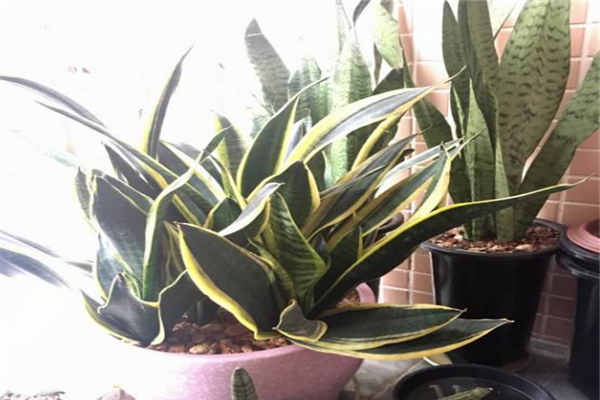
When should snake plant be divided?
Snake plant (Sansevieria) is a foliage plant with very strong vitality. Its greatest feature is its ability to purify the air, with an extremely strong capacity to absorb formaldehyde. Placing a few pots of snake plant in a newly renovated home can absorb indoor harmful gases. Any flower lover who has grown snake plant knows that this plant will outgrow its pot after being grown for a long time, and at that point it needs repotting or division for propagation.
Division time: Generally speaking, snake plant needs to be repotted once every two years, or divided for propagation.
Division method: Cut the overly dense leaf clusters into several clusters. Each cluster, in addition to the leaves, must also have a section of rhizome and a sucker, then plant each separately in a pot.
Detailed steps:
1. The knife used for division must be sterilized and dried;
2. The cut surfaces of the snake plant must be thoroughly dried;
3. Plant in semi-dry soil, and do not water within one week after planting, otherwise it will rot.
When should spider plant be divided?
The spider plant, famed as an “air flower” and a room “purifier”, is deeply loved for its graceful leaf shape and is a common plant for beautifying the home environment and resisting smog.
For potted spider plants, in terms of care, to achieve lush stems and leaves, they should be divided, have their soil changed and be repotted once every year in March. If the pot is relatively deep and the base fertilizer is sufficient, they can be divided and repotted once every 2 years.
When dividing spider plant, you can cut off the clustered stems and leaves of the stolon (this is a young new plant, with leaves above and roots below) and plant it directly into a flower pot to grow. Newly planted plants should be placed in a shaded spot, avoiding direct sunlight.
When should clivia be divided?
Generally, when a clivia seedling has grown one leaf, about 2-3 cm tall, it can be divided. Dividing too early means the seedling's resistance is weak and it cannot withstand the disturbance of division, making it prone to damage during transplanting and reducing the survival rate of the seedling. But it should not be divided too late either, as dividing too late will affect the growth of the clivia seedling.
Division can generally be done indoors all year round, but it differs by region. In areas south of the Yangtze River basin, it is generally done around Qingming Festival, at temperatures generally 15~22°C. For autumn division, choose between White Dew and Autumn Equinox, when the fruit is basically ripe, to prepare for the next year's flowering. In northern regions, the division time is later than in the south and can be determined according to temperature conditions.
Division methods: You can use the bud-cutting method or the hand-pulling method. Bud cutting is mostly used for basal buds, where the connection between the offset and the mother plant is large and hand-pulling cannot easily bring roots with the bud; using a knife to cut off the new rhizome together with the bud can increase the survival rate of the bud. Hand-pulling is mostly used for lateral buds on the stem or buds between leaves, because both of these buds are on the outer side of the stem. When doing this, hold the mother plant's pseudobulb with one hand and pinch the base of the bud with the other, pulling gently. Pay special attention that the new plant must retain some roots, as this makes it easier to survive.
The wound after pulling must be disinfected by applying plant ash, charcoal powder or gentian violet, and left to dry for 4-5 hours until the wound is dry before potting. Note that the nutrient soil near the wound should be mixed with some river sand, and watering should not be too heavy, as this helps the wound recover as quickly as possible and prevents rotting.
When should Cymbidium sinense be divided?
Cymbidium sinense has many lovely names, such as Baosui Lan and Rusui Lan. Its leaves are strap-shaped, very thin, dark green, and somewhat leathery, which is why it is called Mo Lan (ink orchid). After October, its flower scape will emerge from the pseudobulb. The color of Cymbidium sinense flowers varies considerably, often dark purple or purple-brown with a lighter lip, and also yellow-green, peach-pink or white. Its flowers have a rich fragrance, but it is an elegant kind of “richness”. The flowering period is from October to March of the following year.
Generally speaking, division of Cymbidium sinense is best done in spring and autumn, and it is best to avoid the flowering period.
As long as the pseudobulb is plump and mature, each plant has 3 roots, and the plant is disease-free, it can be separated and grown as a single plant. Moreover, if a mature large plant that has never flowered is separated and grown singly, it will often sprout 2 new shoots; if cultivated and managed properly, the new plant will be only 1/10 shorter and smaller than the old plant. If a cluster has 3-4 plants, and the new plants have no roots and their pseudobulbs are not yet mature, while the old plant has many roots, then at least one old and one new plant must be separated together as a connected pair.
5 major precautions for orchid division
1. One-year-old plants cannot be divided. Forced division creates a large wound that is prone to infection, and at the same time the pseudobulb is tender, the degree of hardening of the epidermis is low, and the ability to adapt to a new environment is weak, so division makes it difficult for the plant to survive.
2. Division requires old, middle-aged and young plants of three generations to be connected, and a cluster of 5 plants is ideal. Divided in this way, the orchid has a strong ability to adapt to a new environment and no plant loss will occur. Division of precious orchids should basically follow this requirement.
3. For orchid division, look at the condition of the roots. If there are many orchid roots, it can be divided; if there are few orchid roots, divide cautiously. When dividing, make sure that each divided orchid plant has roots.
4. When dividing orchids, you will encounter situations such as shoot buds and flower buds. Observe carefully whether shoot buds or flower buds have grown on the pseudobulb. If shoot buds or flower buds are present, division can still be done, but the basic requirement is not to damage the shoot buds or flower buds.
5. After division, the connective point of the orchid is wounded and susceptible to contamination leading to disease. You can apply a paste made of wheat flour, or cauterize and apply with a match head, to make the wound harden and seal as quickly as possible.