The Best Time and Method for Grafting Hibiscus: A Detailed Guide
Hibiscus, also known as Chinese hibiscus, Fojin, and Chinese rose, has large, brightly colored flowers that bloom all year round and is widely cultivated around the world, especially in tropical and subtropical regions. Grafting is one of its important propagation methods, so when is the best time to graft hibiscus? How is grafting done? According to Uncle Li, a garden manager, hibiscus can generally be grafted in spring, summer, autumn, and even late winter, but it is best to do so when the temperature most favorable for the variety to form callus tissue arrives, so that the time from grafting to survival can be shortened to the minimum. Branch grafting of hibiscus is generally best in late spring and early summer.
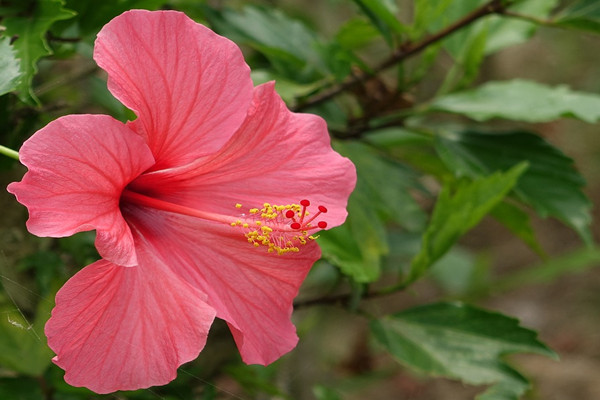
How is hibiscus grafted?
First, select a vigorously growing golden hibiscus as the rootstock, choose multiple one-year-old branches on the plant as rootstock branches for grafting, cut them off at an appropriate height, and then make a straight downward cut on one side of the rootstock branch at the cut end where there is a small amount of xylem.
Next, select plump-growing dark red hibiscus and pink hibiscus branches as scions, make a slanted cut on one side of the lower end of the scion, and shave off a little bark on the other side.
The trimmed scion should generally retain one or two buds, then quickly insert the scion into the cut on the rootstock branch, align the cambium, and tie it tightly with plastic tape.
How should it be managed after grafting?
After survival, properly prune away excess branches of the golden hibiscus (rootstock) so that the dark red hibiscus and pink hibiscus can better obtain nutrients and water from the golden hibiscus plant for growth and development.
Through pruning and shaping, a spectacular and wonderful flowering plant is formed, with flowers of diverse colors set off by green leaves. In particular, this double-petaled, brightly colored large-flowered hibiscus is even more beautiful and endearing.
Main values of hibiscus
Hibiscus is a beautiful ornamental flowering plant with large, brightly colored flowers and a long flowering period. Besides red, there are also different varieties such as pink, orange-yellow, yellow, pink-edged with a red center, and white; besides single-petaled, there are also double-petaled varieties. Potted hibiscus is one of the best flowering plants for decorating holiday parks, flowerbeds, hotels, conference venues, and homes.
The roots, leaves, and flowers of hibiscus can all be used as medicine, with the effects of clearing heat and promoting diuresis, and detoxifying and reducing swelling. In the south, hibiscus is often planted beside ponds, in front of pavilions, along roads, and by walls, where large red flowers bloom continuously throughout the year, creating an exceptionally lively scene. In the Yangtze River Basin and the north, it is often potted to adorn balconies or small courtyards, and under sufficient light conditions, its ornamental period is especially long. It is also one of the main flowering potted plants placed in public places in summer and autumn.