A Detailed Guide to Planting Methods and Ripe Harvest Time for the Noble Bottle Tree (Sterculia nobilis)
The noble bottle tree has a dense canopy, evergreen leaves and an attractive shape, making it a fairly common courtyard tree and street tree in the region south of Guangdong in China. Its fruit has high edible value and can be steamed, boiled, roasted, candied or braised, and is much loved. So how should the noble bottle tree be planted? When does it ripen for harvest?
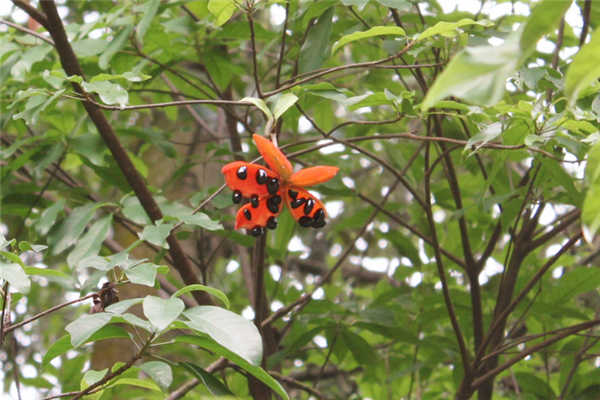
The noble bottle tree prefers well-drained fertile soil and tolerates shade. It likes a warm, humid climate and is found in Guangdong, southern Guangxi, southeastern Fujian, southern Yunnan and Taiwan, China. It is widely cultivated around Guangzhou and in the Pearl River Delta. It is also distributed in India, Vietnam and Indonesia, mostly under cultivation.
1. Timely Planting
Planting of the noble bottle tree is best done in spring, with a spacing of 4×5 m being more suitable, at 33 plants per mu. Dig holes 80×80×60 cm in size. Apply base fertilizer based mainly on organic fertilizer together with a small amount of chemical fertilizer to promote early growth and rapid development of the seedlings and early production.
2. Rational Fertilization
Young noble bottle trees are generally fertilized 4 to 6 times a year, once every 2 to 3 months, with either organic or chemical fertilizer. Mature fruiting trees need more nutrients; to prevent weakening of the tree, fertilize more than 2 times a year.
3. Flowering Period Management
The noble bottle tree tolerates waterlogging but not drought, and requires appropriate soil moisture and atmospheric humidity during the flowering and young fruit stages, commonly described as "mango in sunny weather, noble bottle tree in rain."
4. Pruning and Shaping
If a noble bottle tree grows vigorously but flowers and fruits little, it must be pruned and shaped appropriately to allow ventilation and light penetration inside the canopy, which can reduce psyllids and the sooty mold they cause, and also benefit flowering and fruit set.
5. Pest and Disease Control
The main pests and diseases of the noble bottle tree are anthracnose, root rot and psyllid damage. In conjunction with winter fertilization, do a good job of cleaning the orchard, collect diseased fallen leaves and burn them in a centralized way, which can reduce sources of infection.
6. Timely Harvest
The noble bottle tree bears fruit 3 to 4 years after planting, reaches full fruiting at 15 years, when yield tends to stabilize, and a 30-year-old plant produces 125 kg of fruit. The main crop flowers from March to May and ripens from July to September; the secondary crop flowers from August to October and begins to ripen in mid-December.