Does Pothos Prefer Shade or Sun? Detailed Guide to Propagation by Cuttings
Pothos is a common indoor potted plant with strong twining habits and well-developed aerial roots, and it can be grown hydroponically. So, does pothos prefer shade or sun? Can it be propagated by cuttings? What are the specific methods?
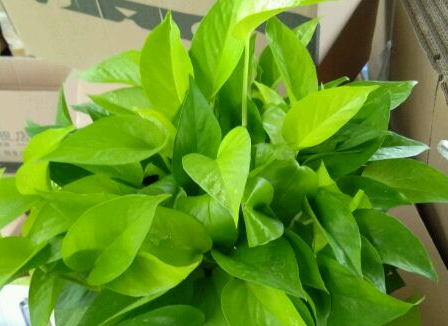
I. Does Pothos Prefer Shade or Sun?
Pothos is a shade-loving plant that prefers scattered light and is fairly tolerant of shade. It comes to life as soon as it touches water, and because of its tenacious vitality it is called the "flower of life." Its trailing green stems and leaves are very easy to satisfy. When grown indoors, whether in a pot or with a few stems cut for hydroponic growing, it can grow well. You can let it climb a cylinder wrapped in palm fiber, or train it into a trailing form and place it in a study or on a windowsill, or simply grow it in a pot, making it a beautiful flower that is very suitable for indoor growing.
II. Can Pothos Be Propagated by Cuttings? What Are the Specific Methods?
Pothos can be propagated by cuttings. In late spring and early summer, select robust pothos vines, cut 15 cm to 30 cm long stems, remove the leaves from the first 1 to 2 nodes at the base, being careful not to damage the aerial roots, then insert them into plain sand or coal cinders to a depth of 1/3 of the cutting. Water thoroughly and place in a shaded spot. Mist the leaves daily or cover with plastic film to retain moisture. As long as the environment is kept no lower than 20°C, the survival rate is over 90%.
Specific cutting method:
1. Selection and Treatment of Cuttings
For cuttings, choose healthy, pest-free, semi-lignified stems, cut them into 10-13 cm lengths, cut the lower end at an angle, and keep 2-3 leaves at the upper end, cutting the leaves in half to reduce water evaporation and help the cuttings survive.
2. Cutting Medium
The cutting medium should be loose, breathable, well-drained loam or sandy soil rich in humus; vermiculite is best, as it leads to fast rooting and a high survival rate. Before inserting the cuttings, disinfect the soil with 2% formalin or 5% potassium permanganate.
3. Cutting Method
Quickly dip the lower end of the prepared cuttings in ABT rooting powder or indolebutyric acid, then insert them into the prepared medium to half their length, water thoroughly so the cuttings make close contact with the medium, and then cover with plastic film.
4. Management After Cutting
(1) After cutting, keep the soil moist and the air temperature relatively high. Soil moisture of around 50% is suitable, while air humidity of 80%-90% is best.
(2) In the early stage after cutting, keep the shade shed at about 80% shading. This prevents direct strong sunlight while ensuring enough scattered light for the leafy cuttings to photosynthesize, which helps rooting.
(3) With the above treatment, roots generally form after about 20 days, at which point the film can be removed and light increased. On sunny summer days, still pay attention to misting the leaves and shading, and in winter protect against cold. About 10 days after rooting, the plants can be moved into pots for normal care.