How much does a potted ZZ plant cost? Grow it this way to make it thrive
The ZZ plant (Zamioculcas zamiifolia) is a fairly common potted plant in daily life. It not only has high ornamental value but also has a certain ability to purify the air, so many people like to grow it as a small potted plant. So how much does a potted ZZ plant cost? How do you grow it so it thrives?
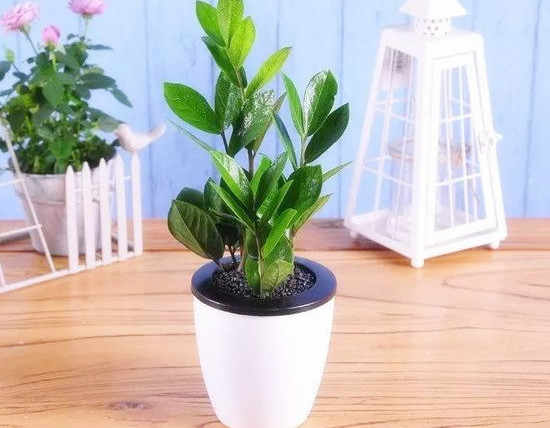
ZZ plant pot price list
Plant height Plant quantity Reference price
20-30 cm 6-8 plants 10-12 yuan/pot
30-40 cm 6-8 plants 25-30 yuan/pot
50-60 cm 8-10 plants 35-40 yuan/pot
70-80 cm 10-12 plants 90-100 yuan/pot 17.90 yuan
Note: The ZZ plant is a well-known indoor foliage plant. The price of its pot mainly depends on factors such as plant size, plant quantity and sales market. The above prices are for reference only. Please base your purchase on the actual price.
How to grow a potted ZZ plant
1. Substrate
The ZZ plant growing substrate is usually made of materials such as peat soil and coconut coir, mixed at a ratio of 1:1. According to size, 3 leaves of basically the same size are grouped as 1 set, then inserted into a plug tray filled with substrate, with the 3 leaves arranged in a plum-blossom shape, leaf surface facing the cell hole and leaf back facing outward, so as to ensure the compactness of the plant shape. In actual cultivation, because the climate conditions of the ZZ plant's place of origin are very special, it has developed strong drought tolerance, so the substrate is required to have good permeability, and a root growth environment with good air permeability and drainage conditions must also be created.
2. Temperature
For the ZZ plant, its suitable growing temperature is generally 20-32°C. Both potted and ground cultivation require that the average annual temperature not vary greatly; growth is best especially in temperature-controlled greenhouses or indoor cultivation. When the summer temperature exceeds 35°C, the plant grows slowly. At this time, a black shade net should be added promptly or water sprayed to cool it down, thereby creating a growing environment with a relatively suitable temperature.
3. Light
The ZZ plant likes light and tolerates shade, and must never be exposed to direct strong light. In particular, avoid the strong sunlight after long rain at the end of spring and beginning of summer as well as the scorching midday sun in summer, to prevent the newly sprouted tender leaves from being burned by strong light. During ZZ plant cultivation, from late spring to September, the plant must be moved into a greenhouse with more than 50% shading, and care should be taken that there are not too many dark spots in the greenhouse, so as to prevent the newly sprouted tender leaves from becoming slender and the leaf color from turning yellow. As for the spacing between small leaves, sparse leaves will seriously affect the beauty of the plant shape. In winter, light should be supplemented promptly; especially potted ZZ plants should receive light promptly.
4. Watering
During ZZ plant cultivation and management, water should be controlled on the principle of “water when dry”. Generally, in winter water about once every 15 days, in spring and autumn about once every 1 week, and in summer about once every 3 days. When watering, be sure not to use too much water, to avoid problems such as root rot or tuber rot. For indoor ZZ plant cultivation, when the room temperature is above 33°C, it is recommended to water once a day.
5. Fertilizing
The ZZ plant likes fertilizer. Before transplanting, the growing substrate needs to be fertilized, preferably with an appropriate amount of composted cake fertilizer or slow-release compound fertilizer. During growth, it is recommended to apply a dilute cake fertilizer solution once a month. In addition, a mixed solution of 0.1% potassium dihydrogen phosphate and 0.2% urea can also be applied. After September each year, in order to ensure that the ZZ plant survives the winter safely, it is recommended to stop applying nitrogen fertilizer and apply 2-3 topdressings of 0.3% potassium dihydrogen phosphate, to ensure that the young leaf axes and newly sprouted leaves become plump and hardened. When the temperature is below 15°C, do not apply topdressing again, to avoid root damage caused by too low a temperature.
6. Pest and disease control
ZZ plant brown spot disease: the lesions on the leaves are nearly round, grayish brown or yellowish brown in color, with a slightly darker color at the edges, and the disease easily occurs in high-temperature, high-humidity environments. In practice, if a small number of leaves are found to have been damaged, it is recommended to remove and burn them promptly. In the early stage of the disease, spray 600 times diluted 50% carbendazim wettable powder or 500 times diluted 40% chlorothalonil suspension concentrate, once every 10 days, 3-4 times in a row.
ZZ plant root rot is root rot disease. Its cause is excessive watering, which results in scarce air near the roots; in the humid environment a large amount of fungi breeds, finally forming root rot. Control measures: when necessary, spray 600 times diluted 27% copper hydroxide suspension concentrate or 1000 times diluted 50% benomyl wettable powder, 800 times diluted 50% thiophanate-methyl · sulfur suspension concentrate, 600 times diluted 50% chlorothalonil · sulfur (chlorothalonil + sulfur) suspension concentrate.