Cucumber viral disease causes great damage, what medication is good for controlling it?
Viral disease is one of the most common diseases during the growth of cucumbers. It can cause leaves to turn yellow and wither, leading to cucumbers failing to set fruit, affecting yield, and in severe cases can cause the entire plant to die. Therefore, when planting cucumbers, this disease must be prevented and controlled. So what harm does cucumber viral disease cause? What medication is good for treating it?
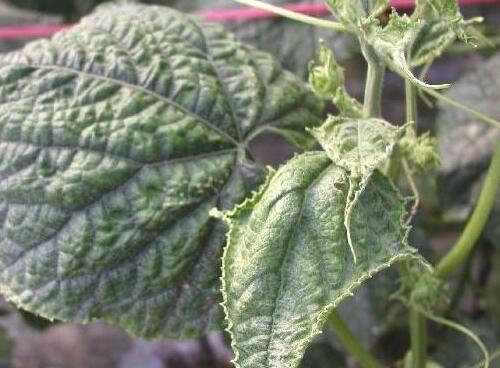
Harm of cucumber viral disease:
Mosaic virus disease: It is a systemic infection, and the virus can reach any part except the growing point. When infected at the seedling stage, the cotyledons turn yellow and wither, and the young leaves show a mosaic pattern of alternating dark green and light green, while the affected leaves show varying degrees of shrinkage and deformity. When infected at the mature plant stage, new leaves show a mosaic pattern of alternating yellow and green, the diseased leaves are small and shrunken, and the leaves become thicker, with leaf margins rolling backward in severe cases; the internodes of the stem shorten, the stem becomes deformed, and in severe cases the leaves of the diseased plant wither; the fruit shows a mottled pattern of alternating dark green and light green, with an uneven surface and deformed fruit. Severely diseased plants have clustered small leaves, fail to set fruit, and shrink and die.
Green mottle-type viral disease: Small yellow spots appear on new leaves, later becoming pale yellow markings, and the green parts show uneven raised wart-like growths. The leaves become smaller, causing plant stunting, and the leaves are mottled and distorted (Figure 1-75). Dark green spots and raised wart-like growths appear on the fruit, mostly deformed fruit.
Cucumber viral disease is also severe when there are many weeds, nearby diseased crops, high temperatures, water shortage, fertilizer shortage, extensive management, and many aphids. In Zhejiang and the middle and lower reaches of the Yangtze River, the peak disease periods are from April to June and from September to November. The green mottle-type viral disease can be seed-borne and can also overwinter in the soil, becoming the primary infection source for the disease the following year, and carries out multiple secondary infections through wind and rain, agricultural operations, etc. Aphids do not transmit the virus. Storms, plants colliding with each other, branches and leaves rubbing together, or root damage caused during cultivation can all easily cause virus infection, and the disease is severe when the temperature is high in the field or greenhouse.
What medication is good for treating it?
1. Treat seedlings with weak virus vaccine N14 and satellite virus S52 to improve plant immunity and also prevent Tobacco mosaic virus and Cucumber mosaic virus. The attenuated vaccine can also be diluted 100 times, with a small amount of carborundum added, and sprayed with a pressure spray gun at 2-3 kg per sq m.
2. Spray once before and once after planting with 24% mixed fatty acid copper aqueous solution at 700-800 times dilution or 10% mixed fatty acid emulsion at 100 times dilution, which can induce disease tolerance in cucumbers and increase yield; soybean milk, milk, and other high-protein substances diluted 100 times with clean water can also be sprayed to weaken the virus's infecting ability and inactivate the viral disease. 27% high-fat film emulsion at 200 times dilution can also be used, once every 7 days, for 2-3 consecutive times.
From before onset to the early stage of disease, the following agents can be used for control: 2% ningnanmycin aqueous solution at 200-400 times dilution; 4% pyrimidine morpholine aqueous solution at 200-300 times dilution; 20% moroxydine hydrochloride • copper acetate wettable powder at 500-700 times dilution; 7.5% bacterial toxin • moroxydine aqueous solution at 500-700 times dilution; 2.1% alkanol • copper sulfate wettable powder at 500-700 times dilution; 25% copper succinate • moroxydine wettable powder at 600-800 times dilution; 3.85% triazole • copper • zinc aqueous emulsion at 600-800 times dilution; 1.5% copper sulfate • alkyl • alkanol aqueous emulsion at 1000 times dilution; 3.95% diazole nucleoside • copper • alkanol • zinc aqueous solution at 500-800 times dilution; 5% bacterial toxin clear aqueous solution at 300-500 times dilution; 31% moroxydine • triazole nucleoside soluble powder at 800 times dilution; 25% moroxydine • zinc sulfate soluble powder at 500-700 times dilution; 3% triazole nucleoside aqueous solution at 600-800 times dilution; 1.05% nitrogen glycoside • copper sulfate aqueous solution at 300-500 times dilution; 20% moroxydine hydrochloride wettable powder at 400-600 times dilution; spray with water, and depending on the condition, spray once every 7-10 days. Spray once each after planting, at the early fruit stage, and at the full fruit stage.