Where is Sempervivum suitable for cultivation, which month does it bloom, and does it die after blooming?
Sempervivum is the collective name for plants in the genus Sempervivum of the Crassulaceae family, mainly distributed across Eurasia. They readily form clusters, are cold-hardy, relatively tolerant of sun, and intolerant of damp heat, making them suitable as accent plants in rock gardens. So, where is Sempervivum suitable for cultivation? Which month is its blooming period? Does it die after blooming?
I. Where is Sempervivum suitable for cultivation?
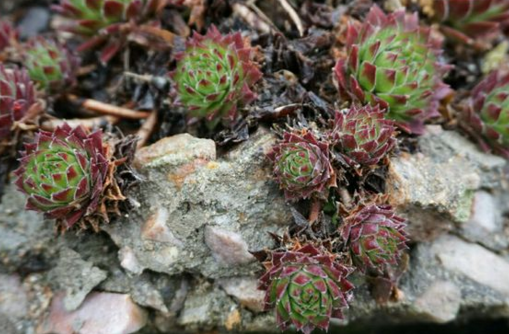
Sempervivum is an alpine-type succulent that prefers a sunny, cool and dry environment and is suitable for acidic, neutral and alkaline soils alike. Apart from needing appropriate shade in summer when temperatures are high to avoid scorching sun exposure, it needs full sun in all other seasons, requires restrained watering in winter, and can tolerate low temperatures of -20°C. The plant goes dormant both in summer heat and winter cold. The cooler spring and autumn seasons are its main growing periods, when it needs ample sunlight; insufficient light leads to a loose, non-compact rosette shape that affects its quality and ornamental appeal, whereas plants grown in full light have thick, plump leaves, a compact rosette and bright leaf color, looking very attractive.
II. Which month is Sempervivum's blooming period?
Plants of the genus Sempervivum are all monocarpic, and the blooming period is generally from June to August.
III. Does Sempervivum die after blooming?
Each rosette of Sempervivum can bloom only once; the flower stalk emerges from the growing point, and the rosette that has bloomed dies. So the saying that it dies once it blooms is indeed true.
Why is it called Sempervivum ("ever-living plant")? It is because Europeans saw this flower-like plant proudly "blooming" on the mountains, not withering even in winter, and instead multiplying more and more each year, so they thought it could live forever. In practice it dies once it blooms, but it leaves behind many offsets, so generation after generation it keeps propagating, and that is why it is called "Sempervivum".