When Is the Best Time to Plant Broccoli? A Detailed Guide to High-Yield Growing Techniques
Broccoli, also known as green cauliflower, is a relatively common vegetable in China. It is very popular because it is rich in vitamins. Its current price is around 5 yuan per jin, so it is a little expensive. So when is the best time to plant broccoli? How do you grow it for high yield?
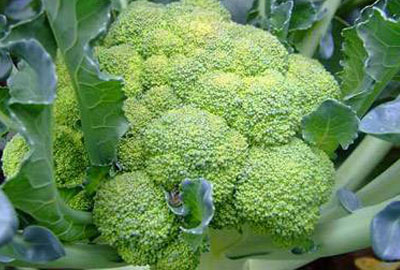
Broccoli is usually sown in autumn and grows through winter. After Spring Festival it is normally harvested and brought to market and onto the table. In spring it begins to flower, and by April or May the seeds mature. For summer and autumn seedling production, seedlings are raised during the high-temperature season from August to October. At this time the temperature is generally above 25°C, sometimes with high temperatures of 30-35°C, and there are also heavy rain and hail hazards, so shade nets are used for open-field seedling production. The seedling age is generally 35-40 days. Sowing or direct hole sowing can be used. The seedling stage averages about 30 days, and from transplanting to harvest takes 80-90 days. It has somewhat strong winter habit; when the seedling stem is 10 mm thick it can be affected by low temperature and complete the vernalization process.
High-Yield Broccoli Cultivation Methods
1. Sow at the right time and grow strong seedlings
Choose a plot with high, dry terrain, good drainage, and fertile soil, and sow at the right time in early August. Before sowing, plow deeply and build beds. Apply 500 kg of decomposed organic fertilizer and 15 kg of high-concentration ternary compound fertilizer per mu as base fertilizer. Water thoroughly 1 day before sowing, broadcast the seed, then cover with fine soil and press it down so the seeds make full contact with the soil. Spray 100 ml of 60% butachlor emulsifiable concentrate mixed with 50 kg of water per mu to control weeds, and at the same time apply 3 kg of 3% Hudijing per mu to control underground pests. Build a shade shed to lower the temperature. After emergence, uncover it in the morning and evening, do not cover it on cloudy days, and harden the seedlings to improve their stress resistance. During heavy rain or rainstorm weather, shade nets should be covered in time.
2. Apply enough base fertilizer and plant at a reasonable density
10-15 days before transplanting, while plowing, apply 1000 kg of decomposed organic fertilizer or 100 kg of commercial organic fertilizer, 30 kg of ternary compound fertilizer, and 1.5 kg of boric acid per mu as base fertilizer. At transplanting, apply 20 kg of calcium magnesium phosphate fertilizer per mu into the planting holes. Build beds 1.4 m wide with ditches 0.3 m wide, with 2 rows per bed and a plant spacing of 35-45 cm. For harvesting fresh-keeping curds, plant 2500-3000 plants per mu; for harvesting large curds, plant 2000-2300 plants per mu.
3. Strengthen fertilizer and water management
Water once a day for 3-4 days after transplanting, and control watering after the plants survive. After that, keep the soil alternately dry and moist. Topdressing should be early and mainly aimed at promoting growth. 15 days after transplanting, apply 15 kg of ternary compound fertilizer per mu. 30 days after the first fertilization, apply another 10 kg of urea and 10 kg of ternary compound fertilizer per mu. After the heart leaves begin to curl, apply 20 kg of ternary compound fertilizer, 10 kg of urea, and 20 kg of potassium chloride per mu to ensure there is no fertilizer shortage during the heading stage.
4. Pest and disease control
The main seedling-stage diseases of Lvxiong 90 broccoli are damping-off and downy mildew, which can be controlled with 72% Kelu at 600 times dilution and 50% carbendazim at 500 times dilution respectively. After transplanting, the main disease is black rot, which can be controlled by spraying 72% agricultural streptomycin at 3000-4000 times dilution, focusing on the base of diseased plants and the ground.
The main insect pests are aphids, cabbage caterpillars, diamondback moths, beet armyworms, and so on. Aphids can be controlled by spraying 10% imidacloprid at 2000 times dilution. Cabbage caterpillars can be controlled by alternating Bt at 1000 times dilution and 20% diflubenzuron at 500-1000 times dilution. Diamondback moths can be controlled by alternating Yitaibao at 1500 times dilution and 2.5% Caixi at 1000 times dilution.
5. Harvest in time
For fresh-keeping curds, harvest when a single curd weighs 250-300 g; for large curds, harvest when a single curd weighs 750-1250 g.