How much does a four-season lemon tree sapling cost per plant? Planting methods, timing and years to fruit
Lemon, also known as ningguo, yangningmeng, yimuguo and yimuzi, is a plant of the genus Citrus in the family Rutaceae. So how much does its sapling cost per plant? What are the planting methods? When is the best time to plant? How many years until it fruits? According to lemon grower Brother Li in Hainan, a lemon takes 7-8 years from planting a small sapling to bearing fruit, while potted lemons, if not managed properly, often only bloom without setting fruit or set few fruits, or even fail to bloom at all. The price of saplings is usually around 2-6 yuan.
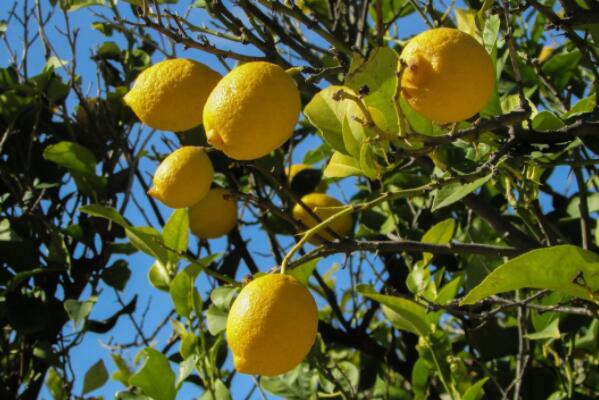
When is the best time to plant a lemon tree?
Lemon prefers warmth, tolerates shade, is not cold-hardy and also fears heat, making it suitable for cultivation in subtropical regions with warm winters and cool summers. The suitable annual average temperature is 17-19°C, the annual effective accumulated temperature (≥10°C) is above 5500°C, the average January temperature is 6-8°C, and the extreme minimum temperature is above -3°C. Annual rainfall is above 1000 mm and annual sunshine hours are above 1000 hours. It is suitable for planting on warm, deep-soiled, well-drained gentle slopes, and the most suitable soil pH for lemon is between 5.5 and 7.0. The plant grows relatively fast, reaching 3-6 m in height, and has a fairly high fertilizer requirement; it flushes, blooms and fruits multiple times a year, and yields often vary greatly depending on how well it is managed.
What are the planting methods for lemon trees?
Graft propagation:
1. Cleft grafting: cleft grafting is mostly used in spring. Grafting works better when the sap begins to flow; in the Sichuan and Chongqing areas it can be grafted in the half month before and after the Rain Water solar term, and in Guangdong the survival rate is high when grafting is done within 40 days after the Start of Spring. In years with low temperatures, the grafting time can be postponed to May. Cleft grafting is simple to perform, sprouts quickly and grows fast, and the plants can reach nursery-release standard in the same year; they can be planted out in autumn or the following spring.
2. Side grafting: side grafting is generally used for autumn grafting and can be carried out from after the Rain Water solar term to early November. Side grafting has a relatively high survival rate, and if one attempt fails, it can be re-grafted 2-3 times. The scion is cut the same way as for cleft grafting: at about 10 cm above the ground, choose a smooth surface and cut vertically from top to bottom, about 2 cm long, with the cutting depth preferably not damaging or only slightly damaging the xylem. Once the cut is made, insert the scion immediately and bind and seal the joint tightly from bottom to top with plastic film strips.
3. Bud grafting: bud grafting can be divided into two types, small-bud cleft grafting and small-bud side grafting; small-bud cleft grafting is mainly done in spring, and small-bud side grafting is mainly done in autumn. Bud grafting is fast, highly efficient, and makes only a small wound on the rootstock that heals easily. When cutting the bud, hold the scion upside down in the left hand, hold the knife in the right hand with the blade flat, and cut from 1 cm below the bud up to 0.5 cm above the bud, so that the bud carries a little wood, then make a vertical downward cut on the scion with the knife to remove the bud piece.
Orchard establishment and planting out:
1. Orchard establishment on flat land: when using paddy fields to establish a lemon orchard, high furrows should be made following the slope to drain water and dry the field. After the soil turns white the following year, mark out the planting points according to the row and plant spacing, and build steamed-bun-shaped mounds 40-50 cm high, with the planting mound about 1 m in diameter at the base.
2. Orchard establishment on sloping land: for sloping land, methods such as building contour terraces, contour ridging or fish-scale pits can be used to improve soil fertility and conserve soil and water. Contour terraces are suitable for slopes of 100-25 degrees, contour ridging is suitable for slopes of 6-100 degrees with deep soil, and fish-scale pits are suitable for steep slopes and complex terrain where building level terraces or contour ridging is relatively difficult.
3. Lemon planting out: the planting density is generally 3×4 m, with 55 plants per mu. Planting is usually done in spring and autumn, and autumn transplanting should preferably be carried out in September-October. Before planting, dig planting holes (trenches) measuring 60×60×60 cm, apply 30-50 kg of organic fertilizer and 0.5-1 kg of superphosphate per hole, or more than 20 kg of decomposed human and livestock manure water, mix the fertilizer evenly with the soil, and cover with soil to form a planting mound 20 cm above the ground level. At planting, remove the grafting film from the sapling, trim damaged roots, and cut off overly long main roots and tender late-autumn shoots. Make a small hollow on the planting mound, place the sapling in, cover with soil while arranging the roots, lift the root system gently, and press the soil lightly so that the roots and soil are in close contact. The planting depth should match the soil mark from the nursery period, with the root crown exposed above the ground; water thoroughly to settle the roots, and cover with straw, stalk, green manure or plastic film to keep warm and retain moisture.
4. Post-planting management: saplings only become established about half a month after planting, and during this half month they should be watered frequently but not given additional fertilizer. After establishment, check frequently to ensure the soil is moist but not waterlogged, promoting root and new shoot growth. Only after a small number of new shoots have emerged can clear manure water be applied.
12