Recommended Cucumber Varieties and Cultivation Techniques for Summer and Autumn
Cucumber is one of the more common vegetables in China, with diverse varieties and simple cultivation techniques, so many people grow it. However, due to regional and climatic issues, it cannot be grown in all seasons. So which cucumbers are suitable for summer and autumn planting?
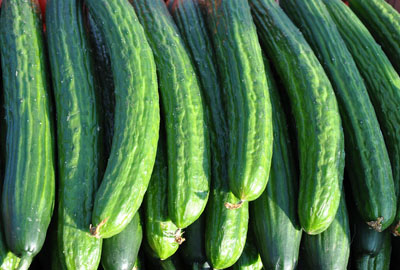
1. Lu Cucumber No. 2
Bred by the Vegetable Research Institute of the Shandong Academy of Agricultural Sciences. The plant has relatively strong growth vigor, mainly setting fruit on the main vine, with weak branching. The leaves are green and palmately pentagonal. The fruit is a long club shape, with green skin, white spines of medium density, thin skin and crisp texture, and relatively good quality. This variety is relatively heat-tolerant and has strong resistance to downy mildew and anthracnose. However, it requires cultivation conditions with sufficient fertilizer and water. In summer and autumn cultivation, the yield is generally about 4000 kg per mu.
2. Xiafeng No. 1
Bred by the Dalian Academy of Agricultural Sciences. The plant has strong growth vigor and few branches. The leaves are large and dark green. It mainly sets fruit on the main vine; the main vine begins setting fruit at nodes 4 to 6, and thereafter produces a female flower every 3 nodes. The fruit is club-shaped, with a relatively short stem end, fruit length 36 to 40 cm, dark green skin, and relatively few spines. The flesh is white-green, crisp, slightly sweet, and of relatively good quality. This variety adapts to growth and fruiting under long-day conditions and has strong heat and moisture tolerance. It has certain resistance to both downy mildew and powdery mildew. It is suitable for summer cultivation, with a yield generally above 2500 kg per mu.
3. Jinyan No. 2
Bred by the Vegetable Research Institute of the Tianjin Academy of Agricultural Sciences and has been promoted for many years. The plant has strong growth vigor and thick stems. The leaves are large and dark green. Both the main and side vines can set fruit, with side vines setting more fruit than the main vine. In summer and autumn cultivation, the main vine begins setting fruit at nodes 10 to 12. The fruit is club-shaped, 40 to 50 cm long, with green skin, no ridges, yellow stripes at the blossom end, relatively sparse spines, white spines, relatively thick skin, and medium quality. It has strong adaptability, is heat-tolerant, resistant to downy mildew and powdery mildew, and not resistant to fusarium wilt. It is suitable for spring-summer and summer-autumn cultivation.
Attached cucumber cultivation methods:
1. Soil selection and land preparation before planting
Cucumber prefers warmth and cannot tolerate cold; it likes moisture but cannot tolerate waterlogging. It is best planted in fertile, slightly clayey sandy soil rich in organic matter with good drainage and water retention. Be sure not to grow it continuously with cucurbit crops. During land preparation, pay attention to deep furrows and high beds; generally the bed width is about 1.8 m, the bed height is about 30 cm, with double-row planting, and plant spacing maintained at 25-30 cm.
2. Correct sowing, seedling raising and transplanting
In cucumber cultivation, the method of soaking seeds to promote germination is commonly used. For spring sowing, generally seedling raising after seed soaking and germination promotion or direct sowing with plastic film mulching is used, with sowing in January to March. For summer and autumn sowing, direct sowing after seed soaking is sufficient, with sowing in June to August.
If raising seedlings for early spring planting, small arched sheds can be used for heat-preserving seedling cultivation. When the seedlings reach two true leaves (about 15-20 days), they are transplanted and set out, and this work should preferably be done on a clear evening. The most important thing to note when transplanting is not to damage the roots. Try to ensure thorough watering before lifting the seedlings for transplanting; when lifting the seedlings, do so in order and transplant with soil attached.
3. Fertilizer and water management
Applying sufficient base fertilizer is one of the key steps for cucumber cultivation to achieve high yields. The principle for topdressing is small amounts applied many times, and the use of farmyard organic fertilizer is advocated.
Spring cucumbers have a relatively high water requirement. On sunny days, water generally once a day; in dry weather, irrigate once every 3-5 consecutive days. However, when there is a lot of rain, attention must be paid to preventing waterlogging.
In summer and autumn, temperatures are relatively high, cucumber growth and development are fast, and because rainfall is relatively heavy, fertilizer and water are lost quickly. Therefore, in addition to applying base fertilizer, timely topdressing is also needed according to the situation.
4. Increasing the number of female cucumber flowers
Increasing the number of female cucumber flowers means increasing the fruit-setting rate, thereby increasing yield.
Specific methods include:
Spraying triiodobenzoic acid during the cucumber seedling stage, spraying sodium naphthaleneacetate after the cucumber grows 2-3 true leaves, or spraying ethephon after the first yellow leaf appears. These methods can all increase the number of female flowers while controlling the number of male flowers.