Differences Between Bowl Lotus and Water Lily, Plus Planting Time, Seed Prices and Hydroponic Methods
Bowl lotus usually refers to the small and medium-sized types of lotus, with the same scientific name as lotus. Also known as basin lotus, bowl lotus, and table lotus, it belongs to the Nymphaeaceae family. So what is the difference between it and the water lily? When is the right time to plant it? How much does a jin of seeds cost? According to a flower and tree base in Suqian, Jiangsu, bowl lotus seeds are generally sold by the piece, at about one yuan each. Water lilies are mainly propagated by tuberous roots, so if you buy seeds you need to identify them carefully and not buy fake seeds.
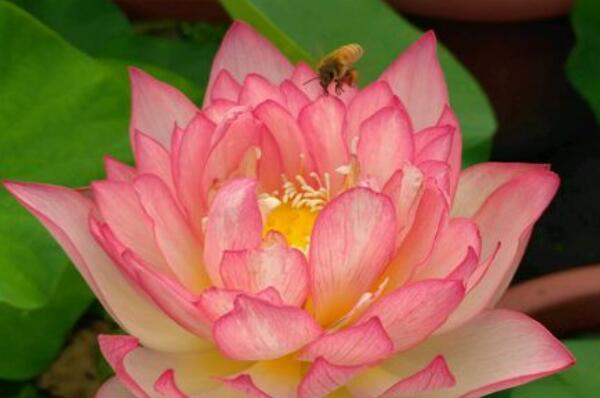
What is the difference between bowl lotus and water lily?
1. The water lily is also called noon lotus, pink water lily, wild water lily, dwarf water lily, and pygmy water lily. The flowers are large and beautiful, and the leaves include both floating leaves and submerged leaves. The flowers of the water lily have distinctive features: they bloom during the day and close at night, and the petals vary in color from white, blue, yellow, and pink.
Water lilies are rarely grown at home unless there is a fairly large courtyard or pond; they are more commonly used for greening park water bodies.
Bowl lotus is also called white lotus, hibiscus, and lotus, but bowl lotus is not a true lotus. The leaves of bowl lotus are round, and the leaves are floating leaves and standing leaves. The flowering period of bowl lotus is from June to September, and the flower colors include red, pink, white, and purple, with colored patterns and edges.
2. The most intuitive difference between bowl lotus and water lily is that the smallest growing container for bowl lotus is a bowl, while the smallest container for water lily is a vat. The size of the container shows the size of the plant! Bowl lotus is smaller and can be moved indoors or onto a balcony to grow. Water lily is larger and is suitable for planting in a courtyard or a large vat or pond in a garden.
3. The leaves of bowl lotus and water lily are completely different. The leaves of bowl lotus are round, with the stem attachment point in the center and a small white dot, and they are floating leaves or standing leaves. Although the leaves of water lily are also round, one side of the leaf has a notch, and the stem attachment point is located on the side of the notch.
4. The petals of bowl lotus are almost round, the leaves are concentrated, and the plant is small and lively. Also, the color of bowl lotus is relatively simple, generally only red and yellow, and the size is about 5 cm. The most important point is that after bowl lotus blooms, it leaves behind cute little lotus seeds.
Water lily petals are long and narrow, the flowers are also a bit larger, and water lilies come in many colors: red, pink, white, and yellow. After flowering, they leave nothing behind.
5. Both bowl lotus and water lily are plants in the Nymphaeaceae family, and their basic form and growth habits are the same, but bowl lotus is a plant in the genus Nelumbo, while water lily is a plant in the genus Nymphaea. The different genera determine that the two have obvious differences in form.
6. Bowl lotus is not cold-tolerant, so for home growing it must be moved indoors in winter to avoid frost damage. Water lilies generally overwinter outdoors, their aboveground parts wither, and they grow leaves again the following spring, with enhanced cold tolerance.
When is the right time to plant bowl lotus?
Bowl lotus can be planted around Qingming. First spread a 3-4 cm thick layer of humus soil on the bottom of the vat, and mix in some decomposed cake fertilizer liquid. Then add cultivation soil (leave 5-6 cm of rim above it to store water) and a small amount of water, and adjust it into a thin paste. Then place the small rhizome with its top bud facing down and plant it diagonally into the mud along the edge of the vat, so that the tail node tilts upward and is slightly exposed above the mud surface. After planting, place it in a sunny spot to receive sunlight for 2-3 days, so that the mud shrinks, the seed rhizome is fixed, and the soil temperature rises to facilitate sprouting. At this time add a small amount of clear water, and after floating leaves grow, slightly raise the water level. After standing leaves grow, gradually fill the vat with water as the leaf stalks lengthen, and add some water every day afterward. During the growth period of bowl lotus, no further fertilization is needed. Too much fertilizer will cause fertilizer damage. Bowl lotus is delicate and susceptible to frost damage. When winter comes, move the vat or bowl indoors to a sunny place and add a small amount of water every week. When Qingming comes the following year, repot it, take out the seed rhizome, and replant it.
Attachment: Hydroponic method for bowl lotus
1. Sowing time: Lotus seeds have no dormancy period. As long as the water temperature can be kept above 16°C, they can be sown in all four seasons. Under suitable temperature and light conditions, lotus seeds need 50-60 days from sowing to flowering in spring and 60-80 days in autumn.
2. Seed treatment: The outer shell of lotus seeds is hard and dense, so before soaking the seeds, a hole must be made manually. One end of the lotus seed has a small pointed tip, and the other end has a small concave dot. Rub the end with the small concave dot on rough cement ground until it breaks, or use pliers to crack a small opening. Be careful not to crush the seed embryo, and do not remove the shell.
3. Soaking seeds to promote germination: A summer water temperature of 20°C-30°C is very suitable for lotus seed germination. Depending on the number of seeds, use a bowl or basin filled with water, just enough to submerge the seeds. It can be placed indoors or outdoors. Change the water three times a day, and germination can occur within 1 week. After sprouting, place it in a sunny spot, strengthen light exposure, and do not let it lack water. Once the root system forms, it can be planted into mud.
4. Planting into mud: Choose a container with a diameter of 18 cm-50 cm, a depth of 15 cm-30 cm, and no bottom hole. Add half a basin of pond mud, and do not fertilize.
5. Autumn and winter management: Bowl lotus seed rhizomes are delicate and susceptible to frost damage. When low temperatures arrive, they should be stored in a place at 0—5 degrees. Winter is the dormant period for bowl lotus; it does not need photosynthesis and can safely overwinter with a deeper water level. When Qingming comes the following year, repot it, take out the lotus rhizome, and replant it.