How Long Do Lavender Seeds Take to Germinate? Planting Methods and Benefits Explained
Lavender's flowering period is generally from June to August. It is an important aromatic economic plant; the plant stays evergreen year-round and carries a fragrant scent, with high ornamental and economic value, and many farmers rush to grow it. So, how long do lavender seeds take to germinate? How do you grow it? What benefits and effects does it have?
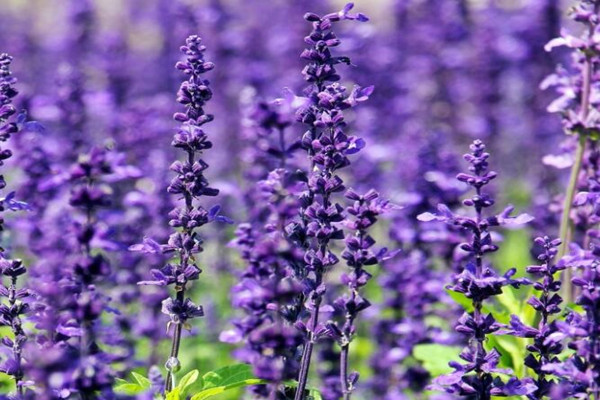
How long do lavender seeds take to germinate?
Lavender seeds have a low germination rate. If the seeds are fresh and treated before sowing, they will germinate in 7-14 days. If the seeds are not fresh and have not been treated, it is hard to say - maybe they will germinate in a month, maybe longer, maybe not at all. Before sowing or soaking the seeds, you can first rub the seed coat with a towel to remove the oils on it.
If the seeds are fresh, you can sow them directly, or you can soak them first in water at 30 to 40 degrees, that is, water that does not burn your finger, for no more than 24 hours. Water the soil thoroughly once, then place the seeds on the soil surface, press lightly with your finger, and cover with a layer of relatively light medium, about 1 cm, that is, 1-2 times the volume of the seeds. Then cover with a layer of film, poke a few holes for ventilation, and place in a sunny spot, keeping the soil moist at all times. After the seedlings emerge, remove the film and give them plenty of sun.
After soaking the seeds, you can also choose to sprout them first and then plant them. Find a flat container, such as a plate, spread a paper towel, cotton pad, or small towel, spray it wet with water, then place the soaked seeds on it, cover with another layer of paper towel, spray wet, put it in a plastic bag, poke a few holes for ventilation, and place in a warm, sunny spot. Open the bag for about an hour each day for ventilation, and observe the seeds at all times. As soon as you see them turn white, plant them in the soil immediately; the white part is the root, not the sprout, so do not plant them upside down. First let the seedlings recover in a shady place, then gradually expose them to the sun.
How do you grow lavender?
Lavender cannot tolerate heat and humidity; if waterlogged for a long time, the roots rot and the plant dies. When planting outdoors, be careful not to let rain fall directly on the plants. After May, move them to a place without direct sunlight and increase ventilation to lower the ambient temperature and keep things cool, so they can get through the hot summer safely. Pay attention to sunlight, water, temperature, and patience.
1. Soil: Suitable for slightly alkaline or neutral sandy soil. Special care must be taken to choose a well-draining medium; you can use 1/3 perlite, 1/3 vermiculite, and 1/3 peat moss mixed together. If growing in open ground, pay attention to soil drainage; you can pile the soil up into raised beds before planting.
2. Watering: Lavender does not like water standing around its roots often. After watering thoroughly once, wait until the soil is dry before watering again, aiming for the surface growing medium to be dry and the interior moist, and for the leaves to be slightly wilted. Water in the morning, avoiding sunlight, and do not splash water on the leaves and flowers, otherwise they rot easily and pests and diseases breed. A continuously damp environment prevents the roots from getting enough air to breathe, leading to poor growth or even sudden death of the whole plant; this is often where lavender growing fails.
3. Light: Lavender is a full-sun plant and needs plenty of sunlight and a moderately humid environment; a full-sun environment is best, though it can also grow in partial sun, only with sparser flowering. In summer, at least 50% of sunlight should be blocked, and ventilation increased to lower the ambient temperature; though growth will be weak, the plant will not die. In winter, lavender grows well on flat ground and should be grown in full sun.
4. Temperature: Lavender is semi-heat-tolerant, prefers coolness, and likes warm winters and cool summers. The suitable growing temperature is 15-25°C, and it can grow at 5-30°C. Limiting temperatures: above 35°C, and with prolonged temperatures above 38-40°C the upper stems and leaves turn yellow and wither. In the north, when winter temperatures stay below 0°C for a long time, it begins dormancy; during dormancy, mature plants can withstand low temperatures of -20 to -25°C.
5. Fertilizing: For fertilizing, you can put bone meal in the potting soil as a base fertilizer (use once every three months). For seedlings, you can apply Hyponex No. 2 (20-20-20); after the plants mature, apply a fertilizer higher in phosphorus, such as Hyponex No. 3 (20-30-20). Apply diluted fertilizer.
6. Pruning: Lavender flowers have the richest essential oil content; when using it, the flowers or flower spikes are the main part. To make harvesting easier, in the early stages of cultivation you may trim some small flower spikes flat with large shears, so the newly grown flower spikes are at a uniform height, which helps with harvesting all at once. Some varieties can reach 90 cm in height; this method is also used to keep the plant short, promote more branching and flowering, and increase the harvest. After flowering, pruning must be done; you can prune the plant back to 2/3 of its original size, which makes the plant shape more compact and benefits growth. Prune in a cool season such as spring or autumn; generally prune in spring, as pruning in autumn will affect cold tolerance. When pruning, be careful not to cut into the lignified part, so the plant does not weaken and die.
7. Common diseases:
When annual seedlings from seed or cuttings are affected, the plant first wilts, loses water, and the leaves look dull, with the tips of the leaves and branches bending and drooping downward; this is most obvious at the bud stage. Mild cases can recover at night, while severe cases die within two or three days, with the roots rotting and the stem vessels turning brown and glossy. In plants over three years old, besides showing the same diseased appearance as seedlings, the wilting symptoms appear at the center or edge of the plant and gradually spread inward and outward, the branches wilt and die, and finally the whole plant dies; the degree of damage varies with plant age and variety. It generally starts in May and peaks in July and August. French lavender is severely affected, while the former Soviet variety 2-417 is lightly affected.
What benefits and effects does lavender have?
1. There are many kinds of lavender, with beautiful leaf shapes and flower colors, noble and elegant; the blue-purple flower spikes are slender and lovely, the plant form is low and compact, the branches and leaves are dense, it grows vigorously, and it tolerates pruning. It can be used in garden squares, patterned flower beds, private gardens, or arranged in flower borders, flower belts, flower clusters, and other garden green spaces, all with a unique ornamental effect.
2. Lavender not only has special ornamental value, but also a scent-appreciation function and good ecological functions; when the plant is touched, it gives off a strong fragrance.
3. As the world's number one incense plant, lavender's essential oil has long been in short supply on the market. Because of its special fragrance, lavender is widely used in beauty care and daily cosmetics, and a series of products such as perfumes, skincare products, shampoos, and aromatic bath products have been developed; it is now widely used in psychotherapy and aromatic spa treatments.
4. The whole lavender plant can be used as medicine; it is also a **traditional medicine of Uyghur doctors, generally used to treat chest and abdominal distension and pain, colds with cough and asthma, dizziness and headache, palpitations and shortness of breath, and joint rheumatism. Lavender essential oil is widely used in the medical field, with effects such as sedation, lowering blood pressure, lowering blood lipids, clearing the mind, antibacterial action, healing, and anti-inflammatory effects.
5. Lavender has significant biological activities such as antibacterial and antioxidant effects. It has not only achieved good antibacterial effects in the medical field, but is now also attracting more and more researchers' attention for antibacterial activity in food and agricultural applications. Linalool, the main component in lavender essential oil, can inhibit and kill microbial activity, and can be used for preserving fruits and vegetables; it is non-toxic and leaves no residue in humans and mammals, and causes no pollution to grain or the environment, so it is bound to become a new type of green food preservative. Because of its fragrant odor, lavender essential oil also has a clear repellent effect on mosquitoes and insects.