Rubiaceae Gardenia: Is It Easy to Grow? Solutions for Wilting Yellow Leaves and Reasons It Won't Bloom
Gardenia, also known as zhizi or yellow gardenia, belongs to the order Gentianales, family Rubiaceae. Gardenia grows the same in all four seasons, with evergreen leaves, and when it blooms it is fragrant and elegantly simple; the white flowers appear pure white, looking especially fresh and lovely, and are extremely appealing. So is gardenia easy to grow? What should you do if the leaves wilt and turn yellow? What causes it not to bloom?
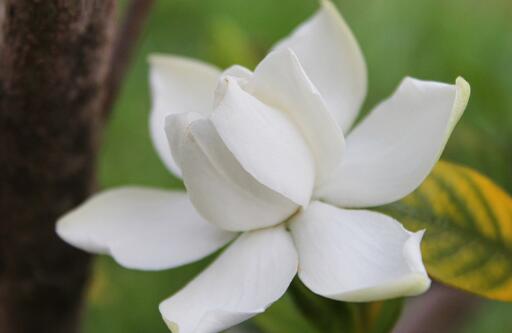
What is usually called gardenia refers to the ornamental double-flowered variety, the large-flowered gardenia (Gardenia jasminoides var. grandiflora). The leaves are leathery, oblong-elliptical, and glossy. The flowers are axillary, with short pedicels, and fleshy. The fruit is ovoid to long-elliptical, with 5-9 winged longitudinal ridges, one locule, and many seeds embedded in a fleshy placenta. It blooms from May to July; the flowers, leaves and fruit are all beautiful, and the flowers are richly fragrant. The roots, leaves and fruit can all be used as medicine, with effects of clearing fire and relieving irritability, clearing heat and promoting urination, cooling the blood and detoxifying. Its fruit can be used to make paint for painting.
Gardenia Planting and Care Tips
First, soil: For planting gardenia, acidic soil is best; alkaline soil will prevent gardenia from absorbing iron well, which greatly affects the formation of chlorophyll and further causes the branches to wither and even die. So its soil must be loose, fertile acidic soil, and some substances with this effect can also be added to it.
Second, environment
Gardenia is best placed where it can maintain 60% sunlight daily. After April arrives, fertilize twice a month.
Third, air humidity and watering
Gardenia likes moisture, so the air must not be too dry; too dry will affect flower opening. Too wet will cause root and stem rot and yellowing leaves. So besides normal watering, you should also frequently spray clean water nearby, and when watering, uphold the principle of "water when dry, and water thoroughly when you do"; when you see the soil is dry, tap the flower pot with your hand, and if there is a hollow sound, you need to water, and stop when the bottom of the pot starts to leak. The water used is best if some egg or soy milk is added, as this is more beneficial for growth.
Fourth, key points for fertilizing
Gardenia likes fertilizer, but you must follow the principle of "weak fertilizer, applied often"; otherwise, too much fertilizer will cause thick branches and large, dark green leaves, and it will lose its own ornamental effect.
Fifth, temperature requirements
The best growing temperature for gardenia is 18 to 22°C, and 5 to 10°C in winter. If it is below minus 10°C, it will suffer frost damage, and northern regions should pay special attention to this.
Sixth, proper pruning
Gardenia should be pruned often to avoid leggy growth that affects its appearance. When pruning, it is best to keep 3 main branches, and at any time cut off new shoots sprouting from root suckers. After the flowers fade, the branches should be cut back promptly, so that new shoots will sprout below the cut. When the new shoots grow three nodes, pinch them back to prevent blind growth.
Seventh, disease prevention
1. Iron deficiency, this is the most common one; iron deficiency affects the formation of chlorophyll and then causes the leaves to lose their green color. At this time, you can use ferrous sulfate water and low-concentration black alum water, three times a month.
2. Magnesium deficiency; magnesium deficiency causes the veins of the lower old leaves of the gardenia to turn yellow. At this time, spraying a low-concentration magnesium sulfate solution is needed.
3. Soil too wet or too dry; for this, refer to point three.
4. Scorching sun exposure; for this, refer to point two.
Eighth, propagation methods
Gardenia generally has two propagation methods: cuttings and layering.
1. Cuttings: in the plum rain season, use tender branches 15 cm long and insert them into a seedbed; they root in 10-12 days.
2. Layering: in April, select two-year-old branches 20-25 cm long, bury them in the soil, keep them moist, and they root in about 30 days; separate them from the mother plant in summer, and transplant them separately the following spring.
What should you do if gardenia leaves wilt?
1. Soil cause: if the gardenia leaves wilt due to the soil, you should replace the nutrient soil and use slightly acidic soil suitable for its growth, and it must be rich in humus.
2. Light problem: gardenia likes light but cannot be exposed to strong direct sun; sun exposure will cause the leaves to wilt and turn yellow. In summer, it should be placed in semi-shade to avoid strong light.
3. Improper watering: gardenia has relatively high water requirements and needs sufficient moisture. In summer, it needs more watering in the afternoon, but the water quality must not be too hard, otherwise it will also cause the leaves to wilt.
4. Fertilizing problem: if the gardenia's nutrition cannot keep up, it will also cause the leaves to wilt, but fertilizing should be moderate and not excessive; during the plant's growing period, fertilize reasonably along with watering.
5. Pests and diseases: gardenia is prone to aphids, whiteflies, scale insects and other damage, so pay attention to pest prevention, apply treatments regularly, and avoid the leaves being harmed.
What should you do if gardenia leaves turn yellow?
1. Improper watering: if too much water is given during gardenia planting, then the tender leaves will be dull and lusterless, while the old leaves are unaffected, but the leaves will be yellow-green, and new leaves will not grow.
Remove the plant from the pot and place it in a ventilated, shady spot until the soil ball dries, then put it back in the pot. When water is lacking, the leaf tips or edges become withered and dry, and the old leaves turn yellow and fall from bottom to top, while new leaves grow relatively normally; at this time, water sufficiently and thoroughly.
2. Improper light: overly strong light causes yellow spots on the lit surface of the leaves; placing it in a dark place can help it recover. If the gardenia is kept in a shaded environment for a long time, the leaves will turn yellow or fall off because they cannot get enough sunlight; it is best to supplement light immediately.
3. Improper fertilizing: when planting gardenia, pay attention to fertilizing; too much or too high a concentration can easily cause the plant to turn yellow. The tips of new leaves will appear brown, generally the leaf surface is thick and lusterless, and uneven and not spread out, while old leaves scorch yellow and fall off. At this time, you should water more to reduce the soil fertilizer concentration.
Insufficient fertilizer in gardenia can also cause the plant to turn yellow, but depending on which nutrient the plant lacks, the symptoms of the following types differ.
① Nitrogen deficiency: with nitrogen deficiency, the leaves simply turn yellow, and new leaves are small and brittle.
② Potassium deficiency: when the plant lacks potassium, the old leaves change from green to brown.
③ Iron deficiency: at first the leaves appear pale yellow or white, while the veins remain green; in severe cases the veins also become yellow or white, and finally the leaves dry up and die. For this situation, spray a 0.2%-0.5% ferrous sulfate aqueous solution for control.
④ Magnesium deficiency: yellowing starts from the old leaves and gradually develops toward the new leaves, while the veins remain green; in severe cases the leaves fall off and the plant dies. You can spray 0.7%-0.8% boron-magnesium fertilizer for control.
⑤ Phosphorus deficiency: the old leaves appear purplish red or dark red.
4. Temperature too low: too low a temperature can also cause leaf yellowing, so when growing gardenia, pay attention to cold protection in winter, and also keep it warm at night in early spring and early winter.
5. Poor ventilation: the growing environment for gardenia needs to be ventilated and moist, with bright light. If windows are often not opened, yellowing at the leaf edges will also appear, so remember to open the windows every day for ventilation.
Reasons gardenia does not bloom
1. Unsuitable water and fertilizer
With excessive water and fertilizer, the plant grows leggy (grows tall but not strong), and such weak branches naturally cannot produce flower buds, resulting in no blooming or very few blooms; some that do bloom may even fall off immediately. During the flower bud differentiation stage, pay special attention to the combination of phosphorus and potassium fertilizers, such as a 0.2% potassium dihydrogen phosphate solution, which is beneficial for flower bud formation and budding; if fertilizing is too concentrated during the budding stage, or watering is uneven, it will also cause flowers and seedlings to drop.
2. Improper light
Gardenia is a shade-loving plant; occasionally give it some light, provide shade in summer, and in winter you can appropriately give it light. Light that is too strong or too weak will both affect gardenia blooming.
3. Soil with high alkalinity
Gardenia likes slightly acidic soil; if the potting soil is high in salt and alkali, the plant's leaves will turn yellow, affecting blooming.
4. Too dense and unpruned
Gardenia branches are messy; a large number of stray branches consume a large amount of nutrients, and branches that are too dense affect photosynthesis. These are all important reasons causing failure to bloom.