Can Horsetail Be Eaten? A Detailed Guide to Its Medicinal Benefits When Boiled in Water and Its Price Per Jin
Horsetail, which we often pulled up to play with as children, also goes by the names pen-holder grass, pen-head grass, air-vent grass, eyebrow grass, earth horsetail, pen shaft, earth ephedra, grass ephedra, wood grass, bone-setting grass, and brow-locking grass, among others. It belongs to the same genus as the traditional Chinese medicine known as muzei (common horsetail) but is a different species. It is the whole plant of Equisetum ramosissimum, a plant in the family Equisetaceae, genus Equisetum. So, can horsetail be eaten? How much does it cost per jin? What illnesses can be treated by boiling it in water?
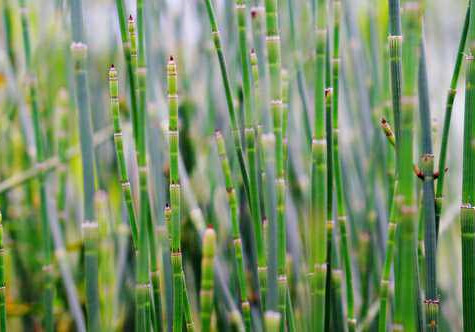
First of all, horsetail can be eaten, and it is also a traditional Chinese herbal medicine with medicinal value.
[Nature, Flavor, and Meridian Tropism] Sweet, slightly bitter, neutral.
[Functions and Indications] Clears heat, promotes urination, improves eyesight and removes eye films, eliminates phlegm and relieves cough. Used for red, swollen, and painful eyes, corneal clouding, hepatitis, cough, bronchitis, and urinary tract infections.
1. "Compendium of Materia Medica": Muzei has the same form and nature as ephedra, so it can also induce sweating and release the flesh, raise and disperse fire stagnation and wind-dampness, and treat various blood disorders of the eyes.
2. "Commentary on the Classic of Materia Medica": Muzei grass primarily treats eye diseases and removes eye films, benefiting the liver and gallbladder to improve eyesight. Its ability to treat accumulations of muzei masses, treat intestinal wind, stop dysentery, and address incessant menstruation in women, flooding and spotting, and bleeding hemorrhoids all stem from its function of entering the blood and benefiting the liver and gallbladder, because the liver stores blood.
3. "Encountering the Sources of the Classic of Materia Medica": Muzei specifically treats wind-heat in the eyes, sudden eye films, and stops tearing, taking effect by dispersing wind from the liver and lungs.
4. "Seeking the Truth from the Classic of Materia Medica": Muzei, as books state, resembles ephedra in form and substance, and its lifting and dispersing properties are quite similar, but it is not pungent and hot, and it enters the foot shaoyang gallbladder and foot jueyin liver meridians. It can drive out wind-heat in the blood aspect of these two meridians, allowing blood to flow upward to the eyes, so it is a key agent for removing eye films and improving eyesight. It is not like ephedra, which is pungent and drying in nature, specifically opening the defensive qi and interstices to cause profuse sweating throughout the body.
In summary, horsetail is sweet and bitter in flavor and neutral in nature; it enters the lung and liver meridians; it has effects such as dispelling wind and dispersing heat, releasing the flesh, and removing eye films; it is suitable for conditions such as clouding of the cornea, tearing in the wind, intestinal wind with blood in the stool, bloody dysentery, rectal prolapse, malaria, sore throat, and carbuncles. It is generally taken internally as a decoction at a dosage of 5 to 15 grams, and can also be made into pills or powders; if used externally, it can be ground into powder and applied to the affected area.
In clinical use, besides its indications, muzei grass also has some precautions. For example, patients with qi and blood deficiency need to take it with caution. In addition, "Commentary on the Classic of Materia Medica" also points out that although muzei grass can treat eye diseases, "for eye diseases caused by anger and summer heat damaging the blood, with sudden red swelling and pain, it is not suitable"; and the statement in "Collected Sayings on Materia Medica" that "taking too much damages the liver, and it should not be taken for a long time" also deserves close attention. Furthermore, excessive consumption of horsetail may lead to coagulation disorders and pulmonary insufficiency.
What illnesses can horsetail treat when boiled in water?
1. To treat pinkeye: Pen-holder grass, Lysimachia christinae, four-leaf clover, Phyllanthus urinaria, and Eriocaulon buergerianum, 5 qian each. Boil in water and take internally. ("Chongqing Herbal Medicine")
2. To treat blurred vision: Pen-holder grass, boil in water to wash the eyes and also take internally. ("Chongqing Herbal Medicine")
3. To treat acute strangury: Horsetail 1 liang, rock sugar half a liang. Add water, decoct, and take. ("Fujian Folk Herbal Medicine")
4. To treat intestinal wind with blood in the stool, red and white vaginal discharge, and traumatic injuries: Horsetail 2 qian. Decoct in water and take. ("Hunan Materia Medica")
5. To treat protracted infectious hepatitis: Horsetail, Trachelospermum jasminoides, and Melia toosendan, 3 qian each; Gardenia jasminoides root and Rabdosia amethystoides, 4 qian each. Decoct in water and take.
6. To treat hematuria: Horsetail, Rumex japonicus, and Eclipta prostrata, 5 qian each; Loropetalum chinense flowers 1 liang; Imperata cylindrica root 4 liang. Decoct in water and take.
7. To treat pyelonephritis: Horsetail, Bidens bipinnata, Plantago asiatica, and Dichondra repens, 5 qian each; Hedyotis chrysotricha and Glechoma hederacea, 1 liang each. Decoct in water and take. (Formulas 5 through 7 are from "Common Folk Herbal Medicines of Zhejiang")
People in many places saw the business opportunity in horsetail and began processing it for sale. The price per jin is around several tens of yuan, and many farmers have turned horsetail from waste into treasure, earning good income from it.