Where Golden Cicada Flower Grows as an Entomopathogenic Fungus, Plus Effective Ways to Eat It and People Who Should Avoid It
Golden cicada flower, commonly known as large cordyceps, is an entomopathogenic fungus; among the 504 species of cordyceps discovered worldwide, golden cicada flower and Chinese cordyceps are just two of them. So, where does golden cicada flower grow? How should it be eaten for the best effect? Who should not eat it?
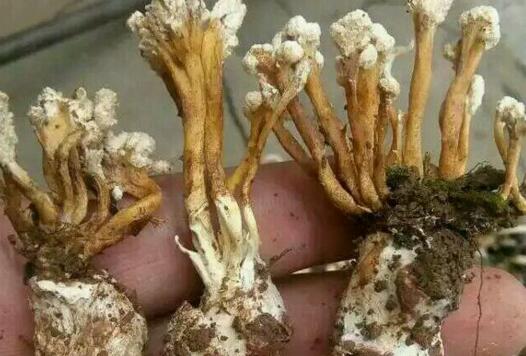
I. Where does golden cicada flower grow?
Golden cicada flower is mostly distributed in the southern provinces of China. The bamboo cicada is commonly found in moso bamboo production areas and is an important host of Paecilomyces cicadae. This insect has 1 generation every 6 years, with 5 instars per generation, and lives in the soil year-round, with older nymphs being the most susceptible to disease. When the temperature is 18-24°C and the relative humidity is >80% in the warm, humid season, older nymphs active in the shallow soil layer come into contact with infected soil and become infected. By June and July of the following year, when temperature and humidity are suitable, light yellow or egg-yellow synnemata grow from the front end of the diseased, dead insect body, break through the surface soil, and extend toward the ground surface, forming the cicada flower we commonly see.
II. How should golden cicada flower be eaten for the best effect?
1. Golden cicada flower free-range chicken soup
Ingredients: 5-8 golden cicada flowers, half a free-range chicken, 6 red dates, 2 slices of ginger, a little cooking wine and salt.
Directions: 1. Wash the golden cicada flowers and drain well for later use.
2. Wash the free-range chicken, cut into pieces, and set aside.
3. Put the golden cicada flowers, free-range chicken, ham slices, and ginger slices into an appropriate amount of clean water, and stew over water at low heat for 3-5 hours; add an appropriate amount of salt when eating.
Function: Tonifies yang and nourishes the kidneys, replenishes essence and marrow.
2. Golden cicada flower infused in water
1. Take about 2-3 cicada flowers, place them in a container, and soak the insect bodies soft with cold water.
2. Remove the outer coating and the hard shell on the insect bodies, keep the insect bodies and mycelium, and wash clean.
3. Add an appropriate amount of clean water, steam (or boil) over water for about 40 minutes, and the liquid produced by steaming (or boiling) can be consumed.
4. Add clean water again and steam (or boil) for 40 minutes; the liquid can be eaten together with the insect bodies and mycelium.
5. Take once in the morning and once in the evening.
3. Golden cicada flower old duck soup
Ingredients: 5-8 golden cicada flowers, half an old drake, 4-5 slices of ginger, a little cooking wine and salt.
Directions: 1. Wash the golden cicada flowers and drain well for later use.
2. Wash the old duck, cut into pieces, and set aside.
3. Put the golden cicada flowers, old duck, and ginger slices together into a clay pot, add an appropriate amount of cooking wine and clean water, stew over low heat for more than 3 hours, and add an appropriate amount of salt when eating.
Function: Nourishes yin and clears heat, tonifies the kidneys and benefits essence.
III. Who should not eat it?
People unsuitable for cicada flower: patients with rheumatoid arthritis should reduce their dosage; children, pregnant and breastfeeding women, people with colds and fever, and people with cerebral hemorrhage should not eat it; those with excess fire or dominant pathogenic factors should not use it.
People suitable for cicada flower: those with breathing difficulties, pulmonary fibrosis, vascular sclerosis, various liver diseases, various kidney diseases, heart failure, impotence, coldness in women, dry skin, visceral agitation, insomnia, tumors, metabolic syndrome, lupus erythematosus, vasculitis, prostatitis, those prone to colds and other people with low immunity, the elderly and weak and frequently ill, those with postpartum weakness, and those in a sub-health state; it is a rare and beneficial nutritional supplement food.