What pesticide should be sprayed on peanut plants (Fabaceae) at the seedling stage and full-bloom stage for yellow leaves and cotton bollworm, and how to achieve high yield?
Peanut (a dicot) generally refers to the groundnut (Fabaceae), an annual herbaceous plant. Its pods swell and have thick shells, with the flowering and fruiting period from June to August. So what pesticide should be sprayed at the seedling stage, full-bloom stage, for yellow leaves, and for cotton bollworm? How can high yield be achieved?
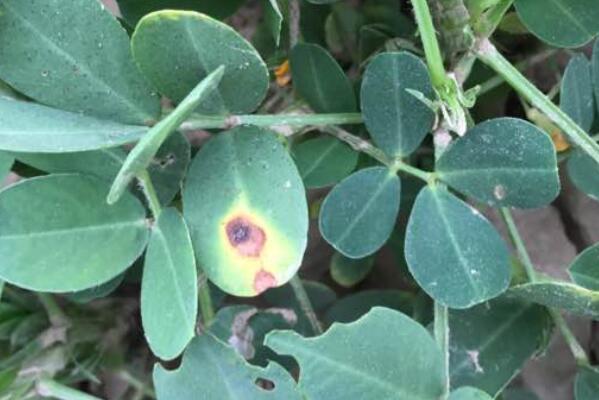
What pesticide should be sprayed on peanut at the seedling stage, full-bloom stage, for yellow leaves, and for cotton bollworm? How can high yield be achieved?
I. Full-bloom stage:
1. Intertillage and earthing up: Earthing up toward the pegs can thicken the soil layer and help the pegs enter the soil earlier.
2. Timely watering: During this period, peanut is very sensitive to moisture, so it should be watered in time.
3. Control plant growth to keep steady growth: The soil in peanut fields is rich in nitrogen fertilizer. If high temperature and rain occur, peanut tends to grow excessively, and then easily lodges, causing severe yield reduction.
4. Timely control of pests and diseases: The main pests and diseases in the middle growth stage of peanut are leaf spot disease, white grubs and cotton bollworm.
Chemical control:
In the middle and late stages of peanut growth, the main focus is preventing peanut leaf spot disease, brown spot disease, etc. For control, 70% thiophanate-methyl wettable powder at 800 times dilution, or 50% carbendazim wettable powder at 800 times dilution can be used for spray control, spraying once every 7-10 days for 2-3 consecutive sprays, which can achieve relatively good control effect. The main insect pests are cotton bollworm, aphids, white grubs, wireworms, etc. After mid-July, 200 ml of 50% “phoxim” can be diluted in 50 kg of water and sprayed on the roots, followed by watering, or sprayed before rain. It can also be mixed with an appropriate amount of water and 10-15 kg of fine sand to make poisoned soil, then spread along the rows before rain or watered after spreading. If underground pests are found, use isofenphos-methyl or phoxim in time for root drenching. Fungicides and insecticides can be mixed together for spraying, so as to achieve the effect of controlling both diseases and pests.
II. Seedling stage
The common diseases at the peanut seedling stage mainly include stem rot and root rot. The main manifestation is large-scale seedling death at the seedling stage.
1. You can use 20 g per mu of 2.5% Celest and 25 g of Tianda 2116 (special for seed dressing), mix with 350 ml of water, dress the seeds, dry them, and then sow;
2. After the peanut seedlings emerge completely, spray with 96% hymexazol at 3000 times plus 3% acetamiprid at 1500 times plus Tianda 2116 (Zhuangmiaoling) at 600 times, which basically solves the problem of peanut seedling death at the seedling stage.
III. Yellow leaves
Peanut leaf yellowing mainly shows the following three symptoms:
First, iron deficiency yellowing. It generally shows that the upper young leaves lose green, while the lower old leaves and leaf veins remain green. In severe cases, the leaf veins lose green and then yellow, and all the upper new leaves turn white, with brown spots and necrosis appearing, then dry up and fall off. In iron deficiency yellowing, the size of peanut leaves generally does not change significantly, but the chlorosis and yellowing are obvious.
Second, nitrogen deficiency yellowing. Peanut leaf yellowing and chlorosis caused by nitrogen deficiency first appears as chlorosis of the old leaves at the lower part of the plant, and generally also shows thinner and smaller leaves and a short plant. Nitrogen deficiency yellowing is generally prone to occur in poor soil, wheat intercropping and summer direct-seeded peanut.
Third, zinc deficiency yellowing. Peanut leaf yellowing caused by zinc deficiency generally shows clustered leaves and the appearance of yellow-white small leaf symptoms.
12