Aspidistra (Cast Iron Plant) Flowering Time, Yellowing Leaf Treatment, Growing Methods and Precautions
Aspidistra, also known as Cast Iron Plant, with alternative names such as Large-Leaf Evergreen, Bamboo-Leaf Plate, Nine-Dragon Plate, Bamboo-Joint Stretch-Tendon, etc., is a plant of the Liliaceae family, genus Aspidistra. In traditional Chinese medicine, the rhizome components are used as medicine, and it is a very widely used medicinal material. So when does Aspidistra bloom? What to do if the leaves turn yellow? Now we have compiled the growing methods and precautions for Aspidistra for everyone.
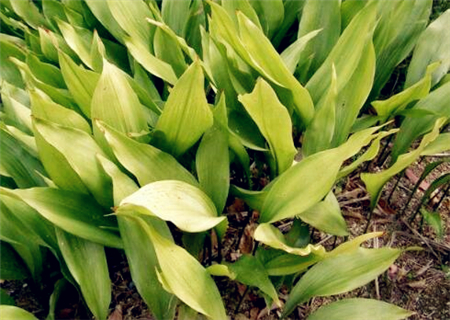
When Does Aspidistra Bloom
Aspidistra blooms between March and April (in natural environments). However, if grown at home, the temperature changes across the four seasons differ from nature, and with temperatures higher than the same period, it generally blooms earlier. However, Aspidistra grown at home rarely blooms, which is also related to the environment and cannot be forced.
The Flower Language of Aspidistra
The flower language of Aspidistra is everlasting love and uniqueness, so Aspidistra is often used as one of the gifts exchanged between couples. Because they hope to be each other's one and only, and everlasting love is also the best blessing for couples.
Cultivated Varieties of Aspidistra
1. Spotted-Leaf Aspidistra: Spotted-Leaf Aspidistra, also known as Golden-Sprinkled Cast Iron Plant, Spotted-Leaf Cast Iron Plant, Star-Speckled Cast Iron Plant, is a cultivated variety of Aspidistra, with milky white or pale yellow spots on the green leaf surface.
2. Golden-Line Aspidistra: Golden-Line Aspidistra, also known as Golden-Striped Cast Iron Plant, White-Striped Cast Iron Plant, is a cultivated variety of Aspidistra, with pale yellow longitudinal line stripes on the green leaf surface.
Division Propagation of Aspidistra
1. Division time: Division propagation of Aspidistra can be carried out in spring when temperatures rise and before new buds have sprouted, combined with repotting for division, generally after the soil thaws in early spring (February and March).
2. Division method: Remove the mother plant from the pot, shake off excess potting soil, separate the tangled root system as much as possible, cut it open into two or more plants with a sharp knife. Each divided plant must have a considerable amount of roots, and its leaves should be properly pruned so that each clump has 3 to 5 leaves, to facilitate survival.
Growing Methods for Aspidistra
1. Potting: Soak the divided small plants in a 1500-fold dilution of chlorothalonil solution for five minutes, then remove and air-dry before potting. You can also drench the roots with chlorothalonil immediately after potting.
2. Management: After dividing and potting, drench the roots or water thoroughly once. Since the root system has been greatly damaged and its water absorption capacity is very weak, it takes about 3 to 4 weeks to recover and sprout new roots. Therefore, within 3 to 4 weeks after division, watering should be controlled to avoid root rot. However, the transpiration of its leaves is not affected. To maintain the water balance of the leaves, the leaf surface needs to be misted 1 to 3 times daily. Do not apply fertilizer during this period. After division, also be careful of excessively strong sunlight; it is best to place it in a shade house for care.
3. Potting: First place a 2 to 3 cm thick layer of coarse substrate at the bottom of the pot as a drainage layer, then place the plant in. The substrate used for potting can be one of the following: peat: perlite: clay pellets = 2:2:1, or peat: vermiculite = 1:1, or peat: furnace slag: clay pellets = 2:2:1, or sawdust: vermiculite: medium-coarse river sand = 2:2:1, or vegetable garden soil: furnace slag = 3:1, or garden soil: medium-coarse river sand: sawdust = 4:1:2, or paddy soil, pond mud, leaf mold, etc. After potting, water thoroughly once and place in a shaded environment for care.
Care Techniques for Aspidistra
1. Soil: Aspidistra is not demanding about soil and tolerates poor soil, but loose, fertile, slightly acidic sandy loam is best. For potting, equal parts of leaf mold, peat soil, and garden soil can be mixed as a substrate.
2. Water: During the growing season, Aspidistra should be watered adequately to keep the potting soil consistently moist, and the leaf surface should be misted frequently to increase humidity, which helps buds sprout and new leaves grow. After late autumn, the amount of watering can be appropriately reduced.
3. Light: Aspidistra can be grown year-round in a bright indoor space, but whether indoors or outdoors, it must not be placed in direct sunlight. Even short periods of direct sun exposure can cause leaf scorch and reduce its ornamental value.
Summary: The growing methods for Aspidistra have been introduced here for now. In fact, Aspidistra is very suitable for home and office placement. It can be enjoyed on its own or arranged together with other flowering plants. It is also a foliage material for modern flower arrangements. Interested friends can continue to read about the precautions for growing Aspidistra!
Precautions for Growing Aspidistra
1. During the growing season, Aspidistra should be watered adequately to keep the potting soil consistently moist, and the leaf surface should be misted frequently to increase humidity, which helps buds sprout and new leaves grow. After late autumn, the amount of watering can be appropriately reduced.
2. When growing Aspidistra, besides paying attention to controlling temperature and moisture, also pay special attention to whether Aspidistra is diseased. Diseased leaves should be promptly cut off and burned to reduce sources of infection.
3. Before the rainy season arrives, spray Aspidistra with a 1000-fold dilution of 50% Shibaike or Shibaogong wettable powder, or a 500-fold dilution of 25% Tanteling wettable powder. Once every 10 days, for 3 to 4 treatments.
4. Aspidistra is a shade-tolerant plant, and light should not be too strong, otherwise it will cause leaf yellowing or disease. Overwatering, especially in winter, will cause root rot and can also cause leaf yellowing.
5. When caring for Aspidistra in a greenhouse, measures can be taken to raise the nighttime temperature of the greenhouse, increase ventilation time during the day, and reduce humidity and fog duration inside the greenhouse, thereby achieving disease control.
6. During the vigorous spring and summer growing period, apply liquid fertilizer 1 to 2 times per month to Aspidistra to ensure the leaves remain clear and bright. It can be grown year-round in a bright indoor space, but whether indoors or outdoors, it must not be placed in direct sunlight.
Reason One for Aspidistra Leaves Turning Yellow: Excessive Light
Aspidistra has broad leaves, and its verdant foliage gives people a warm feeling at all times. This plant fears direct strong light the most; even a short period of exposure will scorch the leaves and affect its ornamental value. If the green leaves in your home, after a midday of sunlight, turn into a pile of withered grass, you would be devastated!
Solution: Aspidistra can be kept year-round in a bright indoor space, but do not place it where sunlight shines directly, especially next to windows. There is no need to deliberately put it in the sun.
Reason Two for Aspidistra Leaves Turning Yellow: Insufficient Light
Plants are sometimes very strange, and it is hard to guess their thoughts. They cannot tolerate sun, nor shade. Although Aspidistra is very shade-tolerant and can grow in dark environments for several months, long-term darkness is not conducive to the sprouting and growth of new leaves. Newly grown leaves are dull and lusterless; although they will not become withered leaves, they also do not look very beautiful.
Solution: Aspidistra can be placed in a dark environment, but it is best to move it to a bright environment every so often to feel the warmth of the sun, which is more conducive to growth and ornamental value. Especially during the period from new leaf growth to maturity, keep it in a bright spot for care as much as possible.
Reasons for Aspidistra Leaves Turning Yellow
Insufficient Light
Aspidistra has broad leaves, and its verdant foliage gives people a warm feeling at all times. This plant fears direct strong light the most; even a short period of exposure will scorch the leaves and affect its ornamental value. If the green leaves in your home, after a midday of sunlight, turn into a pile of withered grass, you would be devastated!
Solution: Aspidistra can be kept year-round in a bright indoor space, but do not place it where sunlight shines directly, especially next to windows. There is no need to deliberately put it in the sun.
Overwatering
Overwatering is also one of the reasons for Aspidistra leaves turning yellow. Aspidistra likes water, but there is a certain limit. It will not die even after several days of drought, but overwatering will affect root respiration, thereby causing leaves to turn yellow. It is like a person who cannot swim suddenly being thrown into water; after coming out, they will definitely be wilted!
Solution: Water Aspidistra by the principle of watering when dry and stopping when wet. Do not water too much, but also not too little. During the growing period, it needs sufficient water, but it must be ensured that water does not accumulate.
Excessive Fertilizer Concentration
Aspidistra does not have a particularly large demand for fertilizer. It is best to use light fertilizer. Over-fertilizing can easily cause root burn, damaging the growth of Aspidistra, and the leaves will also turn yellow due to fertilizer damage.
Solution: Do not fertilize too frequently. Apply a thin liquid fertilizer once every 15 days to promote the sprouting and growth of branches and leaves and ensure the leaves remain clear and bright. Never over-fertilize.
Pest Infestation
Aspidistra cared for indoors is highly prone to red spider mites. Red spider mites parasitize on the leaves and suck sap, which causes the leaves to turn yellow.
Solution: Frequently check both sides of the leaves and regularly wipe the leaves with clean water to keep them clean and shiny. Once red spider mites are found, promptly spray with dicofol, hexythiazox, or similar for control.