What causes rice bakanae disease, and what medicine can cure it?
Rice is one of the more common cash crops in China, grown by almost every household, but as the environment and external factors change, rice becomes infected with various diseases, and rice bakanae disease is one of the most common. So what is rice bakanae disease? How is it caused? What medicine can cure it?
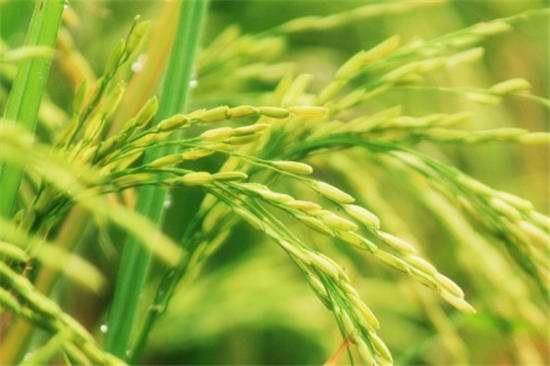
Rice bakanae disease is also called male seedling, and it can occur from the seedling stage to the heading stage. The bakanae pathogen parasitizes or attaches to the seeds, and seed-borne bacteria are the main cause of bakanae disease. Heavily diseased seeds often fail to germinate, or the seedlings die shortly after germination. Diseased seedlings grown from lightly diseased seeds become spindly, about 1/3 taller than healthy plants, with thin, weak plants, the whole plant appearing yellow-green, and poor root development; some diseased seedlings die before or after transplanting.
At the adult plant stage, diseased plants generally appear about one month after transplanting, with symptoms similar to those at the seedling stage. Diseased plants have few or no tillers, markedly elongated internodes, and many inverted adventitious roots growing on the lower stem nodes. White mold grows inside the rice straw, later turning pale red, sometimes as small black spots. After heading, the flag leaf of diseased plants opens at a wider angle than that of normal plants. Severe cases die at the booting stage, while mild cases often head early, with short, small panicles and unfilled grains. In humid weather, pale red or white mold grows on the leaf sheaths of dead diseased plants. On diseased grains, a light red mold layer grows at the seam between the palea and lemma.
What medicine is best? How should it be prevented and controlled?
1. Seeds must be strictly disinfected
Use 100 g of 50% carbendazim, add 50 kg of water for seed soaking; or 120 g of 35% Emiaoling, mixed with 50 kg of water to soak 40 kg of seeds; or 25% Shibaoke, 25% Shibaike, and 25% Junwei, all of which are the same type of pesticide, each using 10 mL mixed with 50 kg of water to soak 40 kg of rice seeds, with the soaking time not less than 48 hours. When soaking seeds in the medicinal solution, it must be noted that the liquid level must be 15-20 cm above the seed layer for the seeds to absorb it. At the same time, during the soaking process, the liquid surface must remain still; it must not be stirred midway, nor reused, to ensure the bacteria are suffocated.
2. Establish disease-free seed fields
Seed fields should be selected from fields that are disease-free or only lightly affected, and harvested separately.
3. Remove diseased plants promptly when found
Whether in seedling fields or main fields, diseased plants should be pulled out promptly when found to prevent the infection from spreading.
4. Handle the rice straw of diseased plants
Properly handle diseased rice straw; it must not be thrown away casually, nor piled at the edge of fields, nor used as a cover for seed germination, nor used to tie rice seedlings. It can be gathered for high-temperature composting, and in severe cases burned.