What are the symptoms of powdery mildew on flowers, fruit, wheat and other crops, and what is the best medicine to spray?
Powdery mildew is one of the main diseases on summer vegetables. In summer, due to high temperature, muggy humidity, improper fertilization, leggy plant growth, poor ventilation and other reasons, this disease is prone to occur. So what medicine is better for powdery mildew? What symptoms are there?
Powdery mildew mostly occurs in the late growth stage of plants and mainly harms leaves, and can also harm leaf stems and stems. June to July is the peak period of the disease for cucurbit crops, especially cucumbers, melons, watermelons and other cucurbit crops.
Generally speaking, the powdery mildew pathogens on different plants belong to different genera. Most powdery mildew pathogens can only infect one host plant, and only a few powdery mildew pathogens can infect multiple host plants. But no matter which genus it is, the diseases caused are very similar in their basic symptom manifestations.
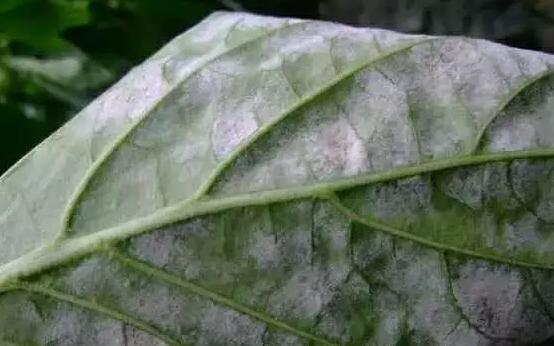
Detailed explanation of powdery mildew on various crops:
1. Powdery mildew of cucurbit crops
Powdery mildew is one of the common diseases of cucurbit crops. In recent years, powdery mildew pathogens have developed a certain degree of resistance, and the disease can occur in all four seasons, bringing certain difficulties to control. In ordinary years the yield reduction is about 10%, and in epidemic years the yield reduction is about 20%-40%.
The disease can be contracted from the seedling stage to the harvest stage, mainly harming leaves, followed by petioles and stems and vines. It generally does not infect the fruit. When leaves are infected, white powdery small round spots initially appear on the back or front of the leaves, and later gradually expand into irregular white powdery mildew spots with indistinct edges. As the disease develops, the spots connect into patches and cover the entire leaf, and the affected parts show chlorosis and yellowing; in the late stage of the disease, many dark brown small black dots are produced on the spots. Finally the white powdery mildew layer matures and turns grayish white. When the disease is severe, the diseased leaf tissue turns yellowish brown and dies. Under high humidity conditions, the pathogen can also infect stems, vines and flower organs, producing white powdery spots, with symptoms similar to those on leaves but with smaller spots.
The peak period of powdery mildew on cucurbit crops is mainly from early to mid-April to late June. For cucumbers grown in protected cultivation, there is also a risk of occurrence from late September to early to mid-November for autumn-planted cucumbers. The most suitable climatic conditions for the disease are a temperature of 16-25°C and a relative humidity above 80%. Protected cultivation of cucumbers is more severely affected due to poor ventilation, excessively high planting density, excessive application of nitrogen fertilizer, and low-lying fields.
[Control methods]
(1) Select disease-tolerant varieties.
(2) Strengthen management. Reasonable close planting, ditching for drainage; timely removal of diseased leaves and old leaves; strengthen ventilation and light penetration to enhance plant growth.
(3) Chemical control. Spray promptly at the early stage of the disease, once every 7-10 days, for 2-3 consecutive treatments, and pay attention to alternating use. The agents can be selected as 80% jinyimi.myclobutanil wettable powder at 2500 times, or 40% flusilazole 4000 times solution, or 25% ethirimol suspension concentrate 1500 times, or 37% difenoconazole 1500 times solution for spray control.
2. Strawberry powdery mildew
Strawberry powdery mildew is one of the important diseases of strawberry. It can occur throughout the entire growth season of strawberry. Infection at the seedling stage causes a decline in seedling quality, making it difficult to survive after transplanting; infection of the fruit seriously affects strawberry quality, leading to a decline in the finished product rate. Under suitable conditions it can develop rapidly, spread and cause disaster, with serious losses.
Strawberry powdery mildew mainly harms leaves, petioles, flowers, flower stalks and fruits. When leaves are infected, at the early stage a thin white mycelial layer grows on the back of the leaves; as the disease worsens, the leaves curl upward in a spoon shape and produce dark stains of varying sizes; afterward the spots gradually expand and a thin frost-like white powdery substance is produced on the back of the leaves. When the occurrence is severe, multiple spots connect into patches and can cover the entire leaf; in the later stage they appear as reddish brown spots, and the leaf margins shrink and scorch. When flower buds and flowers are infected, the petals turn pink and the flower buds cannot open. When fruits are infected, the young fruits cannot expand normally and dry up; if harmed in the later stage, the fruit surface is covered with a layer of white powder, and as the disease worsens the fruit loses its luster and hardens, coloring becomes poor, seriously affecting berry quality and losing commercial value.
The optimum temperature for pathogen infection is 15-25°C and relative humidity above 80%. The annual peak periods of strawberry powdery mildew in protected cultivation are from late February to early May and from late October to December. The sensitive growth period for strawberry infection is from fruit setting to the late harvest stage, and the incubation period of the disease is 5-10 days. Strawberries under protected cultivation develop the disease earlier than those under open-field cultivation, have a longer damage period, and suffer more severely. Excessive planting density, extensive management, poor ventilation and light conditions, and weak plant growth easily lead to aggravated occurrence of powdery mildew. When high temperature and drought alternate with high temperature and high humidity during the strawberry growth period, the disease worsens.
[Control methods]
(1) Select disease-resistant varieties and cultivate disease-free strong seedlings. Different strawberry varieties have relatively large differences in resistance to powdery mildew.
(2) Strengthen cultivation management. Clean the seedling field before planting and after planting; during the strawberry growth period, timely remove diseased, residual and old leaves and diseased fruits, and destroy them centrally; maintain good ventilation and light conditions, drain promptly after rain, strengthen fertilizer and water management, and apply more Jiamei Hongli, Jiamei Hailibao, and Yinglilai to cultivate robust plants.
(3) Chemical control. For open-field strawberries, the flower stalk elongation stage before flowering, and for protected cultivation, October-November and the following spring from March to May, are the key periods for prevention. At the early stage of the disease, use Bayer Luna Sensation, ethirimol sulfamate, Dow AgroSciences Karathane (36% nitrothal-isopropyl emulsifiable concentrate), Peru Keruimu, difenoconazole, tebuconazole and others in alternating use for control. Focus spraying on the disease center and its surroundings, once every 7-10 days, for 2-3 consecutive treatments.
3. Grape powdery mildew
Grape powdery mildew occurs relatively commonly, and in epidemic years it often causes great losses to fruit quality and yield. At the same time it also affects the growth and development of shoots and the growth and development of grapes in the second year.
The powdery mildew pathogen can infect all green tissues of grapes. When leaves are damaged, chlorotic patches of varying sizes appear, after which white powdery substances are produced covering the spots; in the later stage the leaf surface under the powdery spots shows brown patterns, and when severe the leaves scorch and fall off. Sometimes small black grains are produced on the diseased parts. After young leaves are infected, they often shrink and distort, and develop slowly. After the rachis is infected, the tissue becomes brittle and easily broken.
When young fruits are infected, the fruit surface is covered with white powder, the berries tend to wither and fall off, and some fruit surfaces show dark brown netlike patterns. Diseased fruits stop growing, become deformed, the flesh texture hardens, the taste is sour, and the berries easily crack and cause rot.
The young fruit stage after grape flowering is the peak of the disease. Hot and muggy weather with high temperature and high humidity is most likely to cause the disease, and it spreads very quickly on foggy nights. Continuous rain, or genuinely high temperatures, will curb the epidemic and occurrence of the disease. If medication is not strict before bagging the fruit clusters, the fruits at maturity will crack due to powdery mildew infection.
[Control methods]
(1) Thoroughly clean the orchard, and burn the diseased branches and residual leaves cut off during winter pruning. Before germination use 3-5 degree lime sulfur mixture; keep the trellis surface well ventilated and lit; timely remove the central diseased plants, diseased shoots and diseased clusters, and bag the young fruits in time.
(2) 80% jinyimi.myclobutanil wettable powder has a special effect on this disease. At the early stage of the disease, the agent 80% jinyimi.myclobutanil, or azoxystrobin, or myclobutanil can be used for spray control, and the application time should avoid high temperatures.
4. Eggplant powdery mildew
Eggplant powdery mildew is one of the common diseases of eggplant, and it occurs in all vegetable-growing areas. It can occur and cause damage under both open-field cultivation and protected cultivation, but protected cultivation is clearly more severe than open-field cultivation. In years with warm weather and much rain during the growth period, the disease is severe. When the disease is severe, both the front and back of the leaves are completely covered with white powder.
Eggplant powdery mildew mainly harms leaves. At the early stage of the disease, irregular chlorotic yellow small spots appear on the leaf surface, and white small mildew spots appear on the corresponding parts of the leaf back; afterward the number of spots increases, and the white powdery substance becomes increasingly obvious and forms powdery mildew spots. The powdery spots can connect with each other, and after expansion cover the entire leaf surface; when severe, both the front and back of the leaves are completely covered with white powder, finally causing the leaves to turn yellow and dry up.
The most suitable climatic conditions for eggplant powdery mildew are a temperature of 16-24°C and relative humidity of 45-75%; when the relative humidity exceeds 95%, the development of the disease is inhibited. The sensitive growth period for eggplant infection is the flowering and fruiting stage. Fields with low-lying terrain, poor drainage, poor crop growth, continuous cropping, and excessive planting density, poor ventilation and light, and one-sided application of nitrogen fertilizer are severely affected. Among years, those with warm, rainy weather in spring and summer are severely affected.
[Control methods]
(1) Agricultural control. Implement crop rotation; select disease-resistant varieties; fertilize scientifically to enhance the plant's disease resistance and stress resistance; reasonable close planting; ventilation and humidity reduction; timely remove diseased and old leaves and diseased residues.
(2) Chemical control. Apply promptly at the early stage of the disease, once every 7-10 days, for 2-3 consecutive treatments, depending on the development of the disease. The selected agents 80% jinyimi.myclobutanil, or azoxystrobin, or myclobutanil have good spray control effects.
5. Legume powdery mildew
Legume powdery mildew mainly attacks many vegetables such as cowpea, pea, broad bean, hyacinth bean, and common bean. This disease occurs commonly in vegetable-growing areas in southern China, and when severe it has a great impact on yield.
Legume powdery mildew mainly harms leaves, and can also infect stems, vines and pods. When leaves are affected, initially round yellowish brown small spots are produced on the back, which later expand into irregular purple or brown spots, and a white powdery mildew layer is produced on the leaf back or leaf surface; in the later stage the mildew layer on the diseased part matures and turns grayish brown, and small black dots are produced among the mildew layer. When the occurrence is severe, multiple spots connect with each other and expand along the leaf veins into powdery bands, and spots also appear on the leaf surface, with the color changing from white to grayish white to purple brown, spreading over the entire leaf, finally causing the leaves to quickly turn yellow and fall off. When stems, vines and pods are infected, a white powdery mildew layer is produced, which can cause the stems and vines to dry up and the pods to shrink.
The pathogen prefers a warm, humid environment. The suitable temperature range for the disease is 15-35°C, and the most suitable climatic conditions are a temperature of 20-30°C and relative humidity of 40-95%. The most sensitive growth period for crop infection is the middle and late stages of flowering and podding, and the incubation period of the disease is 3-7 days.
The main peak period of legume powdery mildew is from May to November. In years with relatively high temperatures and much rain, the disease is severe; in weather with alternating dry and wet conditions or large day-night temperature differences and easy dew formation on leaves at night, the disease is severe; in fields with many years of continuous cropping, low-lying terrain, poor drainage, excessive planting density, poor ventilation and light, and poor growth, the disease is severe.
[Control methods]
(1) Select varieties with strong stress resistance; cultivate on high beds, plant reasonably closely, ditch for drainage, enhance plant growth, and improve disease resistance; timely remove old and diseased leaves, and after harvest timely remove diseased residues and take them out of the field for centralized destruction to reduce the source of inoculum in the field. Protected cultivation should strengthen ventilation and air exchange.
(2) Chemical control. At the early stage of the disease, the agents 80% jinyimi.myclobutanil, or azoxystrobin, or myclobutanil can be selected for spray control, spraying once every 5-7 days, for 2-3 consecutive treatments.
6. Apple powdery mildew
In addition to harming apples, the apple powdery mildew pathogen can also harm Siberian crabapple, sand apple, pingzi, crabapple and others. Apple powdery mildew mainly harms the young branches and young leaves of apple trees, and can also harm buds, flowers and young fruits. After nursery stock is infected, grayish white patches are produced on the top leaves and young stems of the seedlings, as if covered with a white powdery substance. When the disease is severe, the spots expand to the whole leaf, the diseased leaves shrink, and gradually turn brown and die. After the top of new shoots is damaged, leaf expansion is delayed, the emerging leaves are slender and purplish red, the top shoots are distorted, and after development stops, many dense small black dots are produced on the spots, especially on the young stems and in the leaf axils.
When the spring temperature gradually rises and reaches between 21-25°C, and the relative humidity reaches above 70%, it is favorable for the reproduction and spread of the pathogen. For the occurrence of apple powdery mildew, April to June is the peak period, the disease stagnates in the high-temperature season of July to August, spreads and causes damage again on autumn shoots at the end of August, and gradually declines after September. The disease has two peak periods in a year, completely coinciding with the new shoot growth period of apple trees.
The occurrence of apple powdery mildew is closely related to climatic conditions, cultivation conditions and varieties. Years with warm, dry springs are favorable for the early epidemic of the disease, while rainy and cool summers and clear autumns are favorable for the later occurrence. Low-lying terrain, dense planting in orchards, heavy clay soil, one-sided application of nitrogen fertilizer, insufficient potassium fertilizer, causing a closed tree canopy and weak branches, lead to severe disease. Extensive orchard management, improper pruning, and inappropriate promotion of light pruning and long release, which increase the number of infected buds, will also aggravate the occurrence of powdery mildew.
[Control methods]
(1) Strengthen cultivation management, adopt formula fertilization, avoid one-sided application of nitrogen fertilizer, make the fruit trees grow robustly, and control irrigation.
(2) Clean the orchard, and in combination with winter pruning, cut off diseased shoots and diseased buds; re-prune in early spring, cut off newly diseased shoots, and burn them centrally or bury them deeply to prevent the spread of conidia.
(3) Chemical control: spray protective agents before germination for preventive protection; in spring at the early stage of the disease, select the agents 80% jinyimi.myclobutanil, or azoxystrobin, or myclobutanil for spray control, once every 10-20 days, 3-4 times in total.
7. Flower powdery mildew
Flowers have very high economic value. In flower cultivation, powdery mildew is an important disease. In recent years, powdery mildew has occurred severely on roses and other flowers, and the occurrence area in various flower-producing regions is growing year by year.
The suitable temperature for the occurrence of flower powdery mildew is 15-25°C. Whether the environment is dry or under high humidity conditions, powdery mildew can spread and transmit.
[Control methods]
For the agents, the selected agents 80% jinyimi.myclobutanil, or azoxystrobin, or myclobutanil have good spray control effects on powdery mildew of various roses and other flowers.
8. Powdery mildew of Chinese medicinal materials
In the cultivation of Chinese medicinal materials, powdery mildew is an important disease in production. In recent years, powdery mildew has occurred severely on Schisandra chinensis, Angelica sinensis, Astragalus membranaceus, goji, Panax notoginseng and other Chinese medicinal materials, and the occurrence area in various Chinese medicinal material-producing regions is growing year by year.
The suitable temperature for the occurrence of powdery mildew on Chinese medicinal materials is 15-25°C. Whether the environment is dry or under high humidity conditions, powdery mildew can spread and transmit.
[Control methods]
At the early stage of the disease, select the agents 80% jinyimi.myclobutanil, or azoxystrobin, or myclobutanil for spray control.
9. Mango powdery mildew
Mango powdery mildew occurs in Hainan, Guangdong, Guangxi, and Yunnan. It can harm mango panicles, young leaves, young shoots and young fruits. On the surface of these young tissues, some scattered white powdery spots initially appear, and afterward the tissue under the spots necroses, forming brown scars. After the panicle is damaged, the flowers stop opening, the flower stalk no longer extends, and then withers, dries, turns black and falls off. Young leaves damaged often distort and fall off. Young fruit damage causes fruit drop, and on larger young fruits block-like scars are often formed.
The disease can occur at 9-32°C and 0-100% relative humidity, with the peak occurrence temperature at about 23°C. The pathogen often survives on old diseased leaves of late-emerging shoots, becoming the source of primary infection. In the following spring, it spreads by wind to newly emerging young leaves and panicles to cause damage. Every year from February to April, during the leaf emergence and flowering period of mango, when encountering weather with high humidity, cloudiness and relatively low nighttime temperatures, this disease is prone to occur and become epidemic.
[Control methods]
On the basis of strengthening cultivation management, spray pesticides at the appropriate time. In ordinary years, spraying once each at the panicle elongation stage, flowering stage and fruit-setting stage can control the damage of this disease; however, in severely diseased areas or years of severe infection, it is necessary to spray once every 7 days, increasing the number of sprays. If it rains after spraying, re-spray. For the agent, 80% jinyimi.myclobutanil wettable powder 2500 times solution has a special effect on controlling mango powdery mildew.
10. Wheat powdery mildew
Damage symptoms: at the initial stage of the disease, white mildew spots appear on the leaf surface, and later gradually expand into nearly round to oval white mildew spots. The surface of the mildew spots has a layer of white powder, which immediately disperses when subjected to external force or vibration.
These powdery substances are the mycelium and conidia of the fungus. In the later stage the mildew layer on the diseased part turns grayish white to light brown, and small black granular dots the size of a needle head are scattered on the spots, namely the cleistothecia of the pathogen.
Peak period of the disease: mid to late March to late April, with differences among different regions
[Control methods]
(1) Select disease-resistant varieties.
(2) Advocate the application of compost fermented with effective microorganisms or decomposed organic fertilizer, adopt formula fertilization technology, appropriately increase the application of phosphorus and potassium fertilizer, and plant reasonably closely according to variety characteristics and soil fertility. In the wheat regions of southern China, drain promptly after rain to prevent moisture retention. In the wheat regions of northern China, water at the appropriate time to enhance the host's disease resistance.
(3) In areas where volunteer wheat seedlings overwinter in summer, timely remove volunteer wheat before autumn sowing of winter wheat, which can greatly reduce the source of inoculum for autumn seedlings.
(4) At present, the effective therapeutic agents for controlling powdery mildew on the market mainly include: heterocyclic classes (ethirimol, ethirimol sulfamate), triazole classes (triadimefon, hexaconazole, propiconazole, tebuconazole, epoxiconazole, etc.) and strobilurin classes (azoxystrobin, kresoxim-methyl, etc.).
1. The heterocyclic classes ethirimol and ethirimol sulfamate have very good control effects, but resistance develops too quickly.
2. Triazole class drugs such as hexaconazole, tebuconazole, and epoxiconazole have relatively good preventive effects on wheat powdery mildew, but their therapeutic effects are unstable. When wheat powdery mildew has not occurred or is at the early stage, this type of drug can be selected for control. At present, the wheat powdery mildew pathogen in many regions has relatively strong resistance to triazole class fungicides such as triadimefon, tebuconazole, and hexaconazole; even if the dosage is increased substantially, the control effect on powdery mildew is not stable enough.
12