Where Is the Small Jujube Tree Suited to Grow? A Detailed Guide to Planting Time and Pest Control Spraying
The jujube tree is a deciduous small tree, rarely a shrub, reaching over 10 m tall; the bark is brown or grayish-brown; it flowers from May to July and fruits from August to September. So where is it suited to grow? When is the best time to plant it? What pesticide should be used when pests appear?
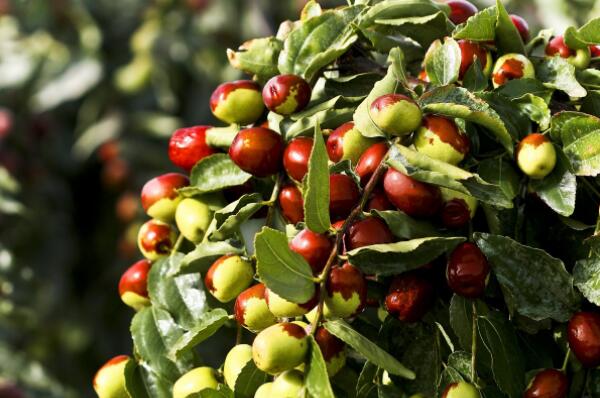
Where is the jujube tree suited to grow?
The jujube tree is a positive heliophyte of the warm temperate zone. It loves light and prefers a dry climate. It is cold-tolerant, heat-tolerant, and also tolerant of drought and waterlogging. It is not demanding about soil; apart from marshes and heavily alkaline soil, it can grow on plains, sandy land, gullies and mountain land. Its adaptability range for pH is between pH5.5 and 8.5, and it grows best in fertile, slightly alkaline or neutral sandy loam. Its root system is well developed and its sprouting ability is strong. It is tolerant of smoke. It is not tolerant of water mist.
When is the best time to plant a jujube tree?
The planting period for jujube trees is divided into two types: autumn planting and spring planting. In all areas where there is no severe cold in winter and the average temperature in January is not lower than -8°C, autumn planting can be carried out, that is, planting after the jujube tree sheds its leaves and before the soil freezes. In the jujube-growing areas south of the Yangtze River in China, winters are relatively warm and the soil moisture is good, so the wounds on the jujube tree's root system can heal in the same year of planting, and some new roots will grow. The following spring, it can grow in time. Therefore, autumn planting of jujube trees gives a high survival rate and also good growth.
What pesticide should be used when pests appear on jujube trees?
Common pests of jujube trees include the jujube curculio, jujube looper, Russian-olive psyllid, jujube gall midge, peach fruit borer, jujube leaf roller, jujube slug moth, tortoise wax scale, green plant bug, and others.
1. Jujube curculio
Control methods: (1) When adults begin to emerge from the soil and climb the trees in late April, spray pesticide on the trunk and the ground near the base of the trunk. Within 1.5 m above ground on the trunk is the key area for application, and it should be sprayed to a dripping state; other long-residual contact insecticides may also be used, sprayed as high-concentration solutions. Alternatively, within 60-90 cm at the base of the trunk, pesticide powder should be scattered, with the base of the trunk as the key area for application; this is effective at killing the adults climbing the trees and saves labor. You can scatter 5% fenthion powder, 4% diazinon powder, 2.5% trichlorfon powder, etc., scattering 150-250 g of powder per mature tree, and after scattering, rake it lightly so the powder is not blown away by the wind. After spraying or scattering powder, it is best to shake the tree once to knock down the adults that have already climbed up, which can improve control effectiveness and reduce damage. If this measure is done well, the damage from this pest can basically be controlled.
(2) For chemical control on the tree during the adult damage period, spraying 80% dichlorvos emulsifiable concentrate or 50% fenthion emulsifiable concentrate, or 40% omethoate emulsifiable concentrate at 1000-1500 times dilution all have relatively good results. To improve control effectiveness, pesticide should also be sprayed on the ground surface near the base of the trunk and on the trunk. After spraying, shake the tree to make the adults fall to the ground; when they climb back up the tree, they will have increased contact with the pesticide, improving control effectiveness.
(3) In the early morning and evening, shake the trees to knock down and kill the adults; plastic sheeting should be laid under the trees to make it easier to collect the adults.
(4) In combination with the control of the jujube looper, tie a plastic film band around the base of the trunk, pack the soil firmly around the lower part, and spray pesticide solution or scatter powder on the ground around the trunk; this is effective against both pest stages. (5) In combination with the control of underground pests, treat the soil with chemicals to kill the larvae with a certain effect; treatment in autumn is preferable. You can use 5% phoxim granules, 4% diazinon powder, 5% chlordane powder, etc., with 2-3.5 kg of pesticide per mu.
12