How much is cilantro seed per jin? High-yield varieties and planting methods explained
Cilantro is a fairly common vegetable in daily life. Its distinctive aroma can remove the gamey smell of meat, so many people like to use it as a seasoning, eat it raw, and so on. So how much is cilantro seed per jin? Which high-yield varieties should be planted? How do you grow it?
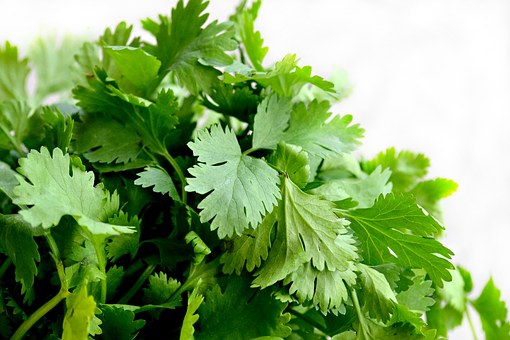
Cilantro seed prices
Currently, cilantro seed on the market is about 12.5 yuan/jin. Market prices may vary slightly from place to place, so for specific price details, please consult your local farmers' market.
Which varieties are good to buy?
1. Beijing cilantro
A local variety from the suburbs of Beijing, with a long history of cultivation. The young plant is about 30 cm tall with a spread of 35 cm. The leaves are green, and the green becomes darker or develops a purple tinge under low temperatures. The petioles are slender and light green. The yield per 667 sq m is 1500-2500 kg. It is relatively cold-tolerant and drought-tolerant and can be cultivated year-round.
2. Purple-flower cilantro
Also known as purple-stem cilantro. The plant is short and grows close to the ground. The plant height is 7 cm with a spread of 14 cm. It is early-maturing and can be eaten about 30 days after sowing. It is cold-tolerant, strongly drought-resistant, and has few pests and diseases. The yield per 667 sq m is generally about 1000 kg.
3. Yuanyang autumn cilantro
A local variety from Yuanyang County, Hebei Province. The plant is tall; the young plant is 42 cm tall with a spread of more than 30 cm, and a single plant weighs 28 g. The young plant is tender in texture, strongly aromatic, and of good quality. It is disease-resistant, heat-resistant, drought-resistant, and likes fertilizer. The yield per 667 sq m is generally 1200 kg.
4. White-flower cilantro
Also known as green-stem cilantro, it is a local variety from the suburbs of Shanghai. It is strongly aromatic, late-maturing, cold-tolerant, likes fertilizer, and has few pests and diseases, but its yield is low, at 600-700 kg per 667 sq m.
5. Shandong large-leaf
A Shandong local variety. The plant height is 45 cm, the leaves are large and deep-colored, the petioles are purple, the fiber is low, the aroma is strong, and the quality is good, but its heat tolerance is relatively poor.
How do you grow it?
1. Variety selection
There are not many cilantro varieties, and basically all of them can be used for greenhouse cultivation, such as purple-flower coriander and white-flower coriander.
2. Land preparation and fertilization
Choose fertile plots with strong water- and fertilizer-holding capacity. Deeply plow the land before sowing and apply sufficient organic fertilizer as base fertilizer. Use 3000 kg of high-quality farmyard manure or 2000 kg of human and animal urine per mu as base fertilizer. After mixing the fertilizer and soil evenly, break it up and level it. Make two high beds in a 4-6 m wide greenhouse.
3. Sowing
Winter cilantro is generally sown from early October to mid-November and harvested successively from late November to March of the following year. Before sowing cilantro seeds, crush the fruit skin and rub the seeds apart to separate them, so as to facilitate uniform emergence. You can sow dry seeds or sow after germination; the latter can emerge 7-10 days earlier and emerge neatly. Before sowing, cover the greenhouse with film, carefully level the bed surface, irrigate fully, and after the water seeps through, sprinkle a thin layer of soil, then broadcast evenly, covering with soil about 1 cm thick.
4. Post-sowing management of winter cilantro
After sowing cilantro seeds, keep the soil moist and not compacted to ensure neat emergence. When the seedlings are 2 cm tall, start topdressing, and apply quick-acting nitrogen fertilizer with irrigation; when the seedlings are 3-4 cm tall, carry out intertillage, weeding, and thinning. Do not water too much during the seedling stage; when the seedlings are about 10 cm tall and enter the vigorous growth period, water frequently to keep the surface soil moist, and topdress 1-2 times together with watering, mostly with quick-acting nitrogen fertilizer. Cilantro has relatively strong cold tolerance. Temperature management for winter cilantro in greenhouses is to strengthen ventilation in the early stage, keeping the greenhouse temperature no higher than 25°C during the day, and to pay attention to insulation and cold protection in the later stage, keeping the greenhouse temperature at 15-20°C during the day and not lower than 5°C at night to favor growth. Multiple layers of coverage can be used to promote growth.
5. Pest and disease control
The main disease of cilantro is leaf blight, which can be controlled by spraying zineb or thiophanate-methyl at the early stage of the disease, once every 7 days, alternately spraying 2-3 times. The main pest is aphids, which should be controlled by timely spraying.
6. Harvesting
For winter cilantro in greenhouses, about 45 days after sowing, when the seedlings are 15-20 cm tall, they can be harvested by thinning and pulling. After each harvest, apply fertilizer and water once to promote growth. A total of 3-4 harvests can be made, and the yield per mu can reach about 1000 kg.