Fertilizing, Repotting and Care of Home Potted Orchids and What They Symbolize
Nowadays many people like to buy all kinds of potted plants and grow them on the balcony or indoors; this not only decorates the room but also freshens the air. Today the editor will introduce to you: what fertilizer is best for home potted orchids? In which season is it suitable to repot them? What should be noted in their care? What meaning do they symbolize?
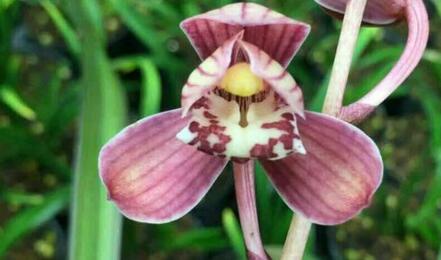
I. What fertilizer is best for home potted orchids?
Fertilizer, put simply and plainly, is nitrogen, phosphorus, potassium + trace elements. According to personal preference and the growing environment, potting mix formulas also vary widely, with different proportions of soft, hard, coarse and fine materials. What is discussed here is a formula of soft to hard at 2:1, with granules of about 1cm, peanut shells + pine bark (coconut husk) + river stones (crushed stone); this formula is the one used relatively often for growing orchids in bulk. There are also 1:1 formulas, or ones of all bark, peanut shells, coconut husk and other soft materials, or even all gravel. What these formulas have in common is that they are light and bland, and can be said to have no fertilizing effect. So the use of fertilizer is relatively controllable and the results are intuitive.
II. In which season is it suitable to repot orchids?
Different orchids have somewhat different growth habits, so the repotting time also differs. At some commercial orchid nurseries, because the environmental conditions can be controlled artificially, repotting can be done in all four seasons. In addition, repotting some orchids is often done together with division; after orchids are planted and grow for two or three years, by then the orchid plants have filled the whole pot, and at this point they need repotting to avoid affecting plant growth. ① The best time to repot orchids is when the dormant period is just about to end and new shoots have not yet sprouted; generally repotting is done once every 2-3 years. Chinese orchids (Cymbidium) are mostly repotted in spring and autumn. In spring, early spring from February to April is the suitable period, and in autumn, September to November is the suitable period.
III. What should be noted in care?
(1) Orchids are mainly distributed in the southeast and southwest regions. They mostly grow wild in moist valley open forests and in shaded spots by rocks, so they like a warm, humid climate, prefer shade and moisture, and require a shading degree of 70%-90%; they are averse to high temperatures, dryness and strong light.
(2) During orchid cultivation, yellowed old leaves and diseased or pest-damaged leaves should be continually cut off to help ventilation. After flower buds emerge from the soil, one strong flower bud should be kept per plant and the rest cut off, so as to avoid consuming too many nutrients and affecting the next year's flowering. After the flowers fade, the flower stalks should be cut off.
(3) In winter, attention should be paid to cold protection. Terrestrial orchids have strong cold resistance, while tropical orchids (such as Phalaenopsis and Cattleya) require a higher overwintering temperature; they should be moved indoors early or protected from the cold with a plastic shed to avoid frost damage. The indoor temperature is best kept at 10-15°C, and ventilation should be noted during indoor care. As the weather gradually warms in spring, the orchids can gradually be moved to the courtyard or balcony.
(4) For home orchid cultivation, natural rainwater, stream water, well water and river water are best. If tap water is used, it should first be stored in a vat and exposed to the sun to remove the bleaching powder before use; if tap water is used to water flowers over the long term, it will gradually make the growing medium alkaline. Ferrous sulfate can be applied once every so often to increase soil acidity. In addition, watering orchids with fermented rice-washing water can also keep the soil in a slightly acidic state.
IV. What do orchids symbolize?
Since ancient times, the Chinese people have loved orchids, grown orchids, praised orchids in verse and painted orchids; the ancients once exclaimed in admiration that "watching the leaves beats watching the flowers." People admire even more how orchids keep company with grasses and trees, do not vie with other flowers for beauty, fear no bullying by frost and snow, and have a firm and unyielding character: "The zhilan orchid grows in a deep valley, and does not cease to be fragrant because no one is there." Orchids have always been regarded by people as a symbol of noble purity and elegance, and together with plum blossoms, bamboo and chrysanthemums they are called the "Four Gentlemen." Orchids generally describe a gentleman, and are often used to describe a woman as an orchid in a secluded valley.