The Loquat, King of Fruits: How Many Times It Flowers and Fruits Per Year and Key Planting Points
Loquat, also known as "golden ball," is a relatively common economic crop in China, and has the fine reputation of being the “king of fruits.” It is popular for its effects such as beautifying the skin and nourishing the lungs to relieve cough. So how many times does a loquat flower per year? How many times does it fruit? How should it be planted so it will flower and fruit?
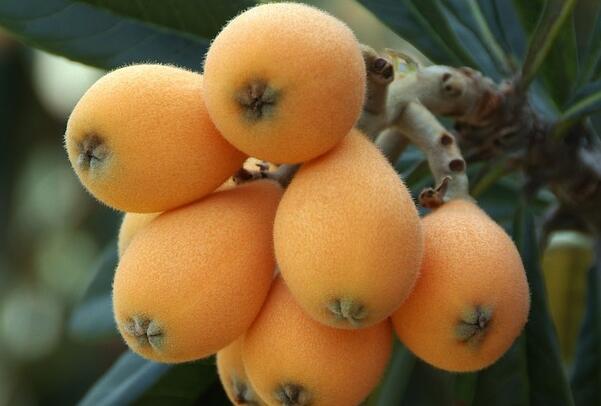
Loquat trees generally flower in the current year and fruit the following year. They flower once a year, usually from October to December, and fruit once a year, in May—June of the following year. However, a loquat tree requires three years from sowing, transplanting, grafting and field planting, then another four years to fruit, and 10~40 years is the peak fruiting period. Grafted seedlings are more likely to flower and fruit than seedling-grown ones. If grown from seed, it will take a very long time, at least more than 5 years, and grafted seedlings generally also need more than 3 years to flower and fruit.
Planting methods:
1. Temperature
Loquat originated in the subtropics and requires relatively high temperatures. It can grow normally when the annual average temperature is above 12°C, but for economic cultivation the annual average temperature should be 15-17°C, with no severe cold weather. The loquat flowering period is in late winter and early spring, and low temperatures in winter and spring will affect its flowering and fruiting. At -6°C, damage occurs to flowering; at -3°C, damage occurs to young fruit; pollen begins to germinate above 10°C, and pollen germination is most suitable at around 20°C. However, when the air temperature or soil temperature reaches above 30°C, the growth of branches, leaves and roots becomes slow and poor. If the fruit encounters high temperatures of 35°C in the 7-15 days before harvest, it is very prone to sunscald damage and may even lose its edible value.
2. Soil
Loquat is not strict about soil requirements and has wide adaptability. It can generally grow and fruit in ordinary soil, but grows better in loose soil containing more sand or gravel. For loquat planting, it is advisable to choose flat, high-yielding dry land that has been cultivated for years, with deep and loose soil, fertile and rich in organic matter. A soil pH of 6.0 is most suitable. When choosing a site, water sources must be considered to ensure the orchard can be irrigated from November each year to May of the following year, and transportation and transport should be convenient. Land that is low-lying and prone to waterlogging should not be chosen. Before planting, deep plowing of more than 30cm should be carried out across the whole area.
3. Planting time
Where irrigation conditions are available, planting should preferably be done in February-March; where there are no irrigation conditions, it should be planted in mid-June (early in the rainy season). In a warm climate, loquat trees grow quickly, and the planting density should preferably be 60-70 plants/mu, with a spacing density of 3m×4m or 3m×3.5m. They can bear fruit after 3 years of field planting. After a certain number of years, thinning should be carried out, which is conducive to management and obtaining early high yields.
4. Planting method
In September-October of the year before planting, while the soil is moist, dig planting holes 60cm deep, 80cm wide at the top and 70cm wide at the bottom, and at the same time pile the topsoil and subsoil separately. Apply 30kg of farmyard manure or sugar mud and 0.8kg of calcium magnesium phosphate fertilizer as base fertilizer to each planting hole, mix with topsoil and apply into the planting hole, then backfill all the original subsoil. The backfilling work must be completed 2 months before planting the loquat seedlings, so that the base fertilizer is fully decomposed and the filled soil settles firmly. For transplanting seedlings, choose ones free of pests and diseases, with dark green leaves, well-developed roots, a graft union thickness of more than 1cm, and a well-healed graft union, with 45-50cm above the graft union (preferably branched). When planting, the root crown of the seedling should be level with the ground and must not be too deep. Some leaves and tender branches should be pruned off to reduce evaporation. When planting, let the fine soil come into full contact with the root system, compact the soil around the roots, and each plant must be watered with about 20L of settling water. After the water seeps down, cover with a layer of fine soil. Head back the plant at 45—50cm above the ground.