How many times a year does the flowerless but fruit-bearing fig tree produce fruit, and how should it be planted to achieve high yields?
The fig, also known as the milk fig, is a relatively common economic fruit tree in China, and it is quite popular among people because of its high edible value and ornamental value. So how many times a year does the fig produce fruit? How should it be planted to achieve high yields?
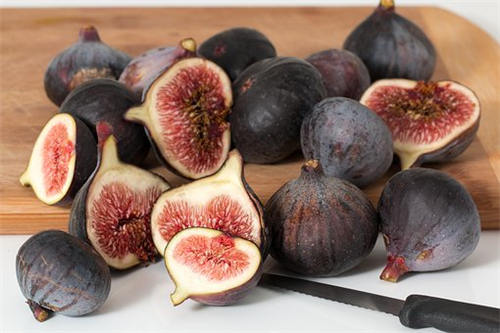
How many times a year does the fig produce fruit?
The fig generally produces fruit twice a year, namely the summer fruit and the autumn fruit. Although the fig is a deciduous fruit tree, it prefers warmth and has weak cold tolerance. In areas with lower winter temperatures and areas hit by late frost in early spring, it is prone to frost damage, and the whole plant may even die. Therefore, the local winter temperature and summer rainy weather conditions must be taken into account. Only by taking corresponding preventive measures against meteorological disasters can the high quality and high yield of figs be ensured. As for whether there is fruit or not, it should be related to the age of the tree, whether the nutrient supply is sufficient, and the planting environment.
Planting methods:
I. Variety selection
Varieties: There are many varieties of fig trees, with more than eight hundred varieties. There are about a dozen varieties mainly cultivated in China. Divided by use, there are processing, landscaping, fresh-eating and dual-purpose varieties; divided by fruit maturity, there are summer-fruit-specific varieties, autumn-fruit-specific varieties, summer-autumn-fruit-specific varieties, etc. When planting, varieties with bright color, large and well-formed fruit, a long fruit growth period and excellent quality can be selected, such as Brunswibk, Qingpi and Zitaofen.
II. Garden plot
The fig is a subtropical deciduous small tree that likes warmth and light. In choosing a planting site, in addition to sunlight and temperature factors, choosing the right soil is especially important for increasing the yield of fig trees. Deep, fertile, well-drained sandy loam or humus loam is suitable. It can be planted in a specially designated concentrated area, or grown in a courtyard.
III. Field planting
One-year-old truncated seedlings (retaining 10—30cm) are commonly used fig tree planting stock. Planting can be done in spring or autumn, with spring planting being the main method. Fig rooting requires a relatively high temperature (9-10℃) and has a fast growth rate, so it is suitable to plant around Qingming. Planting density varies depending on the variety and pruning method. Generally speaking, for cultivation with the "X" shaped pruning method, the plant spacing should be 1-2m and the row spacing should be 2-3m; for cultivation with the "Y" shaped pruning method, the row spacing should be 2m.
IV. Fertilization
Fig trees have a small fertilizer requirement during the seedling stage. After entering the mature seedling to fruiting stage, the leaves are large, the branches are thick and strong, the growth vigor is vigorous, and the fruit load is large, so nutrient supply needs to be strengthened. In addition to supplementing a large amount of nitrogen fertilizer, phosphorus, potassium and calcium fertilizers also need to be supplemented in time to improve fruit quality. The first topdressing of figs can be carried out when the new shoots grow vigorously, mainly applying nitrogen fertilizer at 210—300kg/h㎡. During the fruit ripening period of figs from August to October, 2—3 more topdressings are needed, mainly applying compound fertilizer, with 240—300kg/h㎡ each time.
V. Watering
Drainage: Fig tree roots are well developed and easily obtain nutrients from the soil, and the tree itself is drought-tolerant and afraid of waterlogging, so it does not need frequent watering. In dry summer and autumn environments, frequent watering is needed. During the new shoot growth period and before overwintering, frequent watering is also needed. Spring planting of figs is mostly done around Qingming, when there is more rain, so attention must always be paid to drainage. If drainage is poor, the leaves will fall in mild cases, and the whole plant will die in severe cases. Every year in July and August, rainfall is concentrated, which coincides with the fig fruit ripening period. Too much accumulated water will dilute the sugar content of the fruit and thus affect quality.
VI. Training and pruning
The tree forms commonly used in fig tree cultivation mainly include clump form, open-center form, leader form and cup form. The clump form has no trunk and grows in a clustered state, with a relatively short crown. When planting seedlings, the plant should be pruned to retain a height of 10—15cm, which is conducive to sprouting branches at the base. Then 3—5 of the sprouted branches are selected as clump main branches for training. The open-center form has no central leader, a lower trunk and a relatively large crown, generally with 2—3 main branches and side branches.
Fig tree pruning is mainly concentrated in two stages: growing-season pruning and winter pruning. The branching ability is weak, the branches are sparse and prone to whorled growth, so growing-season pruning focuses on pinching, with pinching leaving a length of 30—40cm to promote crown and fruit growth. Winter pruning is usually carried out after leaf fall and before the soil freezes, mainly using heading back, and in addition frozen dead branches should be cut off.
VII. Pest and disease control
Pest and disease control is a relatively easy part of fig tree cultivation and management, because there are fewer pests and diseases. The main pest is the mulberry longhorn beetle. The mulberry longhorn beetle, commonly known as the water buffalo, has larvae that gnaw the xylem of branches and trunks, affecting tree growth. Adults appear in early June. Control measures can be manual capture or chemical killing. Manual capture can be carried out during the peak emergence period of adults; spraying 50% acephate 800~1000 times solution can quickly and effectively kill adults. Fig trees have strong adaptability, and cultivation and management are relatively easy. As long as you put in more effort, you can get a harvest.