How Many Times a Year Does a Grapevine Flower and Bear Fruit, and How to Plant for Flowering and Fruiting
Grapes are a widely planted fruit tree in our country. Because of their sweet taste, rich nutrition, and simple planting techniques, they are favored by many growers. However, since there are many grape varieties and the planting techniques differ, to grow grapes well you need to have a good grasp of the characteristics of grapes. So how many times a year does a grapevine flower? How many times does it bear fruit? How should you plant it so it flowers and bears fruit?
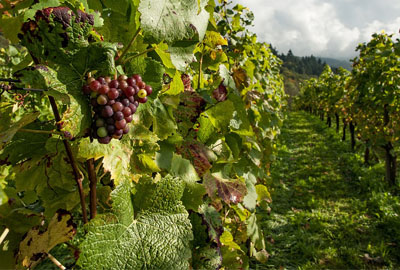
How many times a year does a grapevine flower? How many times does it bear fruit?
Grapevines flower at least twice or more every year, and each flowering can bear fruit. If the flowers open too late, the fruit they set cannot ripen. As for fruiting, it is generally 1 to 3 times, but this is related to the grape variety and the length of the growing period. Generally, mid-to-late-maturing varieties bear fruit only once a year, such as Richardo, Niunai, Kleine Barmaker, Longyan, Meirenzhi, Red Globe, and so on.
Many mid-to-early-maturing varieties can bear fruit multiple times a year, such as Jingxiu, 87-1, Pannonia, Yatomi Rosa, Pearl of Csaba, Queen of the Vineyard, Jingya, Kangtai, Jingyou, Kyoho, Longbao, White Banana, Jixiang, Tianfeng, Fujiminori, Red Fuji, Dabao, Xiyanghong, 8611, 8612, Jingzijing, Golden Star Seedless, Seedless White Chicken Heart, and so on. How many times a multiple-fruiting variety can bear fruit is related to the length of the growing period. In places such as Gongzhuling and Shenyang, the second crop of mid-to-early-maturing varieties can ripen, while late-maturing varieties cannot. In the south, the second and third crops can ripen. It is also related to management techniques: with good management and strong tree vigor, the second and third crops grow quickly and can ripen. In a greenhouse, with proper management and strong tree vigor, varieties such as Seedless White Chicken Heart, White Banana, Tianfeng, and Golden Star Seedless can bear 4 to 5 crops a year, and can even achieve year-round fruiting.
Planting techniques:
1. Planting time: Open-field autumn planting of grapes tends to freeze to death, and greenhouse autumn planting is unfavorable for dormancy, so for both open-field and greenhouse planting, spring planting is best. The time is from January to May, after the soil thaws until after bud break, but the later it is, the weaker the growth. In addition, for greenhouses you can also plant the vines first and build the shed afterward.
2. Land preparation and ridging: For both open-field and greenhouse planting, rows run north-south with a row spacing of 1.8-2 m, and ridges are made along the rows. In areas where soil is mounded up in winter for cold protection, make large ridges; in areas where soil is not mounded up in winter for cold protection, make small ridges. Before ridging, there are two methods of land preparation.
3. Deep plowing of the whole orchard: Broadcast fermented manure on the ground, usually about 5 cubic meters per mu, and more than 10 cubic meters per mu for new greenhouses. Old greenhouses have higher organic matter content and may not need manure. Then plow deeply over the whole area to about 40 cm.
4. Digging trenches along the rows: 60-80 cm deep and 80-100 cm wide. Fill the lower half with about 500 kg of weeds mixed with topsoil, and fill the upper half with about 5 cubic meters per mu of organic fertilizer mixed with topsoil until full. If there is not enough topsoil, you can dig it from between the rows and spread the subsoil between the rows, then use a large amount of water to settle it.
5. Seedling treatment: If it is a grafted seedling, cut off all the rootstock buds, keep only the grafted buds, and remove the binding film.
6. Pollinator trees: Grapes are cleistogamous (self-pollinating), so there is no need to plant pollinator trees. Different varieties should be planted in blocks to facilitate management.
7. Planting method: Along the rows, at a plant spacing of 0.7 m, plant on one side of the ridge. The planting method is as follows.
(1) In areas where soil is mounded up in winter for cold protection, plant on one side of the large ridge: ① For grafted seedlings, plant them slanting toward the north, with the graft union about 10 cm above the ground, so that in the future the part above the graft union will not root and it will be easy to mound soil for cold protection. After planting, water heavily; when the surface soil looks dry, continue mounding soil so the mound exceeds the graft union by 10 cm, and after bud break remove the soil mound. ② For cutting seedlings, plant them slanting toward the north, with the original yin-yang line about 10 cm below the ground level, so that even if the aboveground part freezes to death in the future, the underground part can still sprout. After planting, water heavily; when the surface soil looks dry, continue mounding soil 10 cm or more, and after bud break remove the soil mound. ③ For green seedlings in nutrient cups, plant them upright, but do not bury the green vine, otherwise the seedlings will rot. After planting, water heavily.
(2) In areas where soil is not mounded up in winter for cold protection, plant on one side of the small ridge: ① For grafted seedlings, plant them slanting toward the north, with the graft union about 25 cm above the ground. After planting, water heavily; when the surface soil looks dry, continue mounding soil until it reaches 10 cm above the graft union, so that the seedling is on the large ridge, and after bud break remove the soil to expose the graft union. ② For cutting seedlings, plant them slanting toward the north, with the original yin-yang line slightly above the ground level. After planting, water heavily; when the surface soil looks dry, continue mounding soil about 25 cm, so that the seedling is on the large ridge. ③ For green seedlings in nutrient cups, plant them upright, but do not bury the green vine, otherwise the seedlings will rot. Gradually mound soil during the growing season, so the seedling is also on the large ridge.
8. Fertilizer management
Base fertilizer is applied after fruit harvest in autumn. Dig 40×40 cm deep holes along the outer edge of the original planting hole, and apply organic fertilizer in multiple layers, with one layer of soil and one layer of fertilizer, mainly using human and livestock manure, barnyard manure, compost, and so on. For grapes in full fruiting stage, apply more than 2 kg of organic fertilizer for every 1 kg of fruit produced. Topdressing is mainly done in 2 periods: apply a quick-acting fertilizer such as decomposed human manure and urine once more than ten days before flowering. Apply a fertilizer mainly based on potassium fertilizer, such as plant ash or decomposed chicken manure, once during the fruit swelling stage.