When to sow cornflower for blooming? Growth cycle, planting methods and flower meaning
Cornflower, also known as blue cornflower, cuilan, and lychee chrysanthemum, is an ornamental plant and also a good nectar plant, and is regarded as the national flower of Germany. So when is it sown and when does it bloom? How long is the growth cycle? What are the planting methods? What is the flower meaning? It is said that the cornflower's flower meaning is encounter and happiness, meticulous, and elegant, and it also represents happiness. The growth cycle lasts from April to October.
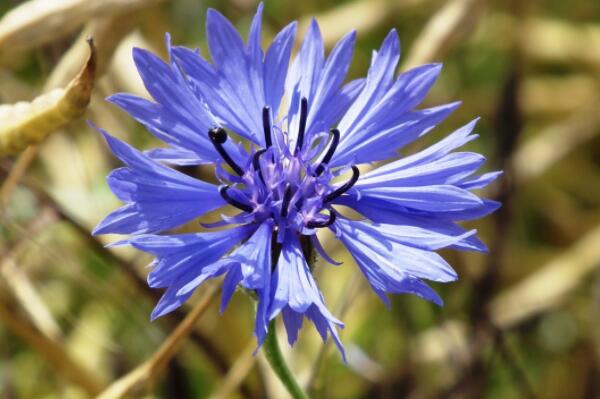
When is cornflower sown and when does it bloom?
1. Cornflower likes full sunlight, a cool climate, and avoids summer heat; it prefers fertile, loose soil. Because it has a taproot, direct sowing is preferable. For autumn sowing to bloom earlier, it can overwinter in a cold frame and bloom by late spring. Because cornflower does not tolerate transplanting, it must be moved with a soil ball when transplanted, otherwise it is slow to recover. After planting and establishment, apply diluted decomposed human manure urine at 5 times water once every 10 days or half a month, and stop fertilizing in March of the following year to wait for blooming.
2. It has strong cold resistance and can be planted in the open ground in East China; in North China it needs covering to overwinter; it likes fertile and loose soil; it likes full sunlight; it can self-sow; it has strong adaptability and is easy to cultivate. When grown for cut flowers, greenhouses are usually used to force blooming: sow in August, transplant in September, and flowers can be produced in February of the next year. In warm areas south of the Pass, sowing is generally done from August to September, overwintered with open-ground covering, transplanted in early spring of the second year, and blooms in early summer. In Northeast China, sow in spring in a greenhouse. Because the cornflower's root is a taproot with very few lateral roots, transplanting must be done with soil when the seedlings are small; once the seedlings are large, they are not easy to survive, so spring direct sowing is often used. Cornflower can also reproduce by self-sowing; in addition, cornflower likes dense planting, otherwise it actually grows poorly.
3. Cornflower is an annual or biennial herbaceous plant, up to 70 cm tall, upright, branched, with gray-white stems and branches, basal leaves, and the top arranged in corymbose or paniculate inflorescences. The involucre is elliptical, with disk flowers, blue, white, red or purple; the achene is elliptical; the flowering and fruiting period is from February to August.
What are the planting methods for cornflower?
1. Seedling raising: choose loose, fertile soil for the bed, cover with about 0.2 cm of soil. Cultivation: transplant when the seedlings have grown 6-7 true leaves; for pot cultivation, plant one per 13-17 cm pot. After the seedlings are transplanted and established, pinch once to encourage more branching and more blooms; conversely, if there is too much branching, some lateral buds should be removed when necessary to obtain larger flowers. Because it has a taproot, direct sowing is preferable; autumn sowing with open-ground covering for overwintering blooms in early summer; if overwintered in a cold frame, it can bloom in late spring; spring sowing should be done as early as possible. It blooms in June.
2. Cultivation site: because cornflower originated in European fields, it is somewhat cold-resistant and likes cool places with ample sunlight.
3. Soil: it prefers loose, fertile, well-drained sandy loam. The cultivation soil should be made as well-drained and well-aerated as possible; if the soil is rather clayey, mix in 30-40% tree fern fiber or perlite to improve it.
4. Watering: in principle, watering once a day is enough, but in drier summer weather, water once in the morning and once in the evening to keep the potting soil moist and lower the pot temperature, but avoid waterlogging.
5. Fertilizing: cornflower likes plenty of fertilizer; during the growing period, apply a diluted three-element solution once a month. If the leaves are too luxuriant, reduce the proportion of nitrogen fertilizer; before blooming, apply more phosphorus and potassium fertilizer to obtain larger flowers with beautiful colors.
6. Blooming period management: cornflower naturally sends out side branches; more side branches mean smaller flowers, so when necessary some lateral buds can be removed, leaving only smaller branches, to obtain larger flowers. Cornflower is a long-day plant; in winter the daylight hours are shorter, and if a plant light is used at night for supplementary lighting, blooming can be advanced.