When is the best time to take cuttings from the deciduous mulberry tree? A detailed guide to the cutting method
The mulberry tree is a deciduous tree commonly found in northeast and southwest China. It is widely cultivated because its leaves can feed silkworms and its roots and bark can be used medicinally. Generally, mulberry trees are grown from cuttings, so when is the best time to take mulberry cuttings? How do you take them?
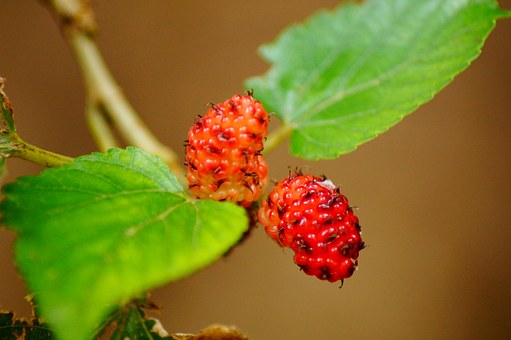
Cutting time:
Mulberry trees can be propagated by cuttings from June to September in summer, usually in two batches.
Cutting techniques:
1. Choose semi-hardwood green branches of the mulberry tree
Professionally, this is called the green branch cutting technique for mulberry trees. The green branch must be semi-hardwood. The tender tip section of the branch cannot be used because it is hollow inside, and the fully woody section at the base also cannot be used, as it affects the survival rate. Remember, only semi-hardwood is the most suitable.
2. Pruning
Cut the mulberry branch to about 15 cm, leaving 1-2 leaves at the top.
3. Dip in rooting hormone
Place the trimmed mulberry branches neatly into a container and soak the base in rooting hormone. There are many types of rooting hormone available now; highly effective ones only need a few minutes. According to the instructions, mix the correct concentration and follow the specified procedure.
4. Cutting
Cuttings need to be done in a spring-autumn greenhouse or a winter-warm greenhouse, or you can build a small shed yourself. Inside the shed, about 20 cm of sandy soil should be laid on the ground soil. Cover the top with a shade net. Before cutting, the sandy soil needs to be disinfected, and carbendazim diluted to the proper concentration can be sprayed on it.
When cutting, be careful not to push too hard when inserting into the sandy soil, to prevent wear and wounds on the base of the branch that could affect root formation.
5. Regular misting, disinfection and ventilation
Maintain the temperature and humidity inside the shed, and mist regularly. Generally, disinfect about every three days to prevent root rot. The standard for humidity, judged by eye, is simply not letting the top leaves dry out; keep the leaves moist. Spray in multiple batches and control the amount of water.
Generally, following these steps, roots can be seen after 15 days, and the plants are basically stable at around 40 days, at which point they can be moved to a shed for planting as appropriate.
The green branch cutting technique for mulberry trees is relatively more complicated than grafting and slightly more costly. Therefore, in practice, farmers prefer to graft in spring and summer, which is faster and more economical.