How much does a Salvia miltiorrhiza seedling cost? Detailed guide to artificial cultivation methods
Salvia miltiorrhiza, also known as red root, Dahongpao, and blood ginseng root, is a relatively common perennial herbaceous plant in China. Because of its effects such as promoting blood circulation and removing blood stasis, and clearing the heart and relieving restlessness, it is widely used as a medicinal plant, and it is currently cultivated in many regions. So how much does a Salvia miltiorrhiza seedling cost? Can it be artificially cultivated? How is it planted?
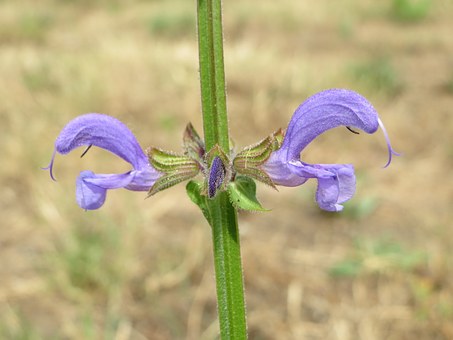
Latest prices for Salvia miltiorrhiza seedlings:
Salvia miltiorrhiza seedlings generally cost about 0.07 yuan each, but prices vary by region, so you should ask locally for the price.
Cultivation techniques:
1. Site selection and land preparation
For the seedling bed, choose a plot with relatively high terrain, loose soil, and convenient irrigation. Plow before sowing, apply decomposed barnyard manure or compost as base fertilizer, break the soil up finely and level it, and make raised beds for sowing. For the planting site, choose a plot with deep, loose, fertile soil, relatively high terrain, and good drainage. For mountain land, choose a sunny low hillside, and the slope should not be too steep. Salvia miltiorrhiza has deep roots, penetrating about 33 cm or more into the soil. Therefore, after the previous crop is harvested, plow the soil more than 35 cm deep. While preparing the land, apply 2500-3000 kg of decomposed barnyard manure or compost per mu, add 50 kg of superphosphate, and turn it into the soil as base fertilizer. Before planting, plow once more, break the soil up finely and level it, make raised beds 1.3 m wide, and open deep drainage ditches around them to facilitate drainage.
2. Transplanting
After spring sowing, the seedlings can be transplanted after about 75 days of cultivation. They can be planted in spring or autumn. Spring planting is done in mid-May, and autumn planting in late October. It is better to plant early than late; early transplanting leads to early rooting and earlier greening the following year. When planting, dig holes on the bed surface at a row spacing of 33×23 cm. The depth of the holes depends on the root length. Apply an appropriate amount of manure at the bottom of the holes as base fertilizer, mix it evenly with the soil in the holes, and then plant 1-2 seedlings propagated from seeds per hole. The planting depth should be based on the original natural growth depth of the seedlings, with the heart buds slightly exposed. After planting, water thoroughly to settle the roots. For cuttings, plant 1 per hole using the same method and planting density.
3. Field management
When filling gaps, it is better to do it early than late so that the new plants catch up as quickly as possible with the surviving seedlings and achieve uniform growth. Cultivation and weeding need to be carried out 3-4 times per year. Weeding can be done by manual hoeing or pulling, or mechanical weeding, but chemical weeding must not be used. The flowering period of Salvia miltiorrhiza is from May to June. If seeds are not being collected, the flower spikes should be removed as early as possible. Salvia miltiorrhiza is a plant that likes potassium and organic fertilizer. In cultivation, in addition to applying sufficient basal fertilizer, apply cake fertilizer or high-quality decomposed farmyard manure once after sprouting in spring (late April) of the second and third years. In addition, carry out foliar topdressing in early March and July each year, spraying leaf nutrient solution and humic acid on the leaves. The application rate is 150 g per mu. Foliar spraying for topdressing should be carried out before 10 a.m. and after 4 p.m. The spray should be even, and both the upper and lower surfaces of the leaves should be sprayed.
4. Pest and disease control
(1) Diseases
Root rot: It is prone to occur in hot and rainy seasons. Affected plants have blackened roots and withered aboveground parts. Control methods: avoid continuous cropping in severely affected areas; choose plots with dry terrain and good drainage for planting; pay attention to drainage during the rainy season; during the disease period, irrigate with 70% carbendazim 1000-fold solution.
(2) Insect pests
Aphids: Adults and nymphs suck sap from stems and leaves, and in severe cases cause stems and leaves to turn yellow. Control methods: clear the garden in winter, and bury or burn dead plants and fallen leaves deeply; during the occurrence period, spray 50% dimethoate 1000-2000-fold solution or 40% dimethoate emulsifiable concentrate 1000-2000-fold solution, once every 7-10 days, for several consecutive times.
Silver Y moth: Larvae bite and eat leaves, occurring in summer and autumn. Control methods: during the young larval stage, spray 90% trichlorfon technical material 800-fold solution or 50% phosphamidon emulsifiable concentrate 1500-fold solution, once every 7 days.
Cotton bollworm: Larvae damage buds, flowers, and fruits, affecting seed yield. Control methods: starting from the bud stage, spray 50% phosphamidon emulsifiable concentrate 1500-fold solution or 25% chlordimeform aqueous solution 500-fold solution for control.
White grubs: Larvae cause damage by biting off seedlings or gnawing roots, causing missing plants or hollow roots, and the damage is severe. Control methods: manure should be fully decomposed, preferably high-temperature compost; use light traps to kill adults; mix seeds with 75% phoxim emulsifiable concentrate at 0.1% of seed weight; during the field occurrence period, drench with 90% trichlorfon 1000-fold solution or 75% phoxim emulsifiable concentrate 700-fold solution; use 25 g of chlordane emulsifiable concentrate, mix with 5 kg of roasted wheat bran, add an appropriate amount of water to make a poisonous bait, and scatter it in the field in the evening to trap and kill them.
Harvesting and processing
Salvia miltiorrhiza can be collected for medicinal use in the second year of growth. The harvest time is when the aboveground parts wither in mid-December or before sprouting in the following spring. First remove the aboveground stems and leaves, then open a deep ditch at one end of the bed to expose the roots. Dig out complete root strips forward along the bed, preventing them from being broken. After digging them out, cut off the remaining stems. If strip Salvia miltiorrhiza is desired, cut off root strips with a diameter of more than 0.8 cm at the mother root, arrange them neatly along the strip direction, sun-dry them, turn them occasionally, and when they are 70-80% dry, tie them into small bundles, then sun-dry them until fully dry and pack them into boxes to make “strip Salvia miltiorrhiza.” If not sorted by thickness, after sun-drying and removing impurities, packing them into gunny sacks is called general Salvia miltiorrhiza.