Lantana Camara Flowering Time, Seed Price, and Home Cultivation Methods
Lantana camara is also known as mountain verbena, ruyi grass, five-color flower, five-thunder pellet, five-color hydrangea, color-changing grass, and large red hydrangea. It is native to South America and the West Indies, and is now widely cultivated around the world. So when does Lantana camara generally bloom? How much do the seeds cost per jin? Can it be kept at home? How do you plant and care for it? According to Shuyang Seed Industry Company, the price of Lantana camara seeds is about 50-80 yuan/jin, and the sowing rate per mu is 5-6 jin.
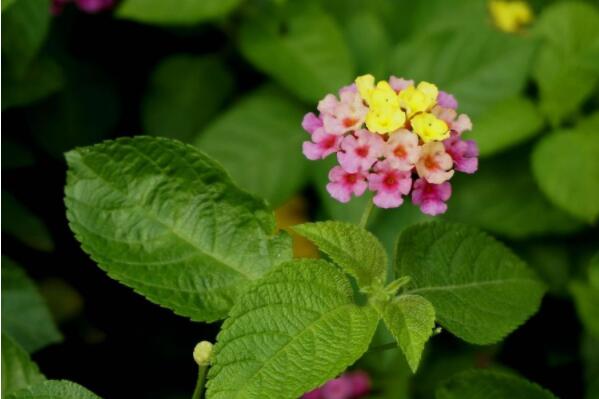
When does Lantana camara generally bloom?
The flowering period of Lantana camara is generally from mid-to-late April to around mid-February of the following year. However, due to the influence of climate and temperature, it can be seen blooming almost all year round, so it can be called a plant that blooms constantly. A single cluster of inflorescences often changes among multiple colors, so it is also commonly known as five-color plum or five-color flower. At the same time, the branches and leaves contain a special pungent odor, so Lantana camara also has aliases such as stink grass and stink golden phoenix. In Taiwan, China, it was introduced by the Dutch around 1645. Because of its strong reproductive capacity, it is currently a common foreign species visible in the wild in the plains of Taiwan, China.
Can Lantana camara be kept at home?
Lantana camara likes light and prefers a warm, humid climate. It has strong adaptability and tolerates drought and poor soil, but not cold, and grows better in loose, fertile, well-drained sandy loam. It likes warm, humid, sunny places. It tolerates drought, slightly tolerates shade, and does not tolerate cold. In the south, it is basically cultivated in the open ground, while in the north it can be kept as a potted plant for ornamental display. The branches, leaves, and flowers of Lantana camara emit an odor that mosquitoes and flies are sensitive to, and it has a strong effect of repelling mosquitoes and flies, while the odor causes no harm to the human body. The flowers and leaves are toxic, and accidental ingestion can cause diarrhea and fever. But as long as we understand their living habits and take certain measures, they will not harm health and will only be beneficial to the human body.
How do you plant and care for Lantana camara?
Planting:
1. What kind of environment is suitable for Lantana camara
The quality of the soil directly determines the quality of Lantana camara seedling growth. If the soil is very good and the growing environment is very good, then management and care will be much more convenient. Lantana camara is not strict about soil requirements; it can be sandy soil, yellow soil, or clay, but soil with a high sand content has ordinary seedling emergence. Lantana camara is afraid of waterlogging, so it needs higher terrain that drains easily. When summer comes and the amount of water increases, water must be able to drain away in time, otherwise it is very easy to have large-scale seedling death. The main point of the terrain is to help drain accumulated water. Ordinary soil is fine, and there should be sufficient light.
2. Land preparation
1. Plowing: Lantana camara responds extremely quickly to nutrients. If the soil has sufficient nutrients, the flowers will be brightly colored and the plants robust. However, the soil in some landscaping sites is basically ordinary in nutrients, so if you want bright flowers, you must spread sufficient farmyard manure before planting, applying 3,000-8,000 kg of cow dung and chicken manure per 660 sq m. After spreading the fertilizer, plow once and harrow once. Only in this way will the soil and fertilizer be mixed evenly together, with no large clods of soil, making planting easier and improving the germination rate.
2. Making beds: In order to facilitate necessary maintenance and management such as irrigation, weed removal, and fertilizer application during the 1-year growth period of Lantana camara seedlings, Changjing Landscape suggests that everyone make the land into fixed-standard beds 1.6 m wide and 10-20 m long, with the details determined by the plot.
3. How to plant Lantana camara
The seeds of Lantana camara are generally medium in size and have a strong germination rate. It is recommended to plant them relatively shallowly, with the soil cover no more than 4 cm deep. Broadcasting is generally used for planting. Choose windless conditions, mix the Lantana camara seeds into wet sand, and evenly scatter them onto the soil. After sowing, you can cover them with soil by hand raking or machine raking. After covering with fine soil, water once, and after about 7-12 days the germination rate can be improved.
4. How to care for Lantana camara
The workload of management and care during the growth period of Lantana camara is relatively small. It has no pests and strong growth. The key matters are mostly concentrated in the flowering period. Before flowering, apply 50 kg of chemical fertilizer per 660 sq m. Fertilizing before flowering is to make the flowering period longer, the number of flowers greater, and the flower color more vivid. Do not fertilize during the full flowering period. During the blooming period of Lantana camara, a lot of water is needed. At this time, combine weather conditions to determine the frequency and timing of watering.
Care:
1. Spring
For potted Lantana camara, before bringing them out in spring, they should be repotted, sufficient base fertilizer should be applied, and the branches should be properly pruned. If they are small seedlings, pinch the tops to promote side branches. For formed plants, pay attention to thinning out weak branches and diseased branches, and properly shorten them to maintain a good tree shape and promote more new shoots.
For adult plants that are not being kept for seeds after flowering and fruiting, remove the spent flowers in spring to help the leaf axils below produce new inflorescences. Cut off dead and weak branches, prune and shape them, keep the new branches looking attractive, and make shaping easier when new branches sprout in spring.
2. Summer
Lantana camara is native to tropical America, and there is also a small amount growing wild in southern China. It likes a warm, humid, and sunny environment and does not tolerate cold. A well-made bonsai can be kept outdoors in a sunny place during the growing season from spring to autumn. Even in midsummer, shading is not necessary, but good ventilation is required. If light is insufficient, the plant will grow leggy, the stems and branches will be thin and long, and flowering will be sparse, seriously affecting ornamental value.
During the growing period, keep the pot soil moist, avoid excessive dryness, and pay attention to spraying water on the leaves to increase air humidity. Apply a thin fertilizer mainly based on phosphorus and potassium about once every 15 days to provide sufficient nutrients so the plant blooms more.
3. Autumn
Autumn is when Lantana camara blooms most abundantly. It is necessary to maintain sufficient sunlight so the flower colors can be rich and varied, bright and vivid, and the leaves can also carry out sufficient photosynthesis to complement the bright flowers.
During the flowering period, pay attention to keeping the pot soil moist and avoid dryness. If dryness occurs, the flowers are prone to wilting, and new flower buds are not easy to open, affecting flower viewing.
4. Winter
In winter, move it indoors to a sunny place. If a room temperature above 15°C can be maintained, the plant can grow and bloom normally, and it should be watered, fertilized, and pruned appropriately. If such a high temperature cannot be maintained, reduce watering, stop fertilizing, and let the plant go dormant. It can overwinter safely at 8°C or above.