How much is a jin of Boston ivy seeds, and its sowing time and planting method
We are no strangers to the Boston ivy plant. It often climbs on walls and rocks, and its rhizome can be used as medicine to break blood stasis and reduce swelling and toxins. So, how much is a jin of Boston ivy seeds on the market? When should they be sown? How should they be planted to grow well?
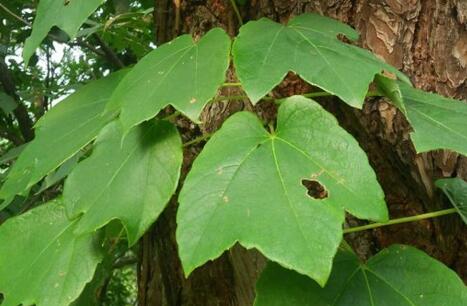
I. How much is a jin of Boston ivy seeds on the market?
It is understood that Boston ivy seeds on the market cost about 60-120 yuan per jin.
II. When should Boston ivy be sown?
In September, when the berries ripen and turn purplish blue, pick them immediately, clean them, dry them in the shade, disinfect the surface with a 0.05% carbendazim solution, drain them, and then store them in moist sand stratification. By early March of the following year, soak the seeds in 45°C warm water for two days, changing the water twice a day, then mix them evenly with moist sand at a seed-to-sand ratio of 2:1, place them in a sunny, wind-sheltered spot, cover with straw bags, and spray fine water frequently to keep them moist. After about 20 days, when 20% of the seeds have sprouted white, they can be sown.
III. How should Boston ivy be planted to grow well?
1. Sowing method: Before sowing Boston ivy seeds, first break up and level the sowing bed, water it thoroughly, sow the seeds together with the sand on the bed surface at a sowing rate of 100 grams per sq m, cover with 1 cm of loose humus soil from under the forest, and set up a small arch shed covered with polyethylene plastic film.
2. Seedling management: After the Boston ivy cotyledons emerge, the film should be uncovered by day and covered at night on sunny days, and kept covered all day on cloudy and rainy days, to raise the soil temperature, promote uniform emergence, and prevent damage from scarab beetles. In addition, water frequently to keep the soil moist.
3. Transplanting management: After the Boston ivy has three true leaves, choose a cloudy day or after 3 p.m. and transplant at a density of 1×1 chi. Immediately after planting, water once with diluted manure water (1:8). During the plum rain season, water must never be allowed to accumulate for too long. After two months, the vines generally grow to more than 60 cm. At this point, the first pinching can be done to prevent the vines from tangling with each other and blocking light, and to promote thicker seedlings. Pinch once a month, combined with supplementary feeding. With the above measures, by the leaf-fall period, the average thickness of the seedling vines can reach more than 0.5 cm, and they can then be lifted from the nursery for planting.
4. Reasonable fertilization: During the growing period, Boston ivy can be top-dressed with liquid fertilizer 2-3 times, and weeds should be hoed and the soil loosened regularly to form a border, so that it is not overwhelmed by weeds and grows vigorously. It is afraid of waterlogging, so pay attention to preventing water accumulation in the soil. It tolerates pruning. During growth, the branches and vines around doors and windows can be pruned and tidied as appropriate to keep them neat, beautiful, and convenient.