How much does a Schisandra chinensis seedling cost per plant? A detailed guide to high-yield cultivation methods
Schisandra chinensis, also known as Xuanji, Huiji, Wumeizi, mountain pepper, Zhuangwei, Wuwei and Diaoliu, is a well-known Chinese medicinal herb that is widely cultivated for its functions of enhancing physical stamina and protecting the heart. So how much does a Schisandra chinensis seedling cost per plant? How should it be planted to achieve high yields?
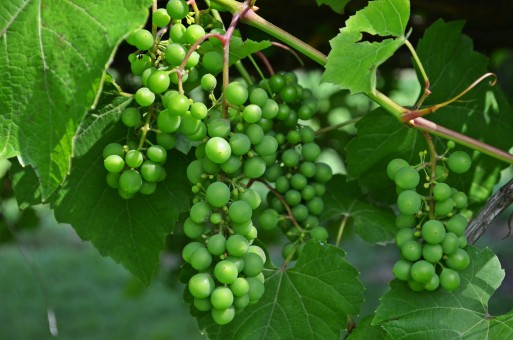
Schisandra chinensis seedling prices:
The market price of Schisandra chinensis seedlings ranges from 1 to 6 yuan per plant. Because seedling prices are often affected by the age of the seedling as well as the place of origin and quality, there will be a certain degree of variation.
Schisandra chinensis prices:
The price of Schisandra chinensis is about 60 to 70 yuan per jin, but prices vary considerably depending on place of origin, quality and other factors. Schisandra chinensis is a famous Chinese medicine, divided into northern Schisandra chinensis and southern Schisandra chinensis. Northern Schisandra chinensis is superior in quality to southern Schisandra chinensis. Its fruit contains schisandrin, vitamin C, resin, tannins and a small amount of sugars, and has effects such as astringing the lungs to stop cough, nourishing and astringing essence, and stopping diarrhea and sweating. It is mainly produced in Heilongjiang, Jilin, Liaoning, Inner Mongolia, Hebei, Shanxi, Ningxia, Gansu, Shandong and other places.
Cultivation techniques:
1. Planting out. There are two methods for planting out Schisandra chinensis: one is to use natural supports. That is, using trees as supports; tree species chosen as natural supports should preferably have smaller leaves and not overly vigorous growth. The second is to use artificial supports. With artificial supports, Schisandra chinensis seedlings can be planted at a spacing of 1 m between large rows, 60 cm between small rows and 50 cm between plants, with rows oriented north-south to facilitate ventilation and light penetration.
2. Comprehensive field management. Schisandra chinensis seedlings grow slowly in the seedling stage, so attention should be paid to weeding, loosening the soil and appropriate watering. After the second year, the supports can be used for branches to climb on, and attention should be paid to maintaining ventilation and light penetration to promote growth. In addition to applying sufficient base fertilizer at planting, topdressing must be carried out every spring; for topdressing, 1500 to 2500 kg of barnyard manure or compost and 15 to 20 kg of superphosphate can be applied per mu. To regulate plant nutrition and reduce unnecessary nutrient consumption, pruning is also needed. The method is as follows: the pruning season is each year after the plants enter dormancy in winter and before they sprout in spring. In addition to selecting and keeping 3 to 4 thick branches per plant for cultivation, all the rest are cut off; short branches as well as overly dense medium fruit branches and long fruit branches are cut off to increase ventilation and light penetration and raise the fruit yield.
3. Pest and disease control. Leaf blight and leaf-rolling insects are common pests and diseases of Schisandra chinensis. Leaf blight starts at the leaf tips and leaf margins and gradually spreads to the entire leaf surface, causing the leaves to wither, yellow and fall off; in severe cases the fruit clusters fall off, and there may even be a complete loss of harvest. Before or in the early stage of the disease, a 1:1:100 Bordeaux mixture can be sprayed, once every 7 to 10 days, for several consecutive sprays. Leaf-rolling insects cause damage as larvae, causing leaves to roll. For control, a 1500-fold dilution of 50% phoxim emulsion or a 1500-fold dilution of 50% phosphamidon emulsion can be sprayed. This can achieve good control results.