What is the purchase price of Agastache rugosa and how much is the seed per jin, and when should it be sown and harvested?
Agastache rugosa is also known as Hexian, Canggao, Shanhuixiang and so on. Its corolla is pale purple-blue, about 8mm long, and the mature nutlets are ovate-oblong. The flowering period is June to September, and the fruiting period is September to November. So what is the current purchase price of Agastache rugosa? How much is the seed per jin? When should it be sown and harvested? According to the Shuyang Seed Company, the price of Agastache rugosa seeds is about 50 yuan/kg, and the sowing rate per mu is 3-4 jin.
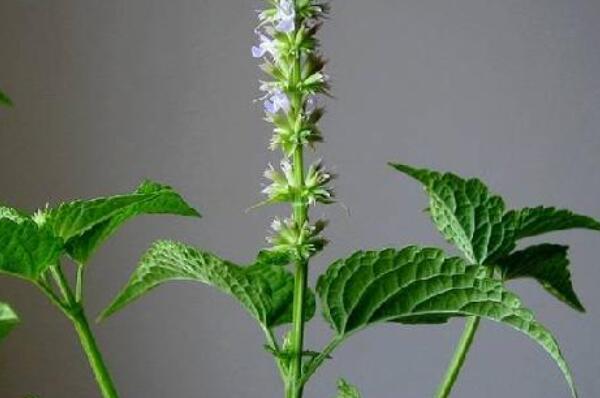
What is the current purchase price of Agastache rugosa?
1. Anguo market: The new-crop output of Guanghuoxiang (Patchouli) was relatively large this year, and the market trend declined somewhat in the earlier period. Recently, traders have been purchasing continuously, the movement of goods has become smoother, and the market trend has rebounded slightly. The current market price for ordinary Guanghuoxiang is between 8-9 yuan.
2. Bozhou market: Affected by the low price and driven by the influenza epidemic, the number of traders paying attention has increased, and the market trend continues to improve. At present, the price of Guanghuoxiang in the Bozhou market is around 9 yuan; the price of slices is 10-11 yuan.
3. The Guanghuoxiang market in Gaozhou City, Maoming City, Guangdong, continues to rise, with purchases from markets and pharmaceutical factories in Guangzhou, Jiangxi, Shanghai and other places, and goods are moving briskly. As of today, the selling price of cut-section ordinary Guanghuoxiang at the production area is 10 yuan, and whole ordinary goods are 8 yuan.
4. Yulin market: In recent years, production has been relatively large; at present, merchants have sufficient inventory, demand is average, and the market trend continues to run weakly. The current price of ordinary Guanghuoxiang is between 7-7.5 yuan, and cut goods are 7.8-8 yuan. Merchants are buying frequently and selling quickly.
When should Agastache rugosa be sown and harvested?
1. Sowing:
Spring sowing. Carry out in mid-to-late April. Along the bed, open shallow furrows at a row spacing of 25-30 cm, with a furrow depth of 1-1.5 cm, mix the seeds with fine sand and evenly scatter them into the furrows. Cover with 1 cm of soil, press lightly. If the soil is too dry, water thoroughly. The seeding rate per mu is 10 kg.
Autumn sowing. Carry out in September-October. After plowing, level and harrow finely. On the bed, open holes at a plant spacing of 30 cm, with a hole depth of 3-6 cm. Open large holes, and the bottom of the holes should be level. Use decomposed human and livestock manure water mixed with plant ash as base fertilizer, evenly insert the seeds into the holes, cover with 1 cm of soil, and press lightly.
Agastache rugosa is best sown in the spring and autumn rainy seasons. The seeds are photoblastic, and the suitable germination temperature is 18-24°C. It can be transplanted when it has 3-4 true leaves. Choose sandy loam soil, and the cultivation environment should be a place with sufficient sunlight and good drainage. The suitable growth temperature is 21-27°C during the day and 14-17°C at night. The flowering period is from spring to autumn, during which topdressing can be applied to supplement nutrients.
2. Harvest:
In June-July, when the plant's inflorescences have emerged but have not yet bloomed, cut down the whole plant and dry it in the sun. In the south, a second harvest is carried out in September-October. Generally, 667 sq m yields 300-500 kg. Choose a sunny day and cut down level with the ground, then transport it back and quickly dry it in the sun, dry it over a heated bed, or dry it in the shade for later use. The yield per hectare is 4500-7500 kg. Agastache rugosa is best when the stems and branches are green in color, dry, with many leaves and a rich fragrance.
Appendix: Cultivation methods of Agastache rugosa
1. Agastache rugosa prefers a humid climate and has no strict requirements for soil. Choose loose, fertile, well-drained sandy loam soil, on flat land or gentle slopes, but avoid high dry land and waterlogged low-lying plots. It should not be planted in places where the soil is sticky and compacted, drainage is poor, or where it is shaded. After selecting the land, plow deeply 20-25 cm in autumn, break up clods, remove debris, apply 3000 kg of farmyard manure per hectare as base fertilizer, turn it into the soil, level and harrow finely, make beds 1.2-1.4 m wide, and open drainage ditches around them to facilitate drainage. If it is sloping land, make beds along the slope or do not make beds.
2. Propagate by seeds or by root division. Seed propagation is mostly used, and it can be sown in spring or autumn. Spring sowing is mostly used in northern regions, and autumn sowing in southern regions. There are seedling raising and transplanting, and direct sowing; most regions use direct sowing.
3. After finely preparing the seedling bed, sow. Before sowing, apply 22500-30000 kg of decomposed human and livestock manure water per hectare, moisten the bed surface and use it as base fertilizer. Then mix the seeds with fine sand or plant ash, evenly scatter them on the bed surface, gently pat the bed surface with a bamboo broom so that the seeds are in close contact with the bed surface, and finally cover the bed surface with grass to keep warm and moist. After the seeds germinate, remove the covering grass, and after emergence carry out loosening the soil, weeding and topdressing. Transplant when the seedlings are 12-15 cm high.
4. Thin seedlings when the temperature is 13-18°C. For drilling, keep a plant spacing of 10-11 cm, with the two rows staggered when final thinning; for hole sowing, keep 3-4 strong seedlings per hole. If missing plants are found after transplanting has survived, fill in the gaps on cloudy days, and after planting pour 1 time of dilute human and livestock manure water to help survival.
5. Weeding and fertilizing, carried out 3-4 times each year. The first time is when the seedlings are 3-5 cm high, loosen the soil and pull out weeds. After loosening the soil, apply 15000-22500 kg of dilute human and livestock manure water per hectare; the second time is when the seedlings are 7-10 cm high, after the first thinning, combined with intertillage and weeding, apply 22500 kg of human and livestock manure water per hectare; the third time is when the seedlings are 15-20 cm high, after intertillage and weeding, apply 22500-30000 kg of human and livestock manure water per hectare; the fourth time is when the seedlings are 25-30 cm high, after intertillage and weeding, apply 30000 kg of human and livestock manure water per hectare. After the rows close, no more topdressing is carried out. After each harvest, intertillage, weeding and topdressing should be carried out 1 time. When the seedlings are 25-30 cm high, after the second harvest, earth up to protect the old root crown for overwintering. In the rainy season, dredge ditches and drain water in time to prevent water accumulation from causing root rot in the plants. In the dry season, water in time to resist drought and protect the seedlings.