How to Care for Japanese Sacred Lily (Rohdea japonica)? Foliage Potted Plant Growing Methods, Precautions and Toxicity
Rohdea japonica is also known by the nicknames Iron Carrying Pole, Throat-Opening Sword, Winter-Non-Withering Grass and so on. It is a traditional ornamental flower of China and Japan, with leaves that stay green all year round, hence the name "Ten-Thousand-Year Green" (Rohdea). So how do you care for Rohdea japonica? What are the growing methods and precautions for potted Rohdea japonica?
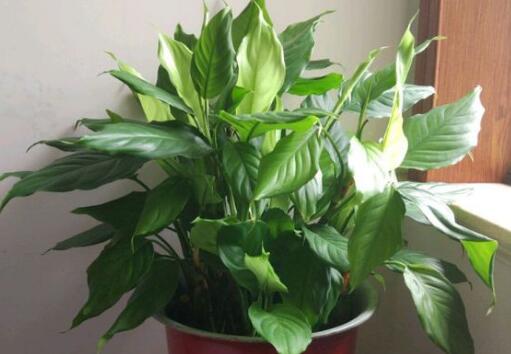
The genus Rohdea is a genus under the family Liliaceae in the phylum Angiospermae. The species in this genus are mostly perennial herbaceous plants. The main features of this genus are: the roots have many fibrous roots densely covered with white woolly hairs; the leaves are basal and arranged in two rows, overlapping and clustering together; the flowers form a fleshy spike inflorescence that emerges from the leaf axils; the corolla is usually white and salver-shaped or funnel-shaped; the fruit is a spherical berry containing a single seed. This genus has only 1 species, distributed in China and Japan.
Rohdea japonica is often planted together with pine and grass lily turf, expressing the meaning of auspiciousness and everlasting green. The people of our country are especially fond of Rohdea japonica, which carries the meaning of “good fortune and wishes come true”. In traditional Chinese decoration, patterns combining Rohdea japonica and glossy ganoderma often appear, symbolizing that everything goes smoothly and according to one's wishes, that is, all wishes come true. Below is a detailed introduction to how to care for Rohdea japonica:
Types of Rohdea japonica
Rohdea japonica is a common foliage plant. The six commonly cultivated varieties in homes are Dieffenbachia (spotted-leaf Rohdea), Guangdong Rohdea (Aglaonema), Ornithogalum caudatum (tiger-eye Rohdea), Chinese Rohdea, Purple-backed Rohdea (Tradescantia spathacea), and Zebra-leaf Rohdea.
Growing Methods and Precautions for Rohdea japonica
1. Soil Selection for Growing Rohdea japonica
The growing medium for Rohdea japonica can be made by mixing 2 parts humus soil, 2 parts forest leaf mold, 2 parts sandy garden soil, 2 parts furnace cinder ash, and 2 parts decomposed barnyard manure. These five media are best prepared in advance, exposed to strong sunlight in summer, and finally finely crushed and sieved before being put into pots for later use. When planting, a layer of base fertilizer should also be placed at the bottom of the pot, such as fermented and decomposed dried poultry manure mixed with a small amount of growing soil.
2. Fertilization Methods for Growing Rohdea japonica
Rohdea japonica has thick, fleshy leaves that stay emerald green all year round, and it has a high fertilizer demand. During the growing season, it must be given an organic liquid fertilizer made from decomposed rapeseed cake, meat bones and the like once every half month. After being brought outdoors for normal cultivation each spring, it can be given a follow-up application at a ratio of 1:6 or 1:8 once every 7—10 days. Before flower bud differentiation, an appropriate amount of 0.5% ammonium sulfate or superphosphate can be added to the topdressing, which is beneficial for bud formation and flowering. Stop fertilizing before flowering; after the fruit sets, a large amount of nutrients is needed, so apply thin fertilizer frequently to make the fruit color bright and the fruit plump.
3. Watering Methods for Growing Rohdea japonica
Rohdea japonica is a herbaceous flower with fleshy roots. It likes moisture but is afraid of water accumulating in the pot, so it should not be watered too much, otherwise the roots are prone to rot. In spring, watering should keep the pot soil moist; generally water once every 2—3 days. In summer, depending on its growth, generally water once every evening, and sprinkler irrigation is preferable, as this makes the soil looser and easier for the roots to absorb. In autumn, water about once every 3 days, and the soil must be kept moist to promote the growth and development of the fruit. No matter where Rohdea japonica is placed for cultivation, it is best to place a water tray under the pot so that water continuously seeps into the soil through the small holes, keeping the pot soil often in a moist state. However, watering should be controlled in winter; for overwintering in a greenhouse, it can be watered once every 10 days. The lower the room temperature, the less watering needed, otherwise the roots will rot and the leaves will turn yellow in winter as well. At this time, air humidity should be maintained, and the leaves should often be rinsed with warm water (25—30℃) to keep them fresh, delicate, clear and emerald green.
4. Temperature Requirements for Growing Rohdea japonica
Rohdea japonica has fairly strong adaptability and is suitable for cultivation in both northern and southern regions. Its most suitable growth temperature is 20—30℃, and in winter it can overwinter safely at above 7℃.
5. Light Requirements for Growing Rohdea japonica
Rohdea japonica has fairly strong shade tolerance and likes to grow in a moist, semi-shaded environment or under scattered light. If cultivated outdoors on a large scale, a shade shed should be set up in summer. For general home ornamental cultivation, it can be placed under tall sun-loving woody flowers to avoid direct strong sunlight.
6. Precautions for Growing Rohdea japonica
(1) Rohdea japonica is a flower that likes warmth and humidity, tolerates shade, and fears cold. When placed outdoors for cultivation in summer, a shade shed is needed. Under strong sunlight, the leaves easily turn greenish-white, and the leaf edges easily become scorched. The most suitable growth temperature for Rohdea japonica is 20—30℃. In winter, the indoor temperature is best kept between 12—15℃, and must not fall below 7℃. Below 7℃, the leaves wither and yellow and drop off, and in severe cases the whole plant dies.
(2) During the growing season, Rohdea japonica prefers moisture rather than dryness. When the temperature is above 25℃, water should often be sprayed on the leaf surface; after autumn, watering should be controlled, preferably following the principle of watering when dry and stopping when wet; in winter, keep it appropriately dry.
(3) Rohdea japonica has strong fertilizer tolerance, so fertilization should be moderate. During the growing season, apply 20% rapeseed cake fertilizer water or 1% compound fertilizer solution once every 15-20 days; stop fertilizing in winter. Shade it at noon in spring and autumn and throughout summer; when grown indoors, simply place it in a bright spot. But in winter it needs sufficient light.
7. Propagation Methods for Growing Rohdea japonica
Rohdea japonica can be propagated by division and by sowing.
(1) Division propagation: Rohdea japonica grows luxuriantly with a well-developed root system and consumes a large amount of nutrients every year. Therefore, the pot and soil should be changed every year, in February—March. Rohdea japonica has strong sprouting ability, and tiller buds easily form at the base; these newly sprouted tiller buds can be used for division propagation. Division can be carried out at the same time as changing the pot and soil. Take the clustered mother plant out of the pot with the soil ball, shake off the attached soil, divide it along its natural gaps, with 2—3 plants per clump, smear the cut with plant ash, and then plant them separately in Yixing purple clay pots of suitable size. Rohdea japonica has strong regeneration ability and grows quickly after division, and can be divided again after 3—4 years.
(2) Seed propagation: The seeds of Rohdea japonica generally mature in December. In the Yangtze River basin and areas to its north, families do not have heating equipment, so the seeds cannot be sown as soon as they are collected. The seeds can be stored until March—April of the following year, when the average temperature is around 22℃, for sowing. Depending on the number of seeds, an earthenware flower pot can generally be used instead of a seedbed. The medium is half forest leaf mold and half fine river sand, fully mixed, sterilized by high temperature, and then put into the pot. When sowing, level and press the medium, then evenly sow the seeds in the seedbed, and water thoroughly by the soaking-pot method. Cover the rim of the pot with glass, then place the seedbed in a warm, ventilated place. The main management work after sowing is to keep the medium moist. The seeds begin to germinate after about 15—20 days; at this time, remove the glass, strengthen ventilation and provide weak sunlight. When the seedlings grow to 3—5 cm, they can be divided into pots at 3—4 plants per pot. In autumn, plant them permanently in Yixing purple clay pots with growing soil and base fertilizer. Newly potted Rohdea japonica needs careful maintenance. Generally, after more than two years of cultivation and management, it can bloom and set fruit and be placed indoors for viewing.
8. Pest and Disease Control for Rohdea japonica
Rohdea japonica is often prone to leaf spot disease, anthracnose, brown soft scale and other pests and diseases. If disease occurs, attention should be paid to frequent ventilation and light transmission, avoid water accumulation, promptly prune diseased and disabled branches and leaves, and spray an appropriate amount of medicine for sterilization and disinfection, which can ensure normal plant growth; if pests occur, promptly spray the corresponding pesticide to kill them. If there are few pests with little impact, simply scrape the insects off the plant with a bamboo strip.
Causes of Yellowing Leaves in Rohdea japonica and Rescue Methods
1. Normal aging
If cared for properly, yellowing leaves in Rohdea japonica are normal metabolism. As the plant grows, the lower leaves begin to age and turn yellow.
Rescue method: There is no need to worry about yellowing leaves caused by normal aging in Rohdea japonica, but the yellow leaves, residual leaves and some old leaves at the lower part of the plant should be pruned in time.
2. Overwatering
Rohdea japonica has a fleshy root system and is most afraid of water accumulation and waterlogging. Therefore, it should not be watered too much, otherwise it easily causes root rot, which in turn leads to yellowing leaves in Rohdea japonica.
Rescue method: Usually just water an appropriate amount. Do not water until the pot soil is dry; it is better to keep it on the dry side than too wet. Apart from keeping the pot soil moist in summer, watering in spring and autumn should not be too frequent. However, air humidity must be maintained, because if the air is dry, undesirable phenomena such as yellowing leaves in Rohdea japonica also easily occur.
3. Excessive sunlight
Rohdea japonica likes a semi-shaded environment and avoids direct strong light in summer. Direct strong light easily causes the leaf edges of Rohdea japonica to scorch or even wither and yellow. Too strong light easily causes sunscald, while too weak light makes it difficult to bloom and set fruit, affecting the ornamental effect.
Rescue method: In spring, summer and autumn, Rohdea japonica should be shaded by more than 60%, and in winter by 40%.
4. Temperature too low
The suitable growth temperature is 15-18℃, and the lowest temperature must not be below 5℃, otherwise freezing damage easily occurs, causing the leaves to turn yellow.
Rescue method: For winter dormancy, Rohdea japonica should be moved into a greenhouse and placed in a sunny place, with the temperature kept above 10℃, and it will sprout new leaves again the following year.
5. Improper fertilization
Overfertilization is another common cause of yellowing leaves in Rohdea japonica, mainly because it causes fertilizer damage and harms the root system of Rohdea japonica.
Rescue method: During the growing season of Rohdea japonica, apply liquid fertilizer once every 10-15 days, and stop fertilizing in winter.
6. Leaves too dirty
Usually, attention should be paid to keeping the leaves of Rohdea japonica clean and tidy. If too much dust accumulates on the leaves and affects photosynthesis, it can also cause the leaves of Rohdea japonica to turn yellow.
Rescue method: At regular intervals, wipe the leaves with a clean damp cloth to keep them clean.
Is Rohdea japonica toxic?
The sap in the roots of Rohdea japonica is toxic. The toxicity of the Dieffenbachia genus and the Aglaonema genus among Rohdea plants is different. Rohdea japonica must not be eaten. If it is accidentally swallowed, symptoms such as dizziness, headache, blurred vision and vomiting will appear after about one hour. In more severe cases, there may be numbness of the limbs, pale skin and decreased blood pressure and so on. If the above symptoms appear, please seek medical attention as soon as possible.
Although Rohdea japonica is slightly toxic, as long as you do not come into contact with its sap there is no problem at all, and it is also a plant of considerable value. If you place Rohdea japonica at home, it can absorb harmful gases such as formaldehyde and nicotine in the home and give you back a healthy living room. Placing Rohdea japonica in the living room can also decorate your living room, making people feel refreshed, and the oxygen it releases is good for the health of your family!