How to Eat, Benefits and Cultivation Methods of Pink Guava in the Myrtaceae Family
Pink guava, also known as pearl guava, belongs to the Myrtaceae family and originated in tropical America. Commercial cultivation is mainly distributed in Xinxing, Datong, Poxin, Wupo, Nanlv, Nankun and other places. So how do you eat pink guava of the Myrtaceae family? What are its benefits and effects? How do you cultivate it? Pink guava is a tropical fruit and can be grown in southern, central and parts of northern Guangxi. The simplest way to eat pink guava is to eat it whole. Eating it whole does not mean swallowing it in one bite, but rather biting into it piece by piece like a pear, and pink guava can also be eaten as a vegetable. Pink guava can beautify the skin and prevent cardiovascular disease; these are its two basic benefits. From Hongxing Fruit Market, we learned that pink guava costs about 20 yuan per jin; prices vary depending on the fruit's quality, variety and market. If you want to learn more specifically about pink guava, please continue reading below!
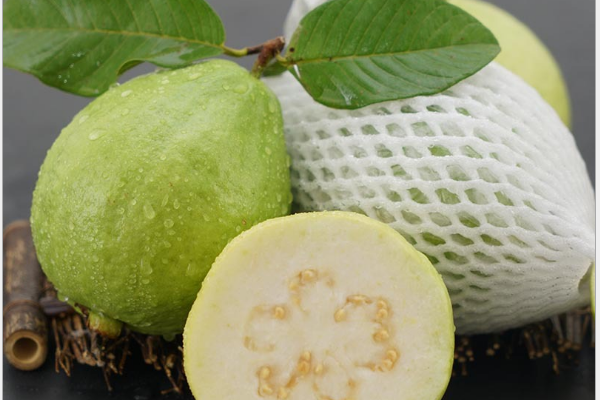
How do you eat pink guava?
1. Eating it whole:
The simplest way to eat pink guava is to eat it whole. Eating it whole does not mean swallowing it in one bite, but rather biting into it piece by piece like a pear, and pink guava can also be eaten as a vegetable. Because pink guava contains a large amount of antioxidants, eating it regularly can effectively delay skin aging and whiten the skin.
2. Eating it in small pieces:
The most ladylike way to eat pink guava is in small pieces. Cut the pink guava into slices or grains, or irregular small pieces, and eat one piece at a time with a toothpick. This way of eating is not only more elegant but also has a crisper, more fragrant and delicious taste. Another method is to add some fine salt, salted plums, salted plum powder, etc., according to individual taste preferences; if placed in the refrigerator, the flavor is even better.
3. Drinking it as juice:
This is a method many people use. Put the prepared pink guava into a juicer, then add an appropriate amount of cold boiled water, and you can also add rock sugar, milk or honey, etc., according to personal taste and bodily needs. It is fragrant and delicious, and is one of the premium beverages. Drinking pink guava juice regularly can nourish the skin and restore its luster.
What are the benefits and effects of pink guava?
1. Beautifying the skin:
Pink guava is rich in minerals and contains antioxidant components - pink guava polyphenols and anthocyanins. It also contains linoleic acid, vitamin C, and minerals such as calcium, magnesium and zinc. It can replenish moisture lost by the skin and has certain benefits for beauty and skin care.
2. Antibacterial and bacteriostatic:
Pomegranate peel has obvious antibacterial and astringent functions. It can cause the intestinal mucosa to contract and reduce the secretions of the intestinal mucosa, so it can effectively treat diarrhea, dysentery and other conditions. It has a good inhibitory effect on Shigella dysenteriae and Escherichia coli, and also has varying degrees of inhibitory effect on various skin fungi. Pomegranate peel decoction can also inhibit influenza virus.
3. Preventing cardiovascular disease:
Pomegranate contains high levels of antioxidants, which can be used to resist inflammation in the human body and the damaging effects of oxygen free radicals, and have a positive effect on preventing atherosclerosis and slowing the process of cancerous changes.
How do you cultivate pink guava?
1. Cultivation season:
Pink guava is a tropical fruit and can be grown in southern, central and parts of northern Guangxi. In the south, it can be planted in all seasons except the cold winter.
2. Preparation before planting:
Pink guava has strong adaptability and can be grown on flat land, paddy fields, hills and slopes, and can also be grown in pots on family balconies and in greenhouses. It is not very strict about soil requirements; sandy soil or sandy loam with deep, fertile soil and good drainage is best for planting.
The hole size is generally 1 m long and 1 m wide, with a depth of 60 cm. The base fertilizer is 20-30 kg of pig, cattle and chicken manure and garbage fertilizer, 1 kg of compound fertilizer, 0.5 kg of lime and 0.5 kg of phosphate fertilizer applied into each pit. Mix the above fertilizers with some weeds or green manure and some of the soil dug from the pit, then fill it back into the pit to prepare for planting the fruit seedlings.
3. Planting:
Plant 1 fruit seedling in each planting hole. The planting depth should be about 2 cm of soil covering the roots. After planting, immediately water thoroughly to settle the roots.