Mimosa Seed Price per Jin, Planting Methods and Germination Time
Mimosa is also called sensitive plant, zhixiu grass, huhe grass, paqiu grass, jianxiao grass, fuqi grass, and shy grass. Its flowers, leaves and pods all have good ornamental value. So how much does mimosa seed cost per jin? How long until it germinates? When should it be planted? What are the planting methods? Learned from a Suqian seed company, mimosa seed costs about 150 yuan--250 yuan/jin, with a sowing rate of 4--5 jin per mu. Mimosa blooms from March to September, the seed maturation period is 40 days, and mimosa flowers come in white, yellow and pink. Flowering time varies by region.
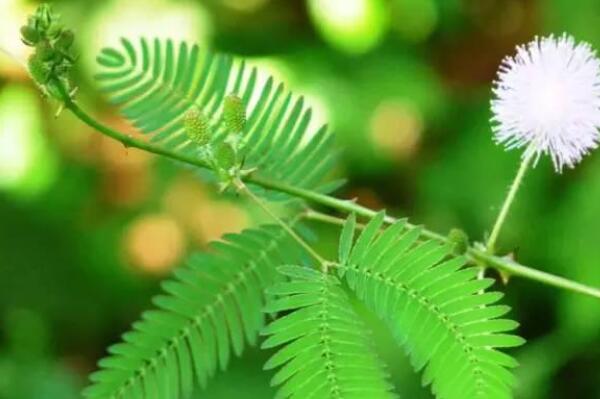
How long does it take for mimosa seeds to germinate?
How long mimosa seeds take to germinate depends on how you treat them. If you soak them in water for 1-2 days before planting, the seeds sprout more easily, in about 7-14 days. Untreated seeds take longer.
Also, after the seeds are planted they need plenty of water. If it rains, leaving them out in the rain can make the seeds germinate earlier.
What are the planting methods for mimosa?
I. Nursery site selection
Mimosa originated in the Americas and is now found in every corner of the world. In China it is planted in Taiwan, China, Fujian, Guangdong, Guangxi, Yunnan, Jiangsu, Zhejiang and other places. The mimosa plant is robust and highly adaptable, with no strict soil requirements. It grows best in sunny, fertile loess, black soil, clay and sandy soil rich in organic matter. Fields suitable for planting mimosa include wheat stubble, potato stubble, soybean stubble and so on. Generally, any land that can grow crops is good land for planting it.
II. Land preparation
1. Deep plowing: Mimosa grows best and yields highest in loose, fertile fields. Clear the land of weeds once, then apply base fertilizer, plow once and harrow once to ensure the soil is soft and fine with no large clods. For fertilization, use 4 tons of farmyard manure per mu, with cow dung and pig manure being best.
2. Making beds: For high and stable yields, not one prerequisite can be missing, no matter what crop is planted. Mimosa is drought-tolerant but not waterlogging-tolerant; its plants are short, and being soaked in water causes large numbers of seedlings to die. Before preparing the land and making beds, dig the drainage ditches around the nursery site, then make the land into beds of a fixed 1.5 m width and rake the soil level, ready for sowing.
III. Sowing
Sowing is the simplest task. Mimosa spreads widely and has an extremely high germination rate; mimosa seeds can still achieve a high sprouting rate without pre-sprouting treatment. Generally, drilling is used, with a row spacing of 40 cm and a sowing depth of 3 cm. After sowing, flood-irrigate once, then cover with straw or plastic film to retain moisture; seedlings emerge in 7-10 days.
IV. Seedling-stage management
During emergence, pay attention to watering to keep the soil sufficiently moist and ensure smooth germination. When the seedlings reach 10 cm, thin them for the first time, keeping the strong, vigorous seedlings and pulling out the weak ones and those that emerged late. After that, the work is regular watering, loosening the soil, fertilizing, weeding, pest control and so on. If selling as flowers at retail, they need to be grown in seedling trays and then transplanted into container flower pots.
When should mimosa be planted?
Mimosa is generally suited to direct sowing in a greenhouse in early spring. Sowing can be done from late March to early April. When sowing, scatter the seeds evenly on fine soil, cover with about 1.5 cm of soil, and at a temperature of about 18°C, seedlings emerge in about 10 days. Seedlings grow slowly; at 7-8 cm they can be planted out or potted.
For home pot cultivation, you can also sow directly in a small pot. For the sowing soil, mix 2 parts leaf mold, 3 parts garden soil and 5 parts fine yellow sand, sieved. When sowing, first fill the pot with an appropriate amount of potting soil, spread it level and press it firm, sprinkle thoroughly with a watering can, and sow immediately once the water has fully soaked in. Sow 1-2 seeds per pot. If using a shallow tray for raising seedlings, sow in spots at a spacing of 2 cm × 2 cm. After sowing, cover with 3-5 cm of soil, enough to cover the seeds. Cover the pot with glass or plastic film to retain moisture, and place the pot in a bright spot out of direct sun at about 20°C. When the potting soil dries out, water by the soak method. After about 7-10 days, the seeds germinate and seedlings emerge.