Does Houttuynia cordata (zhe'ergen) have seeds? With price per jin and growing methods
Houttuynia cordata, also known as zhe'ergen, dog-heart grass, and dog-spot grass, can be used both as medicine and food. Because it has effects such as clearing heat and detoxifying, promoting diuresis and removing dampness, it is widely used medicinally, and it is now grown in many regions. So, does Houttuynia cordata (zhe'ergen) have seeds? How much is it per jin? How do you grow it?
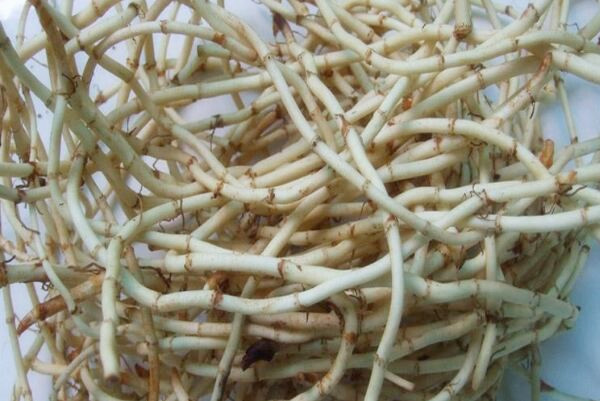
Does Houttuynia cordata have seeds? How much is it?
Houttuynia cordata does have seeds, but because Houttuynia cordata has extremely strong survival ability, its propagation generally uses division, cuttings, and rhizome propagation methods.
Latest price:
The price of Houttuynia cordata varies from place to place, and prices also differ by season within the same region, ranging from 2-10 yuan per jin. Dried Houttuynia cordata may be more expensive than fresh, since it takes time and is easier to preserve. In some places the current retail price ranges from 10 to 20, depending on the region and season.
Growing techniques:
1. Planting Houttuynia cordata
To grow Houttuynia cordata, choose conditions with natural shade (half shade and half sun) and loose, fertile potting soil. It can be planted in all four seasons, but when planted in winter, spring, and early summer it can be harvested the same year. The best sowing time is generally around the Beginning of Spring. In a flowerpot, open furrows in the same direction for row planting, with furrow depth 8-10 cm and width 13-15 cm, and row spacing 20-25 cm. Place Houttuynia cordata seed roots in the furrows, laying two parallel rows per furrow, with stem segment spacing of 5-8 cm, placed continuously, head to tail. The seed stems should be placed evenly, then covered with soil; after planting, keep warm and moist. If planting in the high-temperature summer season, there must be 3 nodes to ensure that the middle node can sprout and take root. If planting before winter, mulch film or newspaper should also be added to facilitate normal growth and development in winter and early spring and obtain high yield.
2. Field management
After planting, if the seedlings encounter drought, water in the morning and evening to moisten the bed soil. From seedling survival until row closure, cultivate and weed and topdress 2-3 times, mainly with nitrogen fertilizer. Each weeding should be combined with topdressing; 20-30 grams of urea can be applied per square meter, applied dilute first and then concentrated. After each harvest, topdress mainly with nitrogen fertilizer to promote plant sprouting. After harvesting in autumn, mainly apply phosphorus and potassium fertilizer, and earth up the soil to help overwintering and lay a foundation for sprouting the next year. In dry seasons, irrigate in a timely manner; in the rainy season, drain promptly, and avoid long-term water accumulation in the flowerpot. Weeds should be removed in a timely manner, and shallow cultivation and soil loosening should be carried out at the right time; combined with soil loosening, spread an appropriate amount of decomposed organic fertilizer between plants and rows. For plants whose aboveground stems and leaves grow too vigorously, pinch the tips to inhibit height growth and promote lateral branch development.