What to do when the newly bought Aglaonema 'Lady Valentine' has yellowing leaves? Cultivation methods and precautions
Aglaonema 'Lady Valentine', also known as Ruyi Wannianqing, colorful-leaf Chinese evergreen, and colorful-leaf Aglaonema, is a herbaceous plant. The plant height is 30-40 cm, the stem is upright and unbranched, the internodes are obvious, the leaf color is beautiful, and it is especially shade-tolerant. So, what should you do if the Aglaonema 'Lady Valentine' you bought home has yellowing leaves? What are the cultivation methods and precautions?
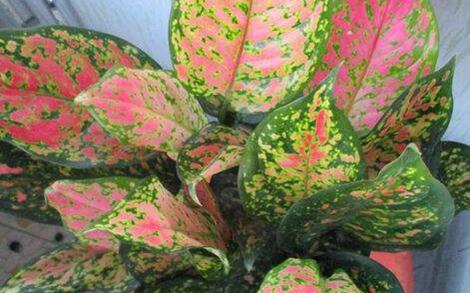
I. What should you do if the Aglaonema 'Lady Valentine' you bought home has yellowing leaves?
1. Color: water yellow
Possible cause: the flower pot of Aglaonema 'Lady Valentine' has too much accumulated water and has been exposed to moisture for too long, thus causing the soil of Aglaonema 'Lady Valentine' to lack oxygen, which leads to rot in the root-growing part of Aglaonema 'Lady Valentine', and may even weaken its absorption capacity.
Treatment method: when this happens, loosen the soil immediately, control the amount of watering, and stop fertilizing. In severe cases, you can take Aglaonema 'Lady Valentine' out of the soil, place it in a shady spot to dry, and then refill the soil.
2. Color: fertilizer yellow
Possible cause: because we fertilized too much or the fertilizer concentration was too high, especially excessive nitrogen fertilizer, which causes yellow leaves. It shows as new leaves being glossy but not flat enough, while old leaves gradually turn yellow and fall off.
Treatment method: at this time, stop fertilizing and appropriately increase the amount of watering to dilute the fertilizer concentration, then replace the soil. These tasks are usually done during rain.
3. Color: alkaline yellow
Possible cause: Aglaonema 'Lady Valentine' often develops chlorosis and yellowing because the soil is alkaline. Its yellowing appears between the leaf veins, but the leaf veins, especially the main veins of Aglaonema 'Lady Valentine', still remain green, showing a very obvious color difference. After a period of time, as the yellowing symptoms on the leaf surface deepen, the main veins also gradually lose their green surface, and finally Aglaonema 'Lady Valentine' turns completely white, the leaf edges become scorched and withered, the leaves wither, the branch tips die back, and even the whole plant dies.
Treatment method: facing this situation, our main goal is to change the soil. Alum fertilizer can be applied to achieve the purpose of fertilizing and watering.
4. Color: drought yellow
Possible cause: Aglaonema 'Lady Valentine' may develop yellowing on the leaf surface or at the ends of branches because it has not been watered for a long time or has been watered insufficiently. At this time, old leaves also turn yellow and fall off from bottom to top, but new leaves generally grow normally.
Treatment method: when this phenomenon occurs, Aglaonema 'Lady Valentine' should be supplemented with water.
5. Color: shade yellow
Possible cause: Aglaonema 'Lady Valentine' likes sunlight, so insufficient indoor sunlight will cause its branches and leaves to turn yellow.
Treatment method: at this time, move the flower pot outdoors to a ventilated place with direct sunlight.
II. What are the cultivation methods and precautions for Aglaonema 'Lady Valentine'?
1. Division: carried out in spring together with repotting. Take the large plant that has filled the pot out of the pot and divide it into several clumps, remove excess old leaves and withered yellow leaves, with each clump having 5-6 leaves, and then plant them separately.
2. Sowing: usually carried out in spring. The suitable temperature for germination is 15-20°C, and germination occurs 15-20 days after sowing. The germination rate is high, and the seedlings emerge neatly.
Precautions for cultivating Aglaonema 'Lady Valentine'
1. Temperature
Aglaonema 'Lady Valentine' likes warmth, and the most suitable temperature for growth is 13-18°C. It is relatively cold-tolerant and can endure a low temperature of -5°C in winter, but it is best to keep it above 0°C.
2. Light
Aglaonema 'Lady Valentine' likes light and tolerates partial shade. But it avoids strong sunlight exposure. Under full-light conditions, the plant grows poorly and becomes short, the leaves turn yellow, and the leaf margins become scorched. From May to September, shading should be provided, or it should be placed in a semi-shady place such as under a large tree. Sufficient scattered light can keep the leaves emerald green and glossy. It also avoids too much shade. When light is insufficient, the leaf surface lacks luster, the beautiful spots become dull, and it is difficult to bloom.
3. Watering
Aglaonema 'Lady Valentine' tolerates shade and moisture, and also tolerates drought. It likes a moist soil environment. During the growing period, it should be watered sufficiently to keep the potting soil moist but not overly wet and without standing water, otherwise it will cause root rot. In summer, water is lost relatively quickly, so water appropriately more; in winter, the amount of watering needs to be controlled, and it is enough to keep the potting soil moist.
4. Fertilizing
During the growing period, the nutritional demand is relatively high, so fertilizer should be applied once every half month. Fertilization should balance nitrogen, phosphorus, and potassium so that the plant grows robustly and has bright colors. Too much nitrogen fertilizer will make the leaves grow too large and soft, making them prone to lodging, and will also make the color spots on the newly emerging leaves smaller, or even turn completely green. Fertilizing should be stopped in winter.
5. Pruning
Withered yellow leaves and old leaves in poor condition should be cut off at any time.
6. Repotting
Potted plants should be repotted once every spring, and ground-planted ones need to be replanted once every 3-4 years. It is not choosy about soil, but loose, fertile, and well-drained soil is best; it can grow in slightly acidic to slightly alkaline soil with a pH of 5.5-8. The substrate can be prepared with materials such as leaf mold, garden soil, rice husk ash, or coarse sand.