What Kind of Vegetable Is Malabar Spinach and the Suitable Planting and Harvesting Times and Methods
Malabar spinach, also known as tofu vegetable, purple angle leaf and so on, is a common vegetable in our country. Because of its high nutritional value and crisp, refreshing taste, many people like to use it in cold dishes, stir-fries or blanching. So what kind of vegetable is Malabar spinach? When is the best time to plant it? When do you harvest it? How do you grow it?
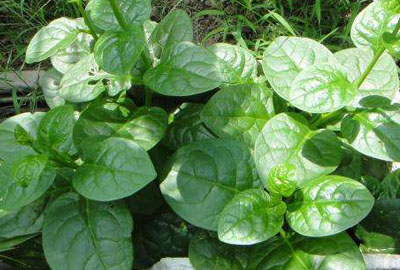
Malabar spinach is also called chan cai, luokui, tofu vegetable and purple angle leaf. It is a plant of the genus Gynura, a perennial tall herb, 1.5-2 m tall. Its flowering and fruiting period is September-October. Malabar spinach is eaten as seedlings, tender shoots or tender leaves. Its texture is tender and smooth, and its nutritional value is high. It can be used in soups, stir-fries, blanching, cold dishes and so on. It has a delicate fragrance, and when chewed it is as crisp and refreshing as eating wood ear, hence the name Malabar spinach. It is commonly cultivated in both the north and the south. In the tropical regions of the south it can be cultivated as a perennial, while in the north annual cultivation is mostly used.
Planting time:
Malabar spinach is generally sown in April and harvested in June. Usually, when the temperature is above 20°C, it can be sown and cultivated in the open field. When the main purpose is harvesting tender stems and leaves, it enters the harvest period about 50 days after sowing. Malabar spinach is tolerant of high temperature and high humidity. It generally grows in loose and fertile sandy loam. The suitable germination temperature for seeds is generally around 25°C, and the suitable growth temperature for the plants is 25-30°C. Throughout the entire growth period, the soil needs to be moist. A few varieties have strict requirements for high temperature and short-day conditions, while most varieties do not have strict requirements for sunlight.
Harvest time:
Under normal circumstances, when Malabar spinach is harvested as seedlings, it can be harvested about 40 days after sowing, when the seedlings have grown to 5-6 leaves.
When the purpose is to harvest tender leaves of Malabar spinach for eating, harvest once every 15-20 days in the early stage, once every 10-20 days in the middle growth stage, and once every 10-17 days in the later stage. When harvesting tender shoots of Malabar spinach, you can use a knife or scissors to cut them. Cut when the shoots are 10-15 cm long, once every 7-10 days. You can also use the method of cutting tender shoots in the early and late stages and picking tender leaves in the middle stage.
Harvesting methods:
When harvesting mainly for eating tender shoots, after the seedlings are 30 cm tall, keep 3 leaves and pinch off the top shoot, select strong side buds to grow new shoots, and remove the rest. After the new shoots are harvested, select another 2-4 strong side shoots or new shoots. In the later stage, as growth vigor weakens, after pruning you can keep 1-2 strong buds or shoots to maintain large leaves and strong shoots.
When harvesting mainly for tender leaves, keep the main vine and one side vine at the base, and pinch the growing tip again when the plant reaches the top of the trellis. Select strong buds or a new main vine from the base of the main vine. After all the leaves on the original main vine have been harvested, cut it off near the new main vine. Harvest once every 10 days in the early stage and once every 5-7 days in the later stage. The yield per 666.7 sq m is 1000-2000 kg.
Planting techniques:
Selecting varieties
It is advisable to choose high-quality, high-yield, disease-resistant excellent Malabar spinach varieties such as red-stem Malabar spinach and green-stem Malabar spinach.
Management and care
1. Management according to needs
① For those grown mainly for harvesting tender shoots, when the seedlings are 30-35 cm tall, keep 3-4 leaves at the base, harvest the tender top shoots, and keep two strong side buds to form shoots. When harvesting the second round of shoots, keep 2-4 side buds to form shoots. During the period of vigorous growth, each plant has 5-8 strong side buds forming shoots. In the middle and later stages, promptly remove flower stems and young buds. In the later stage, as growth weakens, keep 1-2 strong side shoots to help the leaves become thick and large.
② For those grown for the purpose of harvesting leaves, trellis cultivation is required. When the seedlings are about 30 cm tall, set up an A-shaped trellis and train the vines onto it. In addition to keeping the main vine, also keep two strong side vines at the base to form the framework vines. When the framework vines grow to the top of the trellis, pinch the growing tips. After pinching, keep one strong side bud from each framework vine. After the leaves on the framework vines have been harvested, cut them down from the trellis. When setting up the trellis and after each harvest, earth up the soil. It is also possible not to prune or trellis and simply harvest tender shoots.
2. Fertilizing and watering
For the base fertilizer, organic fertilizer is best. For topdressing, chemical fertilizer or organic fertilizer dissolved in water is used. After emergence, keep the soil moist and water in a timely manner. After each harvest, promptly apply organic fertilizer as topdressing. In the rainy season, drain water in a timely manner to prevent waterlogging.
3. Pest and disease control
① The disease that commonly occurs in Malabar spinach is brown spot. In the early stage of occurrence, it can be controlled by spraying 72% Kelu wettable powder 500-600 times dilution, or 68.75% Yibao dispersible granules 800-1000 times dilution.
② If damage by tobacco cutworm occurs, and many tender leaf tips are found to have small holes, a pyrethroid insecticide can be sprayed once when the larvae are in the 1st-2nd instar.