Boston ivy seedling price per plant, why it climbs walls, and its harm to houses
Boston ivy is also known as climbing ivy, Japanese ivy, flying centipede, false grape vine, red silk grass, stone blood, iron trust, iron railing. It blooms in summer, with small yellow-green flowers and purple-black berries. So how much does a Boston ivy seedling cost per plant? Why does it climb walls? Is it harmful to houses? How to plant it? According to Manager Wang of the Zhejiang nursery base, 40-60CM seedlings cost 0.65-0.8 yuan; 60-90CM seedlings cost 0.8-1 yuan; 80-120CM seedlings cost 1-1.2 yuan; 120-160CM seedlings cost 1.6-2.9 yuan.
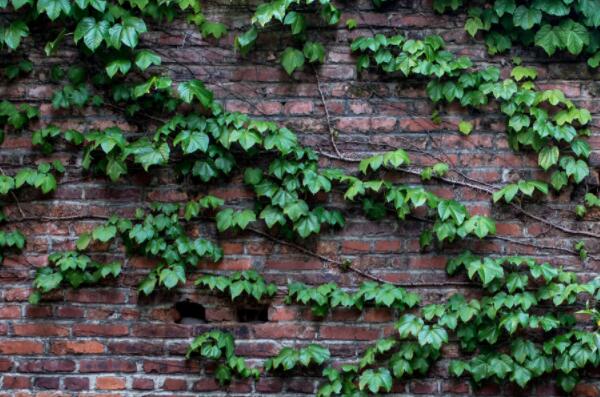
Why does Boston ivy climb walls?
The stems of Boston ivy grow many pink short thin filaments, which botanists call tendrils. Each short tendril can grow several suckers that secrete a sticky substance outward. These suckers can adhere tightly to the surface of hard objects like the suction-cupped feet of a gecko, fixing the stem to rocks, trees or walls. Even strong winds cannot blow them off. New tender stems can continue to grow upward, and the vine stems can grow to more than 30 meters, just like slowly climbing up.
Is Boston ivy harmful to houses?
Yes.
1. Attracts mosquitoes and insects
Mosquito bites in summer are a very annoying thing, and I believe everyone has felt this. Houses planted with Boston ivy naturally cannot avoid this disadvantage. Mosquitoes and insects are still a minor matter; if it attracts venomous snakes that like shaded environments, that would be bad.
2. Damages the wall surface
The stems, leaves and tendril claws of Boston ivy are very strong. In the process of continuously climbing upward, it naturally penetrates into the cracks of the wall surface, gripping tightly to ensure the plant is not blown down. So over the years, it will inevitably cause damage to the wall.
Benefits:
1. Shade and noise reduction
When planting Boston ivy, keep a little distance from the wall base. In one or two years it can grow very lushly, and the dense branches and leaves will cover the wall surface, forming a natural shading effect. In the hot summer, with the protection of Boston ivy, you will not feel hot living in the house. In addition, the climbing of Boston ivy can also play a isolating role, reducing the harm of noise to residents, and because of the plant's natural air purification effect, it can also reduce dust adhesion and enhance the humidity in the air environment.
2. Beautiful greening
The verdant and deep green leaves of Boston ivy are also a very good greening plant. Spreading on the exterior walls of buildings, it is like putting on a magical coat. In spring you can enjoy the green leaves, in summer you can view the tiny flowers, and in autumn you can also appreciate that touch of slight yellow.
How to plant Boston ivy?
1. Cutting propagation Boston ivy is easy to survive by cutting propagation. Softwood and hardwood cuttings both work, and it can be done in spring, summer and autumn. In dry areas, spring and summer cuttings can be done in beds without a shade shed, and management is relatively extensive.
2. Layering propagation Layering propagation roots quickly and has a high survival rate. It is mostly done before the rainy season, and by autumn it can be separated from the mother plant to become a new plant. You can then dig up the seedlings for planting or heel them in, and plant them the following spring.
3. Seed propagation The seeds mature in October. After harvesting, remove the pulp, then sow immediately or wash and air-dry for storage. The following spring, 2 months before sowing, soak the seeds in clean water for 2 days and then stratify them in sand. Near the sowing period, 5-7 days before, place them in a sheltered sunny spot or indoors, keep them moist to promote germination, and sow when some seeds split open. Bed sowing and ridge sowing both work. With careful management, annual seedlings can grow to 1-2 meters.
4. Buried branch or buried root propagation Take mother plant branches or side shoots 0.5-1 cm thick, open a trench and lay them flat, cover with 2-3 cm, press lightly, and irrigate to preserve moisture so that new plants grow. The following spring, cut off the connection point of each plant to form separate individuals. This method can be carried out in spring, summer and autumn.