What vegetable is snow mustard? Planting time and methods for the annual herb potherb mustard
Snow mustard is a fairly common vegetable in China in April. A dish made by stir-frying it with meat is a traditional famous dish of the Han Chinese, so many people grow it. So what vegetable is snow mustard (potherb mustard)? When is the best time to plant it? How do you grow it?
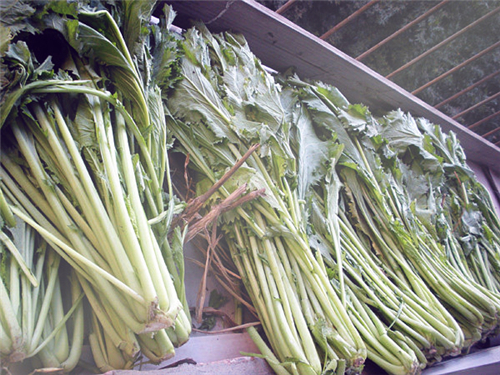
Snow mustard, also known as potherb mustard, nine-head mustard, shaocai, paicai, and so on, belongs to the genus Brassica, phylum Angiospermae, and is a type of mustard. It is the tender stems and leaves of the cruciferous plant mustard, cool in nature and flavor, and enters the lung, spleen, and stomach meridians. It has the effects of promoting urination and stopping diarrhea, dispelling wind and dissipating blood stasis, and reducing swelling and relieving pain. It mainly treats conditions such as difficult urination, dysentery, coughing up blood, swollen and painful gums, sore throat and hoarse voice, swollen and painful hemorrhoids, itching from lacquer poisoning, traumatic injuries, and joint pain. It is a commonly used folk herbal medicine.
It can be applied externally or eaten internally.
Planting time:
For spring cultivation, sow from late February to late April; for summer cultivation, sow from early July to late August; for autumn cultivation, sow from early September to early October. The sowing rate is 0.75-1 kg per mu in spring, 1.5-2 kg per mu in summer, and 1-1.5 kg per mu in autumn. Before sowing, mix the seeds evenly with 2-3 times their volume of dry fine soil, and mainly broadcast them, striving for evenness. After sowing, gently tread over the bed surface with your feet so that the seeds make close contact with the soil, then water thoroughly. For spring and autumn sowing, use plastic film mulching; for summer sowing, use shade netting, to help achieve uniform emergence. After emergence, remove the plastic film or shade netting and keep the bed surface moist to promote growth.
Planting techniques:
1. Variety selection: Jiaxing cockscomb mustard.
2. Sowing and seedling raising
1. Seed soaking and germination: The soaking time generally should not exceed half an hour; the germination temperature should preferably be around 20°C. During germination, the seeds should be turned frequently and rinsed with clean water. Snow mustard seeds are small, and generally after one day and two nights they begin to show white (that is, the seed coat breaks and they germinate). When 20%-30% of the seeds have germinated, they can be sown.
2. Seedbed selection: The seedbed should be chosen close to the field, with fertile soil, good drainage, and clay loam where cruciferous crops have not been grown for many years and the previous crop was paddy rice. If dry land is used as the seedbed, it should be flooded with deep water for 3-5 days before sowing, then drained, left to dry, and plowed, or after deep-water flooding, cover the surface soil with film and sterilize with high temperature to reduce infection by pathogens.
3. Carefully prepare the seedbed: The seedbed must be leveled to a high standard. After plowing, make furrows and hoe finely, achieving deep furrows and high beds, with the bed surface soil finely crumbled, and the broken mud in the furrows should be cleared away cleanly.
4. Apply sufficient base fertilizer: Before land preparation, broadcast 30 kg of superphosphate per mu of seedbed. After land preparation is completed, sprinkle and pour 1000 kg of decomposed human manure onto the bed surface, and use a 1000-fold dilution of 25% Nongdile as a soil treatment to prevent underground pests from damaging the vegetable seedlings.