Is snow mustard the same as mustard greens? How much does it cost per jin and an analysis of growing profitability
Snow mustard, also known as nine-head mustard, shaocai, paicai, etc., is a relatively common cruciferous vegetable in our country. Because of its wide adaptability and low investment cost, it is widely cultivated. Most importantly, it has diuretic and hemostatic, swelling-reducing and pain-relieving effects, so it can be applied externally as medicine. So, is snow mustard the same as mustard greens? How much does it usually cost per jin? How profitable is growing it?
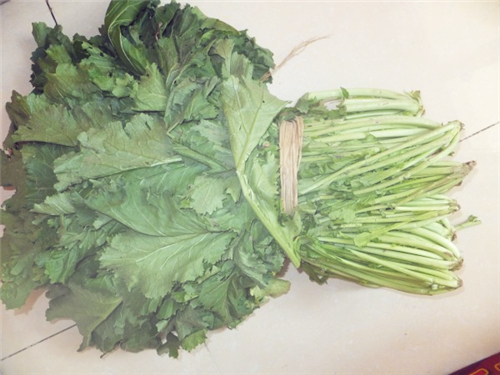
Snow mustard is snow mustard greens. Snow mustard has many alternative names. In Jiangsu and Zhejiang it is called “xuelihong”, “nine-head mustard”, and “shaocai”; in Hunan and Hubei it is called “paicai”. It is an important vegetable grown commonly in the Yangtze River basin during the winter and spring seasons. Its leaf stalks and leaves are eaten, and its nutritional value is very high. It is the tender stems and leaves of the cruciferous plant mustard greens. It is a variety of leaf mustard among mustard vegetables.
Latest price:
The price of snow mustard is about 2 yuan to 4 yuan per jin. There are many types of snow mustard, and prices differ among different varieties. Prices also vary from region to region, so local prices should be taken as the standard.
Analysis of growing profitability:
Mustard greens are harvested in stages. Each harvest should take the large ones and leave the small ones, and the remaining plants should be evenly and appropriately spaced. Shepherd's purse sown in early autumn is harvested when it has 10-13 true leaves, 30-35 days after sowing, and then harvested in stages 4-5 times, ending in late March of the following year, with a total yield of 2500-3000 kg per mu. Autumn shepherd's purse sown in early October requires 45-60 days before harvesting can begin. Shepherd's purse sown in late February is harvested and marketed in early April. Spring-sown crops are generally harvested 1-2 times, with a yield of about 1000 kg per mu.
How to eat it:
Stir-fried xuelihong with minced meat
Ingredients: small mustard greens, sea salt, minced meat, chili, garlic, sugar, an appropriate amount of pepper powder, an appropriate amount of sesame oil, soy sauce, salad oil.
Method:
1. First wash the small mustard greens and drain them, then let the leaves dehydrate and dry slightly at room temperature or in the sun. Sprinkle sea salt over the small mustard greens, rub them lightly with both hands, and let them sit for 1 hour. After sitting for 1 hour, the small mustard greens become xuelihong.
2. First rinse the xuelihong with water to remove the salt, cut the xuelihong into thin strips, and first season the minced meat with 1 small teaspoon of soy sauce, pepper powder, and sesame oil.
3. Add oil and heat the pan, then stir-fry the chili and minced garlic until fragrant, then add the marinated minced meat to the pan and stir-fry until aromatic.
4. Finally, add the xuelihong to the pan and stir-fry, add a little sugar and sesame oil to season, and it is done. The spicy, flavorful xuelihong is excellent with rice, and can also be eaten stuffed in steamed buns.