Deciduous tree Chinese hackberry sapling prices, planting methods and timing, and bonsai care
Chinese hackberry is also called Huangguo hackberry, Baimazi, hackberry, hackberry elm, Puzai tree, and sand hackberry. It is a deciduous tree in the order Rosales, family Ulmaceae, genus Celtis, and can reach 20 m in height. So how much does one Chinese hackberry sapling cost? When should it be planted? How is it planted? How is a bonsai cared for? From a nursery base in Jiangsu we learned that 15CM saplings cost about 1500 yuan; 18CM saplings cost about 1800 yuan; 22CM saplings cost about 2500 yuan; 30CM saplings cost about 5500 yuan. Chinese hackberry sprouts in February in spring and drops its leaves in October in autumn, blooms in March, and its seeds mature in August and September. Its evergreen period is 210 to 240 days per year.
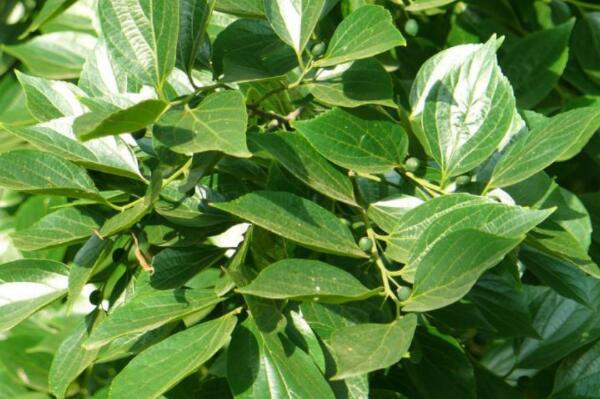
When is Chinese hackberry planted?
Planting in autumn and winter is best, when the aboveground and underground parts of the Chinese hackberry are in a weak or stopped growth and dormant period; the survival rate is highest. Planting and transplanting during this period have the least effect on the Chinese hackberry, and management is also relatively easy.
How is Chinese hackberry planted?
1. Chinese hackberry saplings are mainly obtained by sowing. In South China and East China, sowing can be done from January to May. It is recommended to sow directly in the field, in rows and lines. Use 8 to 10 jin of Chinese hackberry seed per mu. The soil must be fertile and breathable and good for drainage and irrigation; saline-alkali soil cannot be used. First soak the seeds in water for 2 days to promote germination, then take them out and dry them, then sow. A row spacing of 40 cm is suitable. Germination begins in about 10 days, and emergence is basically complete in 20 days. The first thinning is at 35 days, with a seedling spacing of 8 to 10 cm being best. Keep about 30,000 seedlings per mu. They can grow 1 to 1.3 m tall in the same year.
2. Chinese hackberry likes sun and tolerates shade. On fertile land it can grow into a finished product in 5 years. It also tolerates dry and barren land, and can survive in mildly saline-alkali land. Seedlings of the current year are very thin and weak, and the trunk and tree form are poor, so they are not suitable for final planting. They need to be divided and cut back once and grown for 2 years. For dividing current-year seedlings, a plant and row spacing of 40×70 cm is recommended. After division and 2 years of growth, they can reach 2 to 3 cm and a height of 3 to 4 m. At this point a batch of Chinese hackberry seedlings with straight trunks and beautiful tree form has been cultivated. For later final planting and growth promotion, you can consult us by phone, or we can teach you on site. During the seedling stage, pay attention to pruning and shaping to grow a straight and full main trunk; the suggested branch point is between 2.8 and 3 m.
3. Habits of Chinese hackberry
Chinese hackberry is not very strict about soil. Except for low-lying waterlogged land where it cannot be planted, it can be planted in other soils. Chinese hackberry can adapt to different soils, including slightly acidic, slightly alkaline, neutral, and calcareous soils. In order to make Chinese hackberry grow tall with luxuriant branches, it is best to choose loose, fertile, well-drained land for planting before planting.
4. Chinese hackberry planting techniques
(1) Chinese hackberry planting is usually mainly by seed propagation. Seeds can be collected when the fruit is ripe. After collection, pile them for after-ripening. In March of the following spring, drill sowing can be carried out. A seedbed of loose, fertile soil is best, then cover with soil and grass. They sprout and emerge in about 30 days. Note that during the growth period, timely cultivating and weeding are required, along with proper watering and fertilization management, to prevent weeds from competing with the trees for nutrients.
(2) Transplanting can be done from after leaf fall in autumn to before bud break in spring. Large trees need to be transplanted with a soil ball at a ratio of 1/7. Except for small and medium seedlings, which do not need a soil ball for transplanting, dipping the roots in mud is enough. The planting standard for depth is that the soil ball is level with the ground surface.
5. Daily care of Chinese hackberry
(1) In summer, the daily temperature is relatively high and evaporation is great. After new branches survive, in order to let the newly grown tender branches and leaves grow well, according to the condition of the Chinese hackberry, besides misting the branches and leaves, water once in the morning and once in the evening to keep the soil moist. For watering, especially grasp the principle of watering thoroughly if watering at all. However, if there is heavy rain due to the weather, promptly prevent water accumulation. In winter, do not forget watering either; you can choose to water at noon when it has not frozen.
(2) During the growth period of Chinese hackberry, fertilizer must keep up. In order to make Chinese hackberry grow tall and large, fertilization should mainly be phosphorus and potassium fertilizer, once every half month is enough; frequent application of dilute fertilizer is better. For ground planting, you can dig a deep hole beside the seedling, then bury the fertilizer in the middle, which is best. In autumn, apply one additional application of decomposed organic fertilizer, with the aim of laying a good foundation for growth the following year.
How is a Chinese hackberry bonsai cared for?
1. Placement environment: Because Chinese hackberry likes light, the Chinese hackberry bonsai should be placed in a sunny courtyard or balcony. If the bonsai needs to be placed indoors, choose a windowside with enough light and relatively good air circulation. Because plant leaves need sufficient sunlight for photosynthesis, only by giving sufficient light can Chinese hackberry keep its leaves full and luxuriant.
2. Water and fertilizer management: Chinese hackberry tolerates dryness, so its bonsai should not be watered heavily. Control watering frequency to once a day in spring, once each in the morning and evening in summer, and about once every five days in winter. Note that in summer, watering should be avoided at times when the temperature is high (around 2 p.m.), because at this time the plant's transpiration is extremely strong, which will cause a large loss of water and lead to the Chinese hackberry withering. As for fertilizing, apply nitrogen fertilizer or potassium fertilizer once each in spring and summer every year to make the Chinese hackberry grow more robust and enhance its ornamental value.
3. Pruning and shaping: Because of its vigorous growth, we can often prune the Chinese hackberry bonsai to achieve a satisfactory modeling effect. In the modeling process, the method of coarse wiring and fine pruning is often used. When new branches are about 7 cm long, prune most of their leaves and remove their buds to maintain the shape.
4. Pest control: Pests are also an important factor that often affects the healthy growth of Chinese hackberry. To prevent and control pests, spray the Chinese hackberry with diluted dimethoate or dichlorvos solution. However, pay attention to the concentration when preparing the pesticide to prevent damage to the vitality of the Chinese hackberry itself.