Differences Between Zelkova and Elm, Sapling Prices, Planting, and Bonsai Pruning and Care
Zelkova is also called large-leaf zelkova, red zelkova, green zelkova, white zelkova, blood zelkova, golden silk lang, sand lang tree, and hairy-veined zelkova. It is a deciduous tree species in the genus Zelkova of the elm family and is a national second-class key protected plant. So what are the differences between zelkova and elm? How much is a sapling? How do you plant it? How do you prune and care for a bonsai? According to the Jiangxi garden seedling base, the price for 5 cm is 30 yuan, 8 cm is 130 yuan, 10 cm is 250 yuan, 15 cm is 1,500 yuan, 20 cm zelkova is 2,000 yuan, 25 cm is 3,000 yuan, 30 cm is 4,500 yuan, 35 cm is 5,500 yuan, and 40 cm is 8,000 yuan.
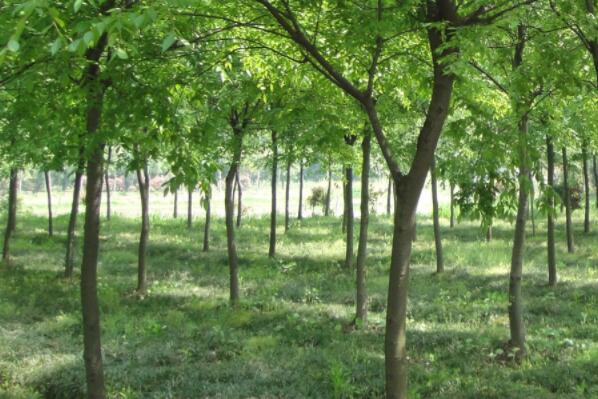
What are the differences between zelkova and elm?
Zelkova bark is gray or reddish brown; young branches have white downy hairs. Elm bark is gray or dark gray; young bark is relatively smooth, while old bark is rough and splits into long vertical cracks. However, zelkova sheds thick bark, while elm sheds very thin bark.
How do you plant zelkova?
1. Choose the soil. To grow zelkova, you must choose places such as plains or floodplains, because the soil layers in these places are relatively deep, loose, and fertile, and more importantly, have good drainage, making them very suitable for zelkova growth.
2. Planting. When planting, the row spacing should be determined according to the planting density, and the time should be chosen in the middle to early part of March each year. When planting, the zelkova sapling must be placed in the middle of the dug soil hole, then one third of the soil should be covered first, and the sapling should be lifted slightly so that the roots can be placed freely, then continue covering with soil. After planting, water thoroughly, and then firm the soil around it by stepping on it.
3. Watering. After planting, water thoroughly three times in a row; afterward, whether watering is needed can be decided according to the weather conditions and how dry the soil is. Generally, when the weather is especially dry, in addition to watering, the crown should also be sprayed with water. The purpose of this is to lower the temperature and also maintain air humidity.
4. Trunk moisture retention. To prevent water evaporation and sunburn to the zelkova from the strong summer sun, straw rope can be used to wrap from its base upward, wrapping the trunk and main branches with straw rope, and afterward remember to spray water frequently to maintain moisture until the zelkova sapling has truly survived, at which point the straw rope can be removed.
5. Set up supports. To prevent newly planted zelkova from swaying and being blown over by wind, supports need to be set up to stabilize it and prevent the roots from loosening and affecting its survival.
6. Prune sprouts. After May, many sprouts will grow on the trunk and consume a lot of nutrients. At this time, excess sprouts must be removed to improve its survival rate.
How do you prune and care for a zelkova bonsai?
Pruning:
1. Zelkova is a southern tree, and its pruning should be done during the spring growing season and the winter dormant period, with the winter dormant period being best. As the tree ages, the number of prunings gradually increases. The pruning process specifically depends on the different trunks and branches.
2. The ornamental characteristic of a bonsai is that it is short, so the pinching process for zelkova is especially important. The timing for pinching is when zelkova grows many adventitious buds at the base and on the trunk; these should be picked at any time to avoid the growth of forked branches. This process is what we call pinching.
3. The ornamental period of a potted plant is when it has just sprouted new buds, and zelkova is no exception. Its leaf-picking process generally involves picking some excess leaves in spring, or in April and May, when the leaves have grown relatively abundantly and also need to be picked.
4. In spring and summer, zelkova will grow many side branches, main branches, crossing branches, and so on. During this period, we should prune even more. In this period, there are generally relatively few dead branches and slightly more diseased branches. In winter, it is the best time to shape our zelkova tree form. When pruning, try to prune it into the tree shape you like. Of course, at this time you need to cut off most of the dead branches and diseased branches.
5. If there are too many roots, it will affect the growth of the potted plant and easily make it sick. To let our potted plant grow well and be less prone to disease, proper pruning of the potted plant's roots is necessary. Repotting is also something that often needs to be done. When the root system has not yet densely covered the bottom of the soil ball, repotting is not needed; when the fibrous roots densely cover the bottom of the soil ball, it should be repotted into a slightly larger pot.
Care:
1. Light: Zelkova is a sun-loving plant. If it is kept in a dark place without light for a long time, it is easy for the bonsai to drop yellow leaves. The zelkova bonsai can be placed in a sunny, airy, and ventilated place. However, sunlight conditions also need to be adjusted according to the season. In midsummer, when sunlight is strong, it should be properly protected from direct sun exposure.
2. Temperature: When the temperature is around 5°C, move it indoors to a warm, sunny place for warmth to prevent frost damage. In winter, the potting soil should be on the dry side. In winter, the indoor temperature should preferably not be lower than 5°C.
3. Watering: Start by spraying water on the leaf surface first, then water thoroughly at the roots, avoiding the phenomenon of half-watering, that is, the pot surface being dry while the inside of the pot is dry. In summer, appropriately give the pot 4. more water for the bonsai, while in winter water less.
Fertilizing: Summer and autumn are the growing periods, which require more nutrients, so it is recommended to fertilize once a month. Use thoroughly decomposed cake fertilizer water. In winter, fertilize less. It is also fine not to fertilize. When fertilizing, bury the fertilizer into the soil along the edge of the flower pot, and water immediately after fertilizing. The main components of the fertilizer are nitrogen, phosphorus, and potassium.