Peanut Shell-On Sowing Method and Benefits, Scientific Fertilization for High Yield
Peanut is a crop that farmers plant every year. It is not only easy to grow and versatile, but also rich in nutritional value. The peanuts we usually see are generally planted after shelling. Today, the editor will talk about planting peanuts without shelling them. So, can peanuts be sown with the shells on? How to plant them? What are the benefits? What fertilizer should be applied for high yield?
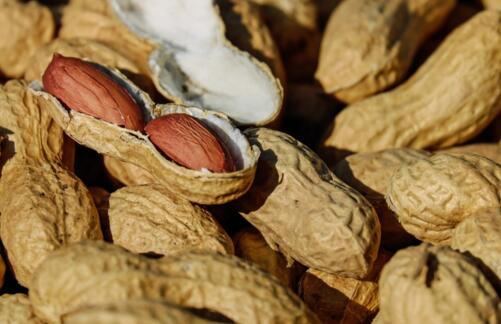
1. Can peanuts be sown with the shells on? How to plant them?
Peanuts can be sown with the shells on, and compared with shelled sowing, this can increase yield by 5%-20%.
1. Seed treatment. Mainly choose medium-early maturing varieties, and sun-dry the pods for 2-3 days before sowing. Break double-kernel pods into single-kernel pods, and pinch open the pod tip of single-kernel pods to help the kernels absorb water and emerge. Soak the pods in warm water at 35°C for 6-8 hours, remove and drain the water, then sow.
2. Sow early at the right time. This method should be carried out 20 days earlier than the local conventional sowing period. If sowing is too late, it will not produce a yield increase. Peanuts sown with shells on grow faster at the seedling stage and slower in the middle and late stages, with shorter plants and branches and a more compact plant shape, so the sowing density needs to be increased by 10%-15%, sowing 11000 hills per 67 sq m (1 mu).
3. Sow appropriately shallowly. This method emerges slowly, so deep sowing is not suitable. The best sowing depth is 3-5 cm. After sowing, press lightly with the foot to avoid bringing the shell out of the soil when emerging. For seedlings that have emerged with the shell on, remove the shell so as not to affect seedling growth. To control underground pests, seed coating agents can be used to dress the seed before sowing, using 1 kg of seed coating agent per 50 kg of seed. You can also use 100 g of 40% isofenphos-methyl or 50% phoxim, add ± kg, and scatter it into the sowing furrow.
4. Strengthen management. After emergence, check the seedling condition and guide seedlings out of the soil to reduce weak and dead seedlings. During the growth period, combine promotion and control, and prevent and control pests and diseases. If excessive vegetative growth occurs at full flowering, spray chlormequat at a concentration of 0.1%. When the aphid population reaches 500 per 100 hills, spray omethoate for control.
2. What are the benefits of sowing peanuts without shelling?
The main benefits are that the seeds absorb water quickly, emerge quickly, and grow uniformly. At the same time, after shelling, kernel selection can also be carried out to ensure seed quality and improve the emergence rate.
Precautions for shelled peanut sowing technology:
1. Do not shell too early. If shelled too early, the seeds lose the protection of the shell and easily absorb moisture from the air, enhancing respiration and enzyme activity, promoting material transformation, and consuming a large amount of nutrients, thereby reducing viability. After sowing, emergence will be slow and uneven. It is best to sun-dry the seeds with shells on before sowing, then shell them.
2. If the shelled seeds cannot be sown within a short time, they need to be wrapped well in plastic bags to prevent moisture from affecting the germination rate.
3. What fertilizer should be applied to peanuts for high yield?
Peanuts have wide adaptability to soil, but high-yield peanut fields require good soil conditions. They are best planted in loose-top and firm-bottom sandy loam, where rain can drain quickly without water accumulation, and drought can be quickly irrigated with fast water penetration. Peanut fertilizer uptake is very small at the seedling stage, but if fertilizer is lacking, it will hinder strong seedling early development and nodule formation.
Fertilization principles: 1. Combine organic fertilizer with inorganic fertilizer. Match nitrogen, phosphorus, potassium, and micronutrients reasonably, apply sufficient base fertilizer, and topdress appropriately. 2. For topdressing amount, 25 kg per mu of peanut special fertilizer with 45% content is sufficient. 3. In the middle and late stages, spray foliar fertilizer according to growth condition, such as boron and zinc (0.2%) and monopotassium phosphate (0.1—0.2%), which can protect leaves and roots and extend the functional period of the top leaves.