Origin, planting method and solutions for non-forking leaves of Cycas balansae
Cycas balansae is a plant of the genus Cycas, named for its broad leaves. Its Latin scientific name honors its discoverer, the French botanist Benedict Balansa, hence the Chinese name is also transliterated as Balansa cycad. So where is its main origin? How do you plant it? What should you do if the leaves do not fork? The details are summarized as follows:
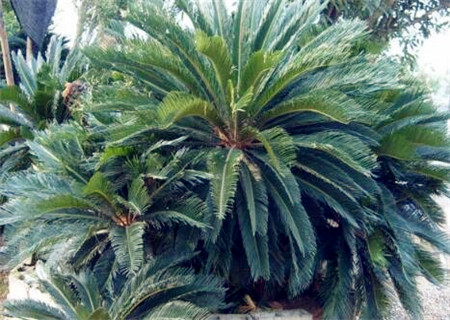
Distribution and origin
It is distributed in southern Guangxi (Fangcheng County), southern Yunnan, as well as Laos, Myanmar, Thailand, Vietnam and other places. Cycas balansae has developed into a potted plant in its native habitat, but it is still relatively rare in other regions.
How to plant
Growing environment
In valley tropical rainforests or limestone mountain monsoon forests, in sandy soil derived from limestone in forests at an altitude of 100-800 m, and in monsoon forest red soil.
Propagation and cultivation
Cycas balansae likes sunlight, prefers warmth, tolerates drought, and can also tolerate partial shade, so it is best placed in a ventilated environment on a balcony. It grows best in an appropriate amount of sandy loam. Cycads are not cold-tolerant. In the Yangtze River basin region, a wind-sheltered, sunny balcony can be chosen for overwintering in winter. If the temperature drops below 0°C, a layer of straw must be covered or the stem wrapped with straw rope, then removed when it warms up the following spring. If the leaves are exposed to cold winds or freeze, yellow-white patches appear on the leaves and are difficult to remedy quickly. Cycads grow slowly and can live for more than 200 years, producing one new whorl of leaves from the top of the stem each year. Potted cycads bloom irregularly and their flowering is not easy to see, hence the saying “a thousand-year cycad blooms,” meaning it flowers relatively rarely. If cultivated properly, old trees 15-20 years old may also bloom once every few years. In the south, under good growing conditions, flowering can be seen every year, and the flowering period can last as long as 1 month. Generally, male flowers bloom from June to August, and female flowers from October to November. They are dioecious, and their flowering periods are not synchronized, so it is not easy to obtain seeds in the north.
Potted Cycas balansae can be moved outdoors in April-May. When repotting every 2-3 years, replace the soil. The best potting soil is fertile, loose sandy loam. When repotting, place broken tile pieces and coarse gravel at the bottom of the pot as a drainage layer, and apply 2-3 pieces of horseshoe slices and cake fertilizer as base fertilizer. During the vigorous summer growth period, apply dilute decomposed cake fertilizer water once or twice a month. If “black alum water” (ferrous sulfate) is added to the topdressing, the leaves can become dark green and glossy. Stop fertilizing after autumn.
For watering potted cycads, for newly potted cycads, the potting soil should not be excessively wet; keep it neither dry nor wet, maintaining appropriate dryness to avoid root rot. After new leaves unfold, increase the amount of watering appropriately. Summer is the vigorous growing season, so it can be slightly more, watering once a day. After autumn, growth gradually slows, and attention should also be paid to controlling the amount of watering. In the rainy season, never allow water to accumulate in the pot. After new leaves emerge, dead, weak, and yellow leaves should be pruned away to maintain the plant's graceful appearance.