How to Grow Avocado Trees So They Bear Fruit? A Detailed Guide to High-Yield Cultivation Techniques
Avocado is a rare fruit of tropical regions, also known as oil pear, alligator pear, butter fruit, and cream fruit, among other names; its fruit is a highly nutritious fruit. So how do you grow avocado so that it bears fruit? Below is a summary of high-yield cultivation techniques.
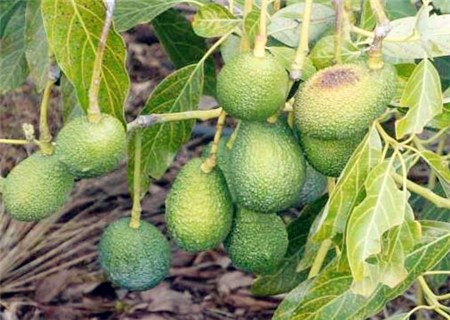
The best time to eat avocado
Eat it during the daytime, half an hour before or after a meal. Avocado is a high-energy, low-sugar fruit, very suitable for infants, young children, and the elderly; it can be eaten during the daytime either half an hour before or after a meal. Eating it before a meal can reduce food intake, and eating it after a meal can promote digestion and prevent constipation. But it is worth noting that avocado is best not eaten at night, because energy expenditure at night is already low, and since avocado is a high-energy fruit, eating it at night easily leads to weight gain.
How do you grow avocado so that it bears fruit?
1. Mulching
Avocado is a fruit tree that grows under tropical rainforest conditions and in competition for sunlight; a high-temperature, high-humidity environment makes it grow quickly, while if environmental conditions are lacking, it grows slowly. Therefore, avocado cultivation abroad mostly emphasizes growing grass or green manure near the plants in the early stage, and applying heavy mulch near the rhizosphere, increasing topsoil organic matter through mulching, forming a rainforest rhizosphere environment similar to that of its place of origin, stabilizing rhizosphere ecological conditions, and promoting the reproduction of microorganisms that can suppress root rot activity. Therefore, from the young tree stage until the tree itself can form a mulch layer through fallen leaves and before root rot occurs, mulching the tree disk of young trees is especially important. Start mulching in winter, supplement the thickness in spring, and by summer a good mulch layer can be formed. Rhizosphere mulching can also reduce soil moisture evaporation, alleviate the damage to avocado from dry heat, lower soil temperature in summer, raise soil temperature in winter, increase soil organic matter, reduce weeds, and prevent soil erosion on sloping land. However, during the rainy season, guard against the mulched soil becoming too wet.
2. Fertilization
The young tree stage, 1 to 4 years after planting avocado, is the period for laying the foundation for high-yield, high-quality avocado cultivation; fertilization should be reasonable to promote rapid and fast growth of young trees. The signs of fertilizer deficiency in avocado trees are severe leaf drop and branch dieback. Reasonable fertilization of both young and fruiting avocado trees should determine the type and amount of fertilizer according to soil fertility, tree age, and plant growth or the situation of growth and fruiting. Generally, complete fertilizers such as nitrogen, phosphorus, and potassium should be applied in a balanced way, and it is best to guide fertilization through soil and leaf nutritional analysis. In the red soil hillsides of South China, where organic matter is lacking and available potassium and available phosphorus are deficient, even more attention should be paid to the application of potassium and phosphorus fertilizers.
The root system of young avocado trees is easily damaged by nitrogen fertilizer, and applying too much nitrogen fertilizer easily causes excessive vegetative growth of branches and leaves, delaying fruiting, so attention should be paid to nitrogen fertilizer application. Abroad, 110 to 450 g of pure nitrogen is applied per tree per year, increasing year by year as the tree ages, with half of it using organic fertilizer as the nitrogen source. In the first year after planting, it should be applied in small amounts and frequently. In areas with frost, nitrogen fertilizer should be stopped in autumn and winter, and more phosphorus and potassium fertilizers should be applied, to avoid cold damage to winter shoots. Superphosphate is applied at 900 g per tree per year. Potassium sulfate is applied at 1.8 to 2.2 kg per tree per year.
3. Drainage and Irrigation
Avocado is evergreen year-round and needs to keep the rhizosphere soil moist throughout the year; it is very sensitive to soil drought. Once short of water, physiological functions are hindered, tree vigor weakens, leading to leaf and fruit drop, and reduced cold resistance in winter, so it should be properly irrigated during drought. From fruit set to fruit maturity, maintaining soil moisture is crucial; if subjected to drought in the first month of fruit set, young fruit drops severely. On Hainan Island, the dry and hot weather in April and May causes severe fruit drop in avocado. Therefore, if there are 10 to 20 consecutive clear days and the orchard soil begins to crack slightly, timely irrigation should be carried out; if rainfall is below transpiration and evaporation for a long time, supplementary irrigation should also be given. But irrigation should be just right, both sufficient and absolutely not excessive; generally, thoroughly wetting the soil is appropriate. If too wet, it will aggravate root rot and also reduce the soluble solids content of the fruit. It is best to use sprinkler or drip irrigation; flood irrigation may cause root rot, and drip irrigation can save 50% to 60% of water. If drought causes leaves to begin curling, water can also be sprayed on the canopy. In the rainy season, attention should be paid to drainage, especially in flatland orchards.
Avocado Cultivation Conditions
Avocado likes light and prefers a warm, humid climate; it is not cold-tolerant, and only a few varieties can endure short-term low temperatures of 0 degrees. It is cultivated between 40°S and 40°N in the world. The suitable average annual temperature is 20 to 25°C. Cold resistance varies by variety (the Mexican race has relatively strong cold resistance, while the Guatemalan race and West Indian race have weaker cold resistance). Cold-resistant varieties can withstand low temperatures of -6°C, while varieties with low cold resistance wither and die when encountering low temperatures of 0°C. It requires annual rainfall of more than 1000 mm. Its roots are shallow, its branches are fragile, and it cannot withstand strong winds; strong winds can lead to reduced yield. It has strong adaptability to soil.
Avocado Propagation Methods
Avocado is mostly propagated by seed, and can also be propagated by grafting. When sowing, the seed coat should be peeled off and the seeds sprouted in a sand bed. Choose a site with deep soil, good drainage, and shelter from wind for planting. A plant spacing of 5*(6 to 7) m is more suitable. Mixed planting of varieties can ensure pollination. For grafting, it is best to use container seedling cultivation; when the seedling diameter is 0.8 to 1 cm thick, grafting can be carried out, mostly by bud grafting or side grafting. Seedlings can be planted out at 50 to 60 cm, with a planting spacing of 5 to 6 m. Grafted seedlings planted out flower and bear fruit in 3 to 4 years, or seedling trees in 4 to 6 years. A mature tree yields 25 to 50 kg per tree, with high yields of 100 to 150 kg.
Avocado Fertilization Techniques
1. Routinely apply nitrogen fertilizer more than 4 times per year, usually by broadcast application or through the irrigation system. For mature trees during the young fruit stage, apply organic fertilizer at 50 kg per tree and compound fertilizer at 50 g, then apply once more after harvest, with the amount doubled.
2. Apply phosphorus and potassium fertilizers when leaf analysis indicates low phosphorus and potassium content. On certain types of soil, zinc can be applied through zinc-containing fertilizers or foliar zinc spraying; spraying is most effective when new leaves unfold in spring. For crops growing on calcareous soil or soil with low oxygen content, the most effective method is to inject chelated iron solution into the root zone.
3. When nitrogen is present in certain soils and irrigation water, the amount of nitrogen used should be reduced. When few new leaves are seen growing on the tree and the leaf color is grayish-white or there is abundant fruiting, then nitrogen fertilizer should be increased.