Which is better for osmanthus, seedling plants or grafted plants? A detailed explanation of the differences
There is a saying: good land produces good seedlings, and good seedlings bear good fruit. The pros and cons of seedling plants and grafted plants have always been a key issue for landscape nursery stock buyers. So which is better, seedling plants or grafted plants, and where do their differences lie? Is native osmanthus better or grafted osmanthus better?
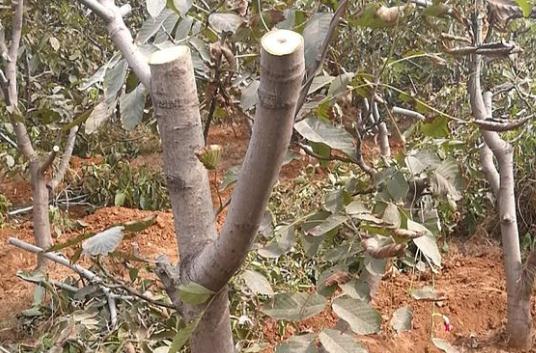
Overall, seedling plants have relatively good disease resistance, while grafted plants, whether forestry oil-tea camellia seedlings or agricultural fruit tree seedlings, tend to perform better in fruiting performance and the superior-fruit rate, so seedling plants and grafted plants each have their own strengths. In practical production, if seedling plants are used for grafting, the original advantages of the nursery stock will be retained.
Seedling plants and grafted plants are the same in cucurbits as well. For example, in watermelon, cucumber and tomato cultivation, soil-borne diseases are relatively serious. To improve disease resistance, we use squash rootstocks or rootstocks of other cucurbits, then graft watermelon seedlings onto them, thereby improving their disease resistance.
1. Propagation methods
Seedling plants include sown seedlings, wild seedling plants, and transplanted seedlings obtained by transplanting the above two types of nursery stock. Seedling plants obtained by seed propagation differ from cutting-propagated plants, grafted plants and the like obtained by asexual propagation.
Grafted plants: nursery stock grown after the branch or bud of one variety is grafted onto the branch, trunk or root of another plant and the graft union heals.
2. Quality
Seedling plants have the characteristics of vigorous growth, a well-developed root system and a relatively long lifespan; when used as propagation material, they have abundant sources, simple methods and low cost. The drawbacks are that variety purity is not high, variants are very likely to appear, and flower color is not pure, among other reasons.
Grafted plants can maintain the excellent traits of the mother tree, have strong adaptability and bear fruit at an early age, and are widely used in fruit tree cultivation. The drawbacks are high cost, and compared with seed propagation, both propagation speed and propagation quantity are inferior.
3. Survival rate
Among nursery stock for sale, the survival rate of all grafted plants is better than that of seedling plants, including various fruit trees and precious ornamental flowers and bonsai.
4. Price
Among nursery stock, most price factors are determined by the quality of the saplings and the scarcity of existing stock. There are exceptions. For example, if some people think seedling plants are better than grafted plants, then they are willing to pay a high price to buy them. Even if grafted plants have very high overall quality and are cheap, they still stubbornly believe that seedling plants are better.
Therefore, seedling plants and grafted plants each have their own advantages, and the specific choice should be made according to one's own actual situation.
Is native osmanthus better or grafted osmanthus better?
Native ones can grow tall and large and are suitable for courtyard planting, but they only bloom after three or four years. Grafted ones have a good shape and grow fast, have strong disease and cold resistance, can basically bloom in the same year, and the plant is short, making them suitable for indoor potted cultivation in the north.
Graft propagation
For graft propagation, spring is best. Osmanthus seedling plants, Ligustrum lucidum or Ligustrum obtusifolium, etc. can be used as rootstock, and side grafting gives a high survival rate. Transplanting is best in spring and autumn. Large seedlings need to be moved with a soil ball, with sufficient base fertilizer applied, and a section with ample sunlight should be chosen. Never transplant in winter. Graft types are distinguished by scion and can be divided into branch grafting and bud grafting; branch grafting can be divided into hardwood grafting and softwood grafting. For example, in rose cutting propagation techniques, according to the cutting and joining methods of rootstock and scion, they can be divided into cut grafting, cleft grafting, approach grafting, bud grafting, side grafting, etc. According to the grafting period, they can be divided into growing-season grafting and dormant-season grafting. Generally, branch grafting can be carried out 2 to 3 weeks before buds sprout in spring, that is, in early to mid-March. It can also be carried out from mid-October to early December. After grafting, let the scion and rootstock heal first, and by the next year the scion will sprout and grow branches. For approach grafting and softwood grafting, it is best to choose May to June. Bud grafting is generally chosen for July to August. Practice has proved that among grafting methods, side grafting has the highest survival rate. Side grafting, also called root-collar grafting, is a branch grafting method that does not cut off the rootstock crown. The specific operation is to first cut the scion into small sections, then make one oblique cut (about 2 cm long), and cut the reverse side into a small slant. The cutting method is the same as cut grafting. After the selected rootstock is dug up and pruned, make one oblique cut at the smooth, straight part of the stem at the root collar, deep enough to reach the xylem, suitable for inserting the scion. Insert the scion into the rootstock, align the cambium, quickly tie the joined part tightly with a plastic band, bag it, and replant it.