General landscaping papaya tree price per tree, whether the fruit is edible, bonsai, and cultivation methods
The papaya tree, also known as Muli, Xianglongmu, etc., is divided into many varieties such as wrinkled papaya, Xuancheng papaya, etc. It can be planted as landscaping nursery stock, and the whole plant is used as medicine. So how much does a landscaping papaya tree cost per tree? Is its fruit edible? Can it be made into a bonsai? How do you plant and care for it?
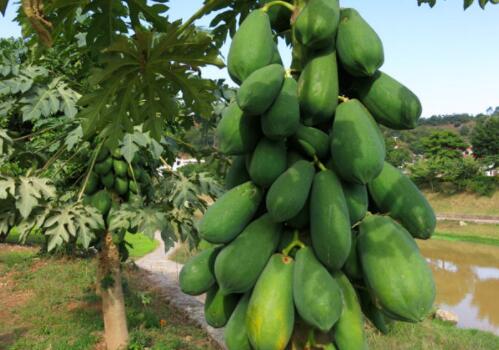
How much does a landscaping papaya tree cost per tree?
Prices vary by quality. The following are compiled prices for reference only.
Is the fruit of the landscaping papaya tree edible?
The fruit of the landscaping papaya tree cannot be eaten. It has absorbed too much exhaust gas and is used for landscaping, so it cannot be eaten and is not good for your health.
Can the papaya tree be made into a bonsai?
It can be made into a bonsai.
Bonsai papaya can produce many bonsai in different styles. Papaya bonsai can be placed in the hall, on the flower stand, in the corner of the entryway, or in leisure places. Papaya bonsai and a reasonably constructed “combination make it a more graceful garden style, and the embellishment is more elegant and handsome.
How do you plant and care for the papaya tree?
Bonsai:
1. Throw the papaya seeds into a pot, and when they grow to 10cm, move them to a separate flower pot for planting. If you want the papaya to bear fruit, you have to move it to a larger pot for care. A foam box can be used, and some vegetable scraps and fruit peels that are not eaten can be composted for the papaya.
2. After the fertilizer is composted, move the small papaya tree into the large foam box. After 1 year it bears fruit. If you like eating them, you can plant several more. If the temperature is not enough in your area, you can make a simple shed for it.
3. Note that a balcony potted papaya has low requirements for environmental conditions. It likes a warm and humid climate and is not strict about soil. It can be planted in the warmer areas of southern China. It requires moist soil and sufficient sunlight.
Papaya likes a high-temperature climate. During the high-temperature period, it not only grows quickly and vigorously, but the fruit it bears also has a higher sugar content and deeper flesh color. During the low-temperature period, growth is slow, the fruit is smaller, the flesh color is lighter, and the sugar content is lower. It dies when it encounters frost. The papaya root system has strong drought tolerance and weak moisture tolerance. Once the rainy season begins, the roots rot easily. A loose, fertile loam rich in organic matter is the most ideal soil.
Orchard planting:
1. Sowing season: Frost often occurs between mid-November and mid-January each year. In order to bear fruit earlier and extend the harvest period, sowing is generally done from October to November, and it is best to do it on a sunny day.
2. Seed soaking and germination: First scald the seeds with 55℃ water, and after they cool naturally, disinfect them with 800 times thiophanate-methyl for 15 minutes, then scoop them out, rub and wash them clean with clear water, soak them in clear water for about 10 hours, scoop them out, wrap them in three layers of wet cloth, and germinate them at about 35℃. Turn and mix them and spray warm water once a day, and sow the seeds that have broken through their coats in time. After 7 days of germination, sow the seeds that have not broken through their coats separately.
3. Raising seedlings: In order to increase the seedling survival rate and make the seedlings robust, use Zhuangmiao No. 1 as the medium for plug tray seedling raising. Cover the top of the plug tray with a film to raise the seedbed temperature and promote emergence. After emergence, remove the film. When the root system of the small seedlings fills the medium, transplant them into pre-prepared large nutrient bags or nutrient cups to grow large seedlings. Keep the seedling soil half dry and half wet, or a little on the dry side. Build an arched shed on the seedbed with transparent film for insulation. When there is frost, add another layer of film or straw to prevent the seedlings from freezing.
4. Land preparation, bed making, and basal fertilizer application
After deep plowing the land, break up the clods and make high beds about 1.8-2 m wide, that is, a bed width of 2.2-2.5 m. Apply about 1500 kg of decomposed manure (chicken manure, hunting manure, etc.), 150-250 kg of phosphate rock powder, 30 kg of compound fertilizer, and 0.3 kg of borax per mu. Evenly broadcast the above basal fertilizers on the bed surface, mix them evenly with the bed soil, then shape them into turtle-back beds, and then mix 10 kg of organic biological fertilizer “Shiquan Dabu” with water and sprinkle it on. This helps decompose nutrients that are not easily absorbed by crops, improves crop immunity, and improves the soil biological community. After making the soil half dry and half wet, cover the bed surface with 2.15 m wide silver-black plastic film, pull it flat and tight, then cover the surroundings with soil clods and press firmly. The silver-black double-sided plastic film can reduce virus diseases transmitted by insects and has effects such as water retention, fertilizer retention, soil loosening, weed prevention, and increasing soil temperature.
5. Field planting
In February of the following year, after the frost period, carry out field planting, with a plant spacing of about 1.8-2 m, planting 140-200 plants per mu. After field planting, water the papaya seedlings thoroughly with rooting water. Fungicides such as thiophanate-methyl can be added to the rooting water to prevent seedling disease, and make sure not to damage the roots, not expose the roots, and not let water accumulate. Papaya seedlings should not be planted too deep; slightly deeper than the root crown is appropriate. Water every day before they survive, keeping the soil moist.