How much does a creeping juniper bonsai cost per plant? A full analysis of pruning and care methods
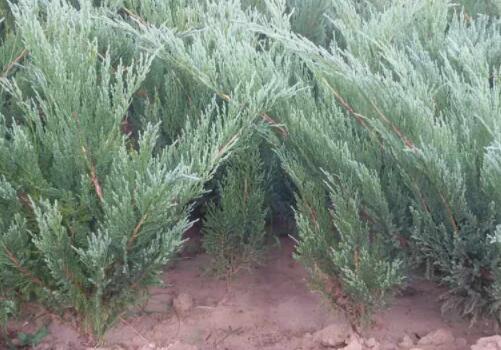
Creeping juniper, also called ground juniper, is an evergreen small shrub. The underside of the leaves is blue-green, and the leaf bases grow in a decurrent pattern. The cones are spherical and bluish. They contain 2 to 3 seeds. So how much does a creeping juniper bonsai cost? How do you prune it? How much does a nursery plant cost per plant? How do you care for it? According to the Changsha landscaping base, ordinary small bonsai are priced from around ten-odd yuan to over one hundred yuan, while large bonsai are quoted at around 1600 yuan.
How do you prune a creeping juniper bonsai?
1. Prune after the plant enters dormancy or semi-dormancy in winter. Cut off weak, diseased or pest-infested, dead, and overly dense branches.
2. It likes a semi-shaded environment and grows poorly under strong sunlight and muggy conditions.
3. Cold-hardy. During the high-temperature period in summer, it cannot tolerate muggy heat, otherwise it will enter a semi-dormant state and its growth will be hindered. The most suitable growing temperature is 15 to 30°C.
How much does a creeping juniper nursery plant cost per plant?
| Nursery plant name | Length (cm) | Unit price (yuan) |
| Creeping juniper | 30 | 0.9~1.3 |
| Creeping juniper | 40 | 1.2~1.6 |
| Creeping juniper | 50 | 1.5~2.8 |
| Creeping juniper | 60 | 2.5~3.8 |
| Creeping juniper | 70 | 3~5 |
| Creeping juniper | 80 | 4~6 |
| Creeping juniper | 100 | 6~8 |
How do you care for creeping juniper?
1. Ground juniper likes sunlight and can also tolerate shade. It is highly adaptable and not demanding about soil, growing in neutral, slightly acidic, and slightly alkaline soils alike, but the best is fertile, moist, well-drained soil rich in humus. The growing medium can be made by mixing 2/3 humus soil with 1/3 sandy surface soil. Planting is best done in March to April. Different pots should be chosen according to different styles.
2. For cascade-style ground juniper cultivation, a purple clay tall cylinder pot is suitable, and the main root should be left appropriately longer to bear the pull of most branches and leaves hanging down outside the pot. For the curved-trunk style, an oval purple clay pot or glazed ceramic pot can be used. For the slanting-trunk and lying-trunk styles, a rectangular shallow purple clay pot is best, to display the graceful posture of the trunk. For the latter two styles, the roots should be cut shorter, keeping more lateral roots and fibrous roots. To prevent bacteria from entering, apply a layer of erythromycin eye ointment to the cut surfaces of the roots.
3. Care:
(1) Location: After ground juniper is potted in a fine pot, the pot holds relatively little soil, and some roots press close to the pot wall. Exposure to the sun can easily damage the roots, which is bad for plant growth. Therefore, creeping juniper bonsai in fine pots should be placed under a shade shed with some light in the hot summer, maintaining a certain humidity. In spring and autumn, they can be placed outdoors for care. When potted in the north, they should be moved indoors in late autumn or early winter to overwinter.
(2) Watering: Ground juniper likes a moist environment but fears waterlogging. In summer, water frequently to keep the pot soil moist. In hot weather, spray water on the leaves once each in the morning and evening. In winter, water less.
(3) Fertilizing: Creeping juniper bonsai in fine pots should be given decomposed, diluted liquid fertilizer. During the growing season, applying liquid fertilizer once about every 20 days is enough. Do not fertilize too much or too often, otherwise the branches will shoot up sharply and spoil the tree shape.
(4) Shaping. During care, ground juniper sometimes grows overly long branches that ruin the tree shape, and these should be cut off in time. To keep the branches and leaves short and dense, pinch back appropriately to encourage lateral branch growth.
(5) Pest and disease prevention: Creeping juniper bonsai has relatively few diseases and pests. The main things to control are rust disease and red spider mite damage.