Chinese juniper sapling prices, how much per tree, differences from Chinese arborvitae, and bonsai care
Chinese juniper, also called spiny juniper, cypress, gui, and guibai, is an evergreen tree; the branchlets with scale-like leaves are round or nearly square. It is used for hedges, street trees, and can also be used as material for stump bonsai and bonsai. So how much does a Chinese juniper sapling cost per tree? What is the difference from Chinese arborvitae? How do you care for the bonsai?
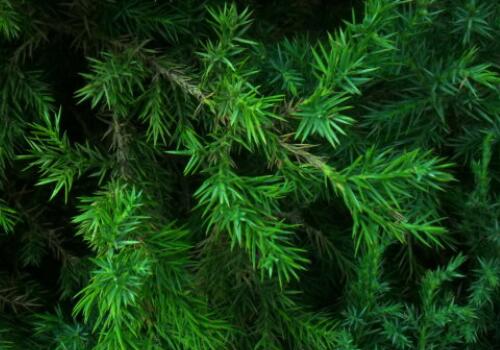
How much does a Chinese juniper sapling cost per tree?
The following prices compiled by Tuliu.com are for reference only:
| Sapling name | Height (cm) | Unit price (yuan) |
| Chinese juniper | 50 | 1.5~1.8 |
| Chinese juniper | 60 | 2~2.4 |
| Chinese juniper | 70 | 3.5~4.8 |
| Chinese juniper | 80 | 5.5~7.5 |
| Chinese juniper | 90 | 6.8~8.5 |
| Chinese juniper | 100 | 8~11 |
| Chinese juniper | 120 | 15~18 |
| Chinese juniper | 150 | 18~22 |
| Chinese juniper | 160 | 20~25 |
| Chinese juniper | 180 | 30~40 |
| Chinese juniper | 200 | 40~60 |
| Chinese juniper | 220 | 50~70 |
| Chinese juniper | 250 | 65~80 |
| Chinese juniper | 280 | 75~90 |
| Chinese juniper | 300 | 80~120 |
What is the difference between Chinese juniper and Chinese arborvitae?
1. Chinese juniper has both needle-like leaves and scale-like leaves, while Chinese arborvitae has only scale-like leaves.
2. In appearance, Chinese juniper is long and spire-shaped, while Chinese arborvitae is cone-shaped
3. The branches of Chinese juniper spread evenly in all directions, while the branches of Chinese arborvitae are almost in a single plane.
4. The seed cones of Chinese juniper are relatively large and spherical; Chinese arborvitae seed cones have 4 pairs of sporophylls and split open completely when mature.
How do you care for a Chinese juniper bonsai?
The Chinese juniper has a graceful tree form, with twisted trunk and branches like a roaming dragon, clustered branches and leaves, and foliage like a green canopy, imposing and magnificent, and it can form a landscape on its own. An old Chinese juniper stump bonsai can live for hundreds of years, with a quaint and picturesque posture, gnarled trunk and curved branches, ancient and robust, evergreen in all four seasons, and suitable for appreciation all year round.
Chinese juniper is a sun-loving plant and a light-demanding tree species, relatively shade-tolerant. It likes a cool and warm climate. The tree is vigorous, deep-rooted, and its lateral roots are also well developed. The trunk is upright, making it very suitable for planting in courtyards or cultivating into valuable bonsai. The following are the care methods:
1. Chinese juniper is drought-tolerant and afraid of waterlogging, so watering should not be on the wet side; do not water until dry, and follow the principle of watering when dry and letting it dry when wet. During the plum rain season, make sure water does not accumulate in the pot. In summer when temperatures are high, water in the morning and evening, just keeping the potting soil moist, and mist the leaves regularly to keep the foliage green.
2. Chinese juniper stump bonsai should not be fertilized too much, so as to avoid excessive growth that affects the beauty of the tree shape. Each spring from March to May, apply diluted and fully decomposed cake fertilizer water or organic fertilizer 2-3 times, and apply 1-2 times in autumn, to keep the branches and leaves fresh green and dense and the growth robust.
3. For Chinese juniper bonsai, pinching is the main method; for leggy branches, you can tip them by cutting off the top to encourage side branches. During the vigorous growth period, especially pay attention to timely pinching and tipping to keep the crown dense and the form beautiful.
4. Chinese juniper stump bonsai grows slowly, so it can be repotted once every 3-4 years, and the repotting time should be in the cool and cold plum rain season. Chinese juniper likes moist soil with good drainage. When repotting, some old roots can be removed appropriately, half of the old soil replaced, and fertile, loose sandy potting soil used to promote the growth and development of new roots. For tall and deep pots, pay attention to placing coarse sand and broken tiles at the bottom to facilitate drainage. Before transplanting a large tree, the roots must be cut; when transplanting, the crown should maintain its original sunny and shady side orientation, and it is best from late autumn to early spring, as the survival rate of transplanting in high temperatures is low.
5. In winter, after the plant enters dormancy or semi-dormancy, cut off weak, diseased, pest-affected, dead, and overly dense branches.